

For certain, there’s more than one way to tell a story!
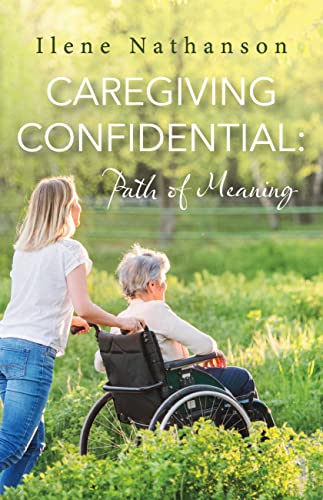
As a practical, roll-up-my-sleeves author who reaches out to caregivers with a skills-oriented how-to approach, I was delighted to become aware of Ilene Nathanson’s book, Caregiving Confidential: Path of Meaning, because of her different style and message.
Weaving true story vignettes that walk the reader through the unfolding of several common pathways to caregiving, Dr. Nathanson’s passion for the holistic needs of caregivers and care recipients is evident on each page.
I was immediately drawn into her narrative style that cleverly brought me through the broad range of circumstances that will, ultimately, confront us all – maybe several times in our lives.
There is no escaping the issue.
We are all aging.
Our needs, and the needs of our loved ones, are going to evolve – and most of us are unprepared.
As a retired chief administrator of graduate social work at Long Island University, with a strong passion for gerontology, her guidance and teaching skills continue in this book and in her co-founding of the New Aging Partnership.
Did you know that the phrase “aging in place,” is the buzz word not only for longings of the heart, casual conversations, and policy makers, but is also the focus of dozens of new and old industries?
Retirement communities have been with us for decades, but now there are real estate agents focusing on senior needs, downsizing specialists, senior service agencies, and more – who are all swooping in to meet the unfolding needs of this growing niche market.
Sandwich generation families are rewriting the book for taking care of parents/grandparents, while juggling the demands of their own children, plus full-time jobs in or outside of the house.
The dynamics of multi-generational households are different than in previous years.
This is why Caregiving Confidential is a beautiful place to start. Enjoyable to read and laced with poignant humor – Ilene Nathanson’s book is always spot on. Like me, you will not want to put it down.
I consider it to be the perfect flashlight for us to use as a primer for this timely topic and a great place to start the aging conversation in our own families.
We are all about sharing here at foodtalk4you. Please share this post using the options under the MORE button below.
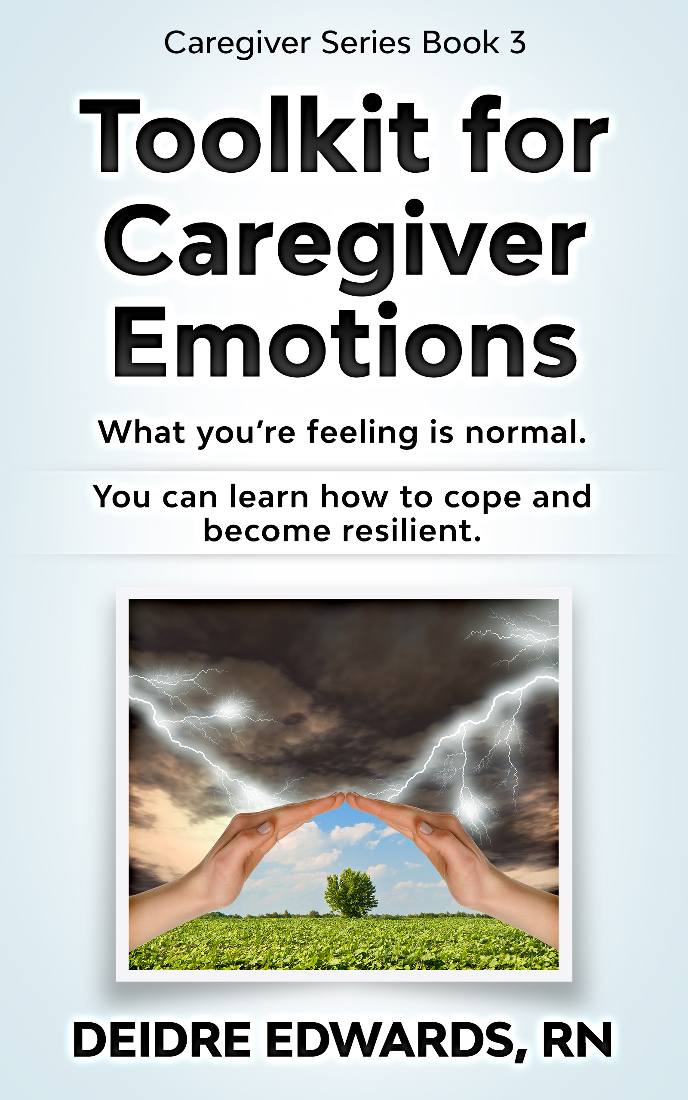
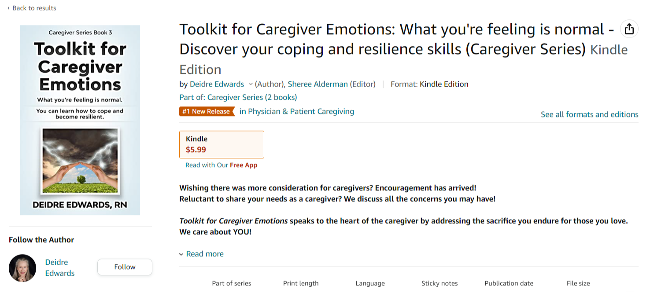
Last week, I mentioned our good news about Toolkit for Caregiver Emotions, being available for pre-order on Amazon, and it occurred to me it might be nice to share a snippet of that book with you today.
Here is the first part of Chapter 2, where I introduce readers to the first technique we do as an exercise that:
1) Assists people in understanding how much control they have over their emotions
2) How to create an accepting mindset and environment for emotions, and
3) How to, at least temporarily, let it go.
I am also introducing caregivers to the idea that they count. Their total health is a valid focus that needs to be recognized, so they can successfully be there for their loved one/patient.
We caregivers of loved ones often think we should just soldier on in silence. Don’t complain. Don’t reach out for help. Just do the job. Any feelings we experience about ourselves are pushed so far down they are out of sight.
Our loved one comes first, last, and everywhere in between.
That philosophy may work for a while … until it clearly does not.
I can tell when it’s not working. Caregivers come to talk to me with that glazed-over, shell-shocked look, like they are drowning at sea and are going down for the third time – lacking the energy to even signal for help.
A greater understanding of the unique caregiver emotional situation will assist you in smoother transitions through the phases of caring – and even grieving.
I thought I had everything figured out when I started caring for my dear husband. I was a nurse who taught Certified Nursing Assistants, after all.
Little did I know, there was still much to learn – especially about my emotional and physical needs during that blessed time of caring for him.
You see, in a caregiving situation, there are two patients. Two patients with equally important, but very different needs. Two patients whose needs are intertwined and dependent upon each other.
Those patients are you,the caregiver; and the loved one you are caring for. Ignore the needs and welfare of the one, and the other will not be cared for.
I want to shine a light on the unpredictable roller coaster of often surprising and negative caregiver emotions.
Emotions are what make us human. When we cry, we’re experiencing emotion. Whenever we are happy, sad, mad, passionate, upset – those are all emotions.
But sometimes, negative emotions need to be reined in!
Emotions can steal our involvement and enjoyment of the present moment.
You see, emotions should just come and go. But sometimes, we get so uncontrollably wrapped up in our feelings, we start identifying with them.
This is what I know – we are not our emotions; and we can – and should – control them at times. But how?
Keep reading and follow along with the techniques I share.
Copyright 2022, Deidre Edwards
Oh, I just hope you are wanting to turn the page to read what’s next!
And you will get to do that. My goal is to beat my deadline of August 2nd by publishing early!
Foodtalk4you subscribers can assist us in getting this book into the hands of the over 50 million caregivers – in America alone – by joining the launch team. Very soon, we will send out information on how you can get an inside look at a book and participate in its success.
There will be opportunities for getting FREE autographed copies for launch participants. Yay!
UPDATE!!
Dear Readers – It’s a humble little burnt orange banner, but it means so very much:
“#1 New Release in (the category of) Physician and Patient Caregiving”
This means YOUR pre-orders for Toolkit for Caregiver Emotions are enabling others to see this book on Amazon so much easier! In the coming weeks, I’ll be dedicating myself to publishing before my projected date of August 2nd because more and more caregivers need this message of hope, understanding, and techniques.
A change in our health status can come in the blink of an eye – not only do we need to be prepared for the physical tasks of caregiving, but we need the mental and emotional skills to stay sane, not feel alone, and to strengthen life-long resilience skills. The third title in my Caregiver Series will do that.
I just cannot say, “Thank You” enough!
In the meantime, it’s time to get up from this desk, do a minute of planks, and go for a walk before the temperature decides to return to winter.
Boing! That’s springtime in the Northern Hemisphere!
Pssst! You have my permission to share this post using the options under the MORE button below. 😊
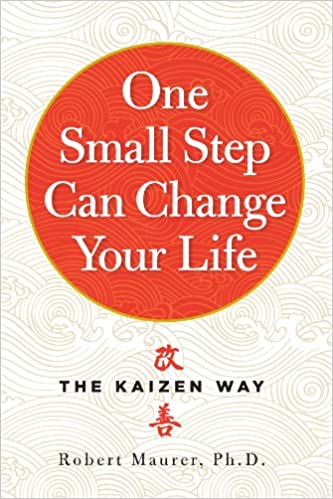
It’s not a word on the tip of everyone’s tongue. Kaizen. It comes from two Japanese words “kai,” meaning ‘change,’ and “zen,” meaning ‘good’.
Many of us bristle at the very thought of change. Status quo is the word of the day for many.
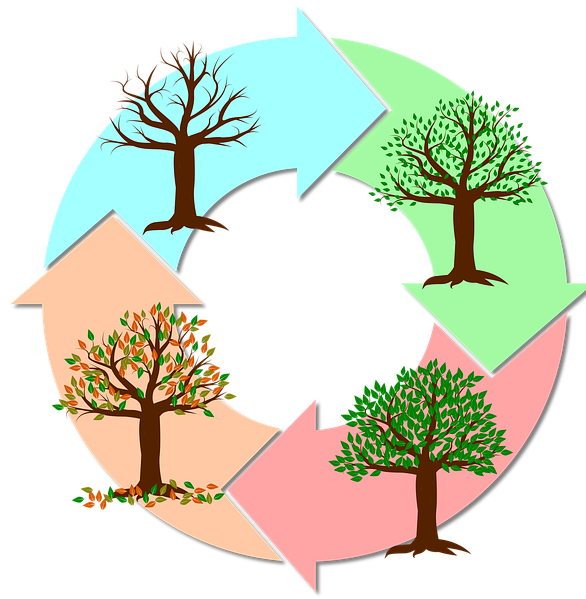
But change is as natural as the different seasons in nature – morphing almost imperceptibly into something different. In our own lives, each day is unique, and each phase of our journey is new. We’ve never been here before. Change is our normal state.
Kaizen has also come to mean the process of continuous improvement. Since the early days of Toyota, the Japanese manufacturer was one of the first organizations to embrace the idea that perfection is not a fixed destination – as life evolves – our needs, visions, and approaches change – and so must our methods and products.
Therefore, change can be good.
There’s a lesson to be learned by the way nature changes that we can take into our own efforts for self-improvement.
What is that lesson? Sustainable change – or a process of changing that can be sustainable – must happen gradually.
We don’t jump from frozen ground to full-bloom spring, do we?
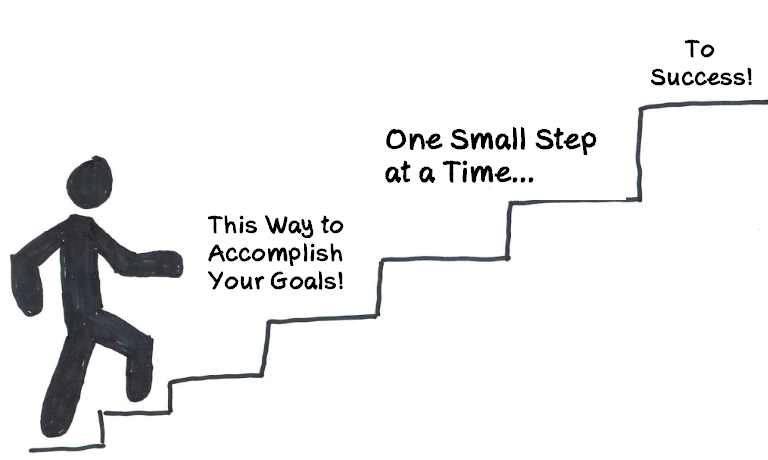
Taking the smallest, measurable step each day is enough to get us there. When we show up every day to take our efforts and results just a little farther down the road, that’s exactly what we want.
Sustainability is the key.
If we make our steps giant, challenging leaps, there’s a good chance we will not return the next day. Skipping one day makes starting the next time harder, and makes creating excuses to skip again very alluring and justifiable.
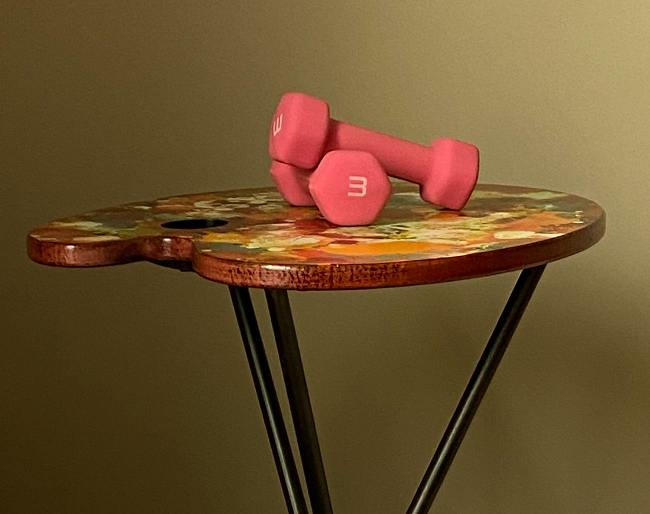
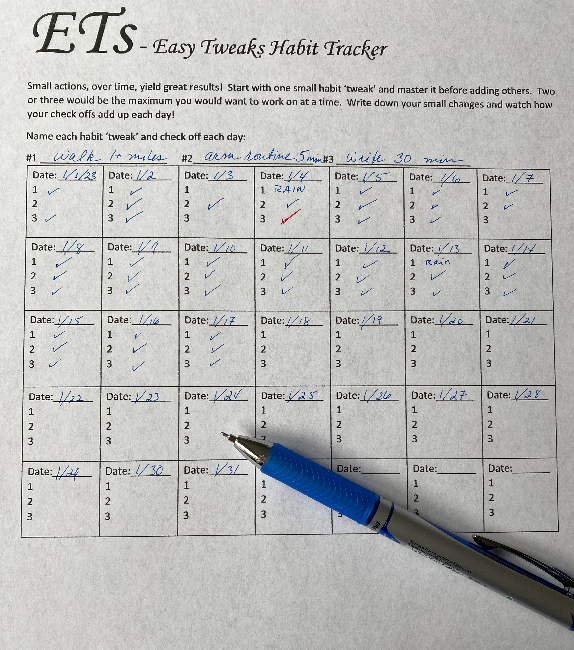
In that vein, the five-minute arm workout I shared with you last week is a perfect example of sustainability. There’s not a big commitment, this routine can be done any time of day or night, and I seem to naturally improve and expand what I do with no special effort.
There’s that Kaizen Principle at work in a simple arm routine.
Yesterday, I morphed a few moves to create a half-dozen more. So fun to do, and variation keeps things fresh!
Try taking a hammer curl to a full overhead arm extension and back again. Then extend that combination to a triceps extension: three moves in one loop.
Add another triceps move by standing upright, arms at the side holding weights, then bend elbows slightly while moving arms back. Hold that position and extend arms back straight. Pause. Flex at the elbow and keep pumping back, pausing at full extension 10-15 times.
Sharing my beautiful appetizer recipe, Basil Boats, a couple of weeks ago, got me to remembering a comforting story from my childhood and that of our children.
Do you know this one?
“The owl and the pussycat went to sea in a beautiful pea-green boat. They took some honey, and plenty of money wrapped up in a five-pound note.”
The cadence of this poem’s lines introduced me to an appreciation of more sophisticated writing – way above, Little Bo Peep – and opened up an understanding of foreign economies and cultures.
“Mommy, what’s a five-pound note?”
I naturally read this classic to our children, and we even started to memorize the lines.
A quick search on Amazon rewarded me with a beautiful The Owl and the Pussy Cat available in a board book version – excellent for unskilled page turners who might also gnaw the edges as they check for flavor.
I was so happy to find this old friend, that I ordered it for my granddaughter who is just turning one today!
Happy birthday, sweet one! Grandma can’t wait to read this to you!
There was another classic recommended- Wynken, Blankenship, and Nod, HERE – that I knew about but was not a part of my childhood. That one was ordered as well for bedtime reading.
While The Very Hungry Caterpillar HEREis at the top of baby and young children’s reading lists these days, a blast-from-the-past can touch minds and hearts as well.
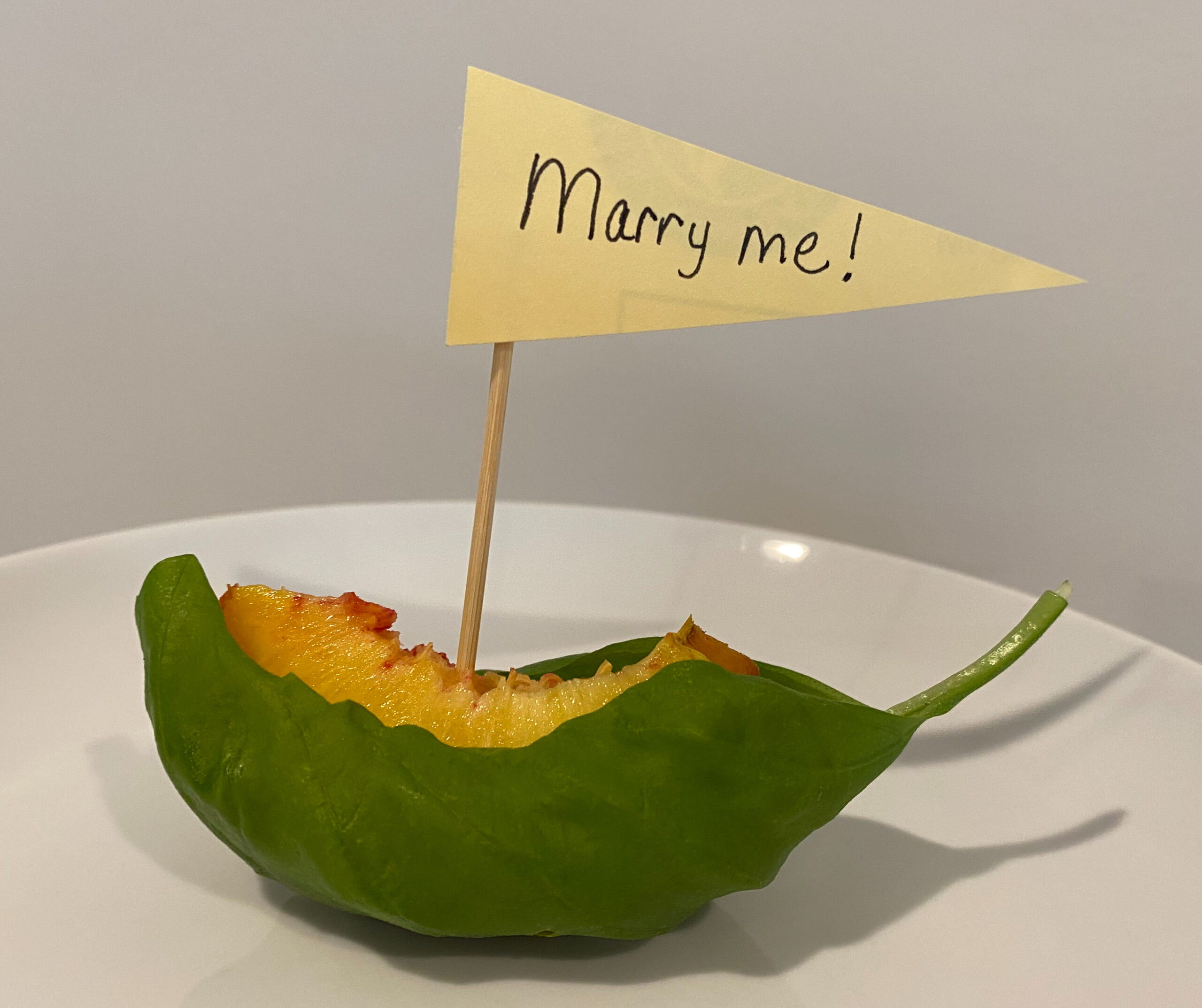
If your young one’s imagination needs a jump start and their taste buds are curious for new flavor combinations, you can try making your own little Basil Boat like I did using a slice of peach inside with a custom sail message from the owl to his sweetheart.
Perhaps a few drops of honey on the peach slice could add to the experience…It’s a tasty treat when the story is finished.
If you liked today’s post, please share using the options on the MORE button below.
In health-
Deidre
As an Amazon Associate, I earn from qualifying purchases.
Few people seem to get too excited about dental care.
If you haven’t developed the habit of regular flossing – chances are, you dig your heels in by saying, “Meh. I’ve never gotten into that so much – it’s not for me.”
BUT…
What if I were to share with you some things I am just learning about good teeth through the eons, good teeth today, the cheap way to improved teeth, and … what new research has found in the brains of Alzheimer’s victims that goes back to their mouths!
This is shocking!
Let’s start with A BOOK I’m reading by a Canadian author who reveals the results of Dr. Weston Andrew Price’s quest to answer the simple question, “Why were his patients experiencing so much dental decay?”
Dr. Price traveled the globe studying people who were not exposed to the influences of modern civilization. Good thing he was doing this in 1899, because the spread of modern civilization today is so complete, there are hardly any corners of the world left untouched.
The bottom line of Dr. Price’s investigations is that once introduced to a modern diet, patterns of change result, predictably, causing dental caries (cavities), gum disease, heart disease, crowded teeth, smaller jaws, infections, and more.
The patients of Dr. Price were not living on Mountain Dew and McDonalds. What was modern about the diets of North Americans in the late 1800’s? This was the time when a major shift to white flour, white sugar, white rice, vegetable fats, and the introduction of canned foods, occurred.
What was missing in the late 1800’s from previous diets were vast resources of minerals, water- soluble vitamins (B and C) and especially fat-soluble vitamins – all sacrificed in the name of longer shelf life, and in creating filling foods that easily survived unrefrigerated transportation.
While Dr. Price could not pinpoint the exact identity of his dietary activators, (later identified as Vitamins A and D), he knew that restoring certain elements to his client’s diets would transform their dental health better than merely filling and pulling teeth.
He started prescribing diets high in fish eggs, egg yolks, some organ meats, and – especially – butterfat from cows grazing on rapidly growing green grass.
Fast forward to 2007, and another element Dr. Price had called Activator X is identified as Vitamin K, which is a group of K vitamins K1-K7.
Vitamin K, Vitamin D, Vitamin A, and even chlorophyll, all does an intricate dance with each other that facilitates processes mandatory for our strong bones and teeth, healthy heart, arteries, and other things.
Turns out, Vitamin K2 is needed to put the calcium into our bones and teeth. A diet low in K2 results in the calcium getting put into the linings of our arteries – that’s called atherosclerosis. Bones without a supply of calcium equal osteoporosis.
In fact, K2 deficiencies are also associated with:
Increased risk for breast, prostate, liver cancers
Diabetes
Varicose veins
Wrinkles
Dental caries
Chron’s Disease
Bottom line? We can gulp all the calcium we want, but without proper levels of K2, that calcium will be routed away from the bones and teeth only to land in the soft tissues and linings of our arteries.
That’s the Calcium Paradox.
I had drastically cut back my calcium supplementation that was supposed to help with my bone issues because I feared clogging up my coronary arteries.
Another tidbit to consider is oral hygiene and what we are feeding our bodies to enable unusual bacterium in our mouths. It’s all being studied further after what scientists found HERE and I quote:
“Scientists have previously found that this species of bacteria, called Porphyromonas gingivalis, can move from the mouth to the brain. Once in the brain, the bacteria release enzymes called gingipains that can destroy nerve cells, which in turn can lead to memory loss and eventually Alzheimer’s.
In this study, researchers looked for evidence of this process in human brains. They examined the brains of 53 deceased people who had been diagnosed with Alzheimer’s and found high levels of gingipain in almost all of them. They also noted that the amount of gingipain tended to rise over time, which suggests there may be a tipping point when dementia symptoms first begin.”
The take-aways from this week’s post are:
By eliminating sugar, white rice, white flours, vegetable fats, and processed foods from our diet we will not only boost oral health, but also general health.
Consider supplementing with Vit K2 by reading Rheaume-Bleue’s book to get the full scope of how seriously our modern diets are causing a host of preventable diseases and conditions.
Brush and floss those pearlies, folks.
In health and personally taking 100-200 mcg K2 every day –
Deidre
If you found this post helpful, please share by clicking the MORE button below.
To my European readers, Rheaume-Bleue’s book, Vitamin K and the Calcium Paradox has been translated into Italian and Polish.
We are presented with a victim covered in band aids.
Every year, more and more band aids are applied to stop our victim’s various leaks. Each effort is quelling one leak, but more leaks keep popping up.
What is the cause?
Are we so busy treating the symptoms, that a true understanding of the causes for our collective diseases are being ignored? Or maybe truly fixing the cause is not financially advantageous to those who are supplying their vast resources of expensive band aids to us?
We explored leaky gut last year HERE, but now I want to soar even higher for an even broader, 50,000-foot view.
Ever wanting to learn more about health and wellness, I have discovered Metabolical by Robert H. Lustig, MD. He compliments my messages in Toolkit for Wellness– our being designed for good health and eating an anti-inflammatory diet – and focuses his prescription for health into 1) protecting the liver and 2) feeding the gut.
In his scholarly book, he peels back layer-after-layer of the band aids to reveal the long-ignored causes. His descriptions of the intricate physiology of cells and body systems underscores my determination to not use band aids – but to prevent needing them in the first place.
Lustig calls this solving the problem upstream – at the source of the trouble.
Where’s the trouble?
In the food.
Processed food, specifically.
Not vegan vs. keto vs. organic vs. fill-in-the-blank.
This is not a new message, I know. Hang with me for a moment.
Lustig supports his conclusions that 75% of the US health dollars and 50% of the world’s health dollars go towards efforts to medically “fix” the host of chronic non-infectious diseases that affect modern society: diabetes, hypertension, and heart disease.
These fixes are failing at dizzying speed as numbers of cases rise every day despite all the money being spent AND as our life expectancies shrink.
He likens our efforts to medically “fix” these and other noncommunicable diseases that plague us as “rearranging the deck chairs on the Titanic” for all the good they are doing.
Even cancer, autoimmune disease, dementia, and psychiatric disease is being shown to be processed food related, and more cases of advanced disease processes of all kinds are being seen in teenagers.

As I have long said, we are not crumbling genetically – we are feeding our bodies the wrong food. These startling statistics are simply the culmination of 40-50 years of relying upon food-like substances, not real food.
I’m just on page 55 so far, but the over-arching message is that the chronic diseases of today are a result of abnormal metabolism in different cells and different organs of the body. Abnormal metabolism becomes metabolic syndrome which is the springboard for insulin resistance, diabetes, and fatty liver disease – and obesity.
Abnormal metabolism is set aright not by a fix of pills, (band aids), but by food choice.
What’s for dinner tonight? Is there added sugar and/or salt to the ingredients list? When was the last time any of us cooked a meal totally from real/whole food with no labels?
I’ll be sharing more from his book in future posts but let me leave you with Lustig’s experience with trying to advance treatments for his pediatric diabetic patients.
After years of falling in line with the likes of the American Diabetic Association and others who rested their diabetes approaches on “covering” blood sugars with appropriate amounts of insulin, Dr. Lustig proposed something novel: How about decreasing the need for insulin by NOT eating sugar?
He was regarded as if he had sprouted horns.
Why?
Because some studies have not been conclusive as to what raises blood glucose levels. Really? Oh, you mean the studies that were backed by food interests – including Pepsi? Hmmm…
The studies not backed by food/beverage interests did show that sugar causes diabetes (Type 2).
Ta-da!
Food for thought, dear readers. That’s why we call this foodtalk4you.

If this was helpful to you, please share with your friends and family using the options found in the MORE button below. Also, remember to subscribe to foodtalk4you.com by clicking on the subscribe button.
There are those who pride themselves in avoiding all forms of social media. That’s fine. Taken to an extreme, we are apt to have permanently bent over necks and backs as we gaze at our phones instead of looking up or out at the world in the first person.
Checking on the latest news in my respective feeds is something I do have to rein in from time to time. There is the element of becoming addicted.
But hearing the daily “Banjoy” from George Oliver as he plays a short banjo ditty from his front porch or seeing the latest photograph or drone video from photographer friends, Elaine Varley, Sue Williams, Steve Smith, and Ben Linderman, and my day is brighter.
Then, a friend will post an inspiring thought I might share as well.
Some posts seem to come around every so often. I appreciate the repeated messages of hope and love. Often, they seem to appear just when I need them.
Then, there’s this poem that found its way to my Facebook feed again earlier this month. Perhaps you, too, have seen it:
HEY GOD – Author, John Roedel
Me: Hey God
God: Hello …
Me: I’m falling apart. Can you put me back together?
God: I would rather not.
Me: Why?
God: Because you aren’t a puzzle.
Me: What about all of the pieces of my life that are falling down onto the ground?
God: Let them stay there for a while. They fell off for a reason. Take some time and decide if you need any of those pieces back.
Me: You don’t understand! I’m breaking down!
God: No – you don’t understand. You are breaking through. What you are feeling are just growing pains. You are shedding the things and the people in your life that are holding you back. You aren’t falling apart. You are falling into place. Relax. Take some deep breaths and allow those things you don’t need any more to fall off of you. Quit holding onto the pieces that don’t fit you anymore. Let them fall off. Let them go.


Me: Once I start doing that, what will be left of me?
God: Only the very best pieces of you.
Me: I’m scared of changing.
God: I keep telling you – YOU AREN’T CHANGING!! YOU ARE BECOMING!
Me: Becoming who?
God: Becoming who I created you to be! A person of light and love and charity and hope and courage and joy and mercy and grace and compassion. I made you for more than the shallow pieces you have decided to adorn yourself with that you cling to with such greed and fear. Let those things fall off of you. I love you! Don’t change! … Become! Become! Become who I made you to be. I’m going to keep telling you this until you remember it.
Me: There goes another piece.
God: Yep. Let it be.
Me: So … I’m not broken?
God: Of course Not! – but you are breaking like the dawn. It’s a new day. Become!! Become!!
Becoming is our everyday state, our journey. My appreciation for the state of becoming increases with each passing year – it’s a part of gaining perspective.
It’s easy to see the uncomfortable changing processes on the heels of tragedy, grief, loss, or enormous positive shifts in our lives. But the subtleties of cleaning out a closet cannot be ignored as we let go, realizing we no longer need this or that.
This becoming thing has lessons for us on cosmic, earthly, and on mundane levels.
The words of John Roedel are resonating with me to the point I have now purchased two of his books and am following him on Facebook. The details of the birth of his writing journey may inspire your own life journey. Check him out HERE.
Just wanted to share something of value with you today.
In health-
Deidre
If this has been useful to you, please use the MORE button below to share.
As Alex is fond of saying, it doesn’t matter how big or small you are, you have a voice! As she fights for her parents against Alzheimer’s and dementia, Alex’s “Operation Caregivers,” is yet another battle to restore dignity for those who suffer from the disease and empowerment for their https://www.facebook.com/alexandra.allred.3-569859
Email Alex at: redburn4@gmail.com. (Reference that you saw her on The Complete Caregiver Guide event) and request a copy of either “Alzheimer’s and Dementia 101” OR “Awareness is Armor.”
First come, first serve!
DEIDRE EDWARDS
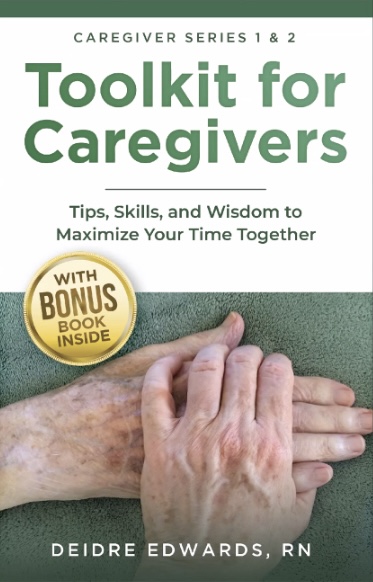
If you are one of the millions of people who has become a caregiver to a loved one, Deidre’s Toolkit for Caregivers will guide you through that maze of caregiving concerns that threaten to overwhelm and consume you.
FREEBIE: We are giving three lucky people our most popular publication, Toolkit for Caregivers. Toolkit for Caregivers blends the demands associated with caring for another with a calmer atmosphere and self-assured peacefulness – creating a remedy for a more purposeful, soothing atmosphere, beneficial to both you and your patient. Please take the time to sign up for our drawing. We would love for the winner to be you!
Lori is a passionate advocate who searches for ways to shift our dementia care culture from crisis to comfort. She was recognized as the #1 Influencer Online for Alzheimer’s. As a professional speaker and daughter of a mother with dementia for over 30 years, Lori gets it! Change is needed on multiple levels.
Lucia has worked for over 25 years with elders, high-risk population and persons with chronic conditions, as well as their caregivers, in a wide range of community, research, and institutional settings. She developed a pioneering practice using mindfulness to improve the quality of life in community, hospital, clinic and nursing home settings.
Divya’s strategies motivate leaders, cross-functional groups, and teams to cultivate independent leadership, the interdependence between themselves and their internal and external customers to achieve a combined mastery of connectivity and alignment. Her experience allows her to guide leaders, teams, and professionals through complicated business and personal challenges.
During the past four decades, Dr. Marion has provided care for more than 2,000 elderly clients while she owned and operated a thriving Geriatric Care Management practice. It is now Dr. Marion’s goal to help caregivers everywhere by providing valuable insights and information.
Claudia is a burnout prevention and stress resilience coach and mentor, a self-care advocate, and a motivational speaker. She is also an entrepreneur, a digital course creator and founder of the ”Unstoppable You Wellness Academy,” an online platform offering digital courses, digital products and online trainings, with the mission to empower those who are burned out.
Petra is an author and entrepreneur who turned her attention to finding real-world elder care solutions after a series of unexpected events left her scrambling to help her parents manage their affairs. Her desire was to offer other adult children of seniors practical advice they could use in their own lives.
NOTE: If you wish to save a copy of this on your computer or want to print it out, click our PRINT button below – under DESTINATION, scroll down to PDF and click SAVE.
You can enjoy some kite-flying weather in the United States right now, but our post is not about kites today.
No, we’re talking about metaphorical heartstrings.
We don’t hear much about heartstrings anymore. You know the expressions, “That story really tugged at my heartstrings”? or “Zing! Went the strings of my heart”?
Most old sayings are rooted in truth. We do have strings in our heart called the chordae tendineae. They hang onto one of the two kinds of heart valve flaps we have, allowing them to close just enough during each beat.
Understanding the concept of love reaching out over the miles during a pandemic, or across space and time as in the Titanic love song, “My Heart Will Go On,” can be a tricky concept to explain to young children or even adults.
How do you paint the picture of feeling love, connection, or concern in your heart? How is it that we are connected? How do you demonstrate love never dies? How do we remain connected after physical separation?
One mother, Patrice Karst, sought a way to explain this phenomenon to her young son, Elijah, and in so doing, has given adults and children a physical way to see that which is invisible.
Her book called, The Invisible Stringwas born. With a relatable, down-to-earth story, and masterful illustrations by Joanne Lew-Vriethoff, Patrice Karst brings to life the love ties that bind and connect us all.
Is your child anxious about leaving you when going to school, especially after staying at home so much?
Has a best friend moved away?
Is a parent being deployed?
Has a loved one died?
Is there a sense of disconnect because of travel restrictions?
I think this book will go a long way in demonstrating the strength and nature of love to young ones and will serve as a great reminder to the adults reading, The Invisible String, as well.
I have my copy! It’s ready to share with grandkids, and has already reminded me not to pout too much, when not hearing from someone for a while. That love string is still there. Maybe I need to make it stronger by reaching out to them.
Thank you, Natalie, my Facebook friend, for sharing this delightful book with me! Now, I am spreading the love by sharing it with my readers!
If you enjoyed this post, please share on social media, and click on the subscribe button so you won’t miss the next post.
We
interrupt this hurricane to give you the following important
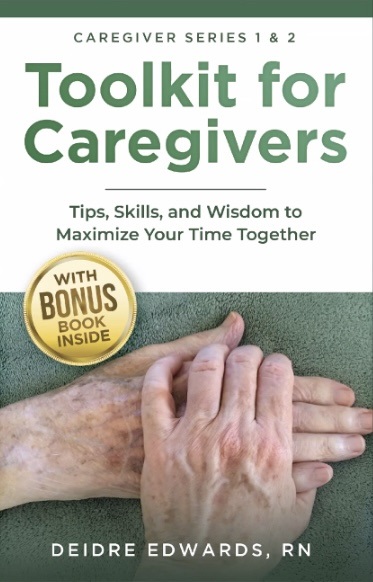
announcement. Toolkit for Caregivers, is now published
and available for purchase on Amazon! As a bonus, a second book –
Toolkit for Caregiver Survival – is included. That’s
right. Two books for the price of one and under one cover!
If
you are young, healthy, and thinking that becoming a caregiver to
your parents or spouse is decades away, the bonus book is for you
now. There’s a way to approach caregiving that will make
future family dynamic transitions less traumatic for all involved.
You
see, we never know when that job description of “caregiver” will
be plopped into our laps. Sometimes a slow aging process or
predictable disease progression is not what happens.
Sometimes
life turns on a dime, and we find ourselves assisting a loved one
healing from a sudden accident or surgery.
Sometimes,
after a brief period of not feeling well, we are hit with a crushing
diagnosis.
Being
a caregiver to a loved one at home is not reserved for grandma
helping grandpa in his 90s. In fact, the average age of caregivers of
loved ones at home is 49 years old.
The
new term coined by the Hospice Foundation of America is “Silver
Tsunami.” This tidal wave of Baby Boomers becoming Medicare
eligible at a rate of 10,000 a day is not only going to need
the services of a loving family caregiver, but is also going to
become a caregiver for someone at home in the future.
This
represents a double-edged sword for the Baby Boomers AND creates
family transitions across the generations. Truly, no one is immune
from caregiving issues.
The
five-star reviews are coming in for this new release, and reflect
readers’ appreciation of the information provided in this double
book.
Why
don’t you check it out yourself here:
The preview feature will give you a meaningful peek inside. You will notice from the table of contents, I have made every effort to answer caregiver concerns that no other book does.
Whether
you are decades away from becoming a caregiver to a loved one, or you
are starting to see the handwriting on the wall and know you may be
entering the world of caregiving, this double offering of Toolkit for
Caregivers will guide you through the most challenging job
description ever given to someone.
These
tips, skills, and wisdom for before, during and after will become a
lifeline so you can avoid common pitfalls, make your loved one more
comfortable, and enable you to maximize the time you have together.
Toolkit
for Caregivers is for you. It’s for your friends and
family. It’s for your doctor, nurse. It’s for your home health
and Hospice agency. It’s helpful for funeral homes as they support
those in pre-planning or those just new to grieving. There’s
something for everybody.
Foodtalk4you
is all about sharing useful information. I decline offers to monetize
this site because I do not want to keep hounding my readers with
pop-up ads, op-ins, and buy-this-now offers. I just want to share
pertinent information that could make a difference in improving life.
Please
share this book link with some of the 40 million plus caregivers of
loved ones at home, your families and friends, and with those
individuals and organizations that ultimately serve caregivers.
My
immediate sharing goals include local presentations to groups in the
Carolinas. Because I am just one person, there is an on-line option
for Caregiver Workshops that I will be exploring. Anyone interested
in a Caregiver Workshop with a book signing, please contact me at:
Deidre@ToolkitsForHealth.com.
Now,
let’s return to our Hurricane Dorian coverage on the Weather
Channel.
Our
life in the Carolinas could radically change this week.
Prayers
that my lovely historical town will not get flooded again; we are
still rebuilding after last year’s Florence.