Category Archives: Anti-Inflammatory Foods

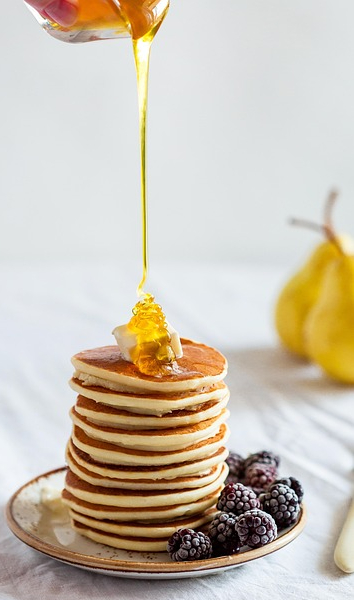
The Pancake of Champions

Once again, I saw something healthy and yummy online and tried it – tweaking the ingredient’s list as always.

There was already a great lineup of gluten-free, high-protein ingredients, but when I was through, it kind of looked like a recipe list for Kitchen Sink Pancakes!

Any recipe for pancakes – for me – is more of a concept recipe. I might not have all the ingredients and/or I might make substitutions.

So, knock yourself out with this one.

The core of the concept is to create pancakes that are:

1. Naturally sweet – needing no syrup to raise blood sugars

    2. Gluten-free – to be non-inflammatory and to support a happy belly

    3. High in fiber – to aide in digestion

    4. High in protein – to support growth and repair

    Pancakes are often the antithesis of these concepts because they are high carbohydrate, pro-inflammatory sponges begging for tons of butter and rivers of syrup.

    The original recipe featured 2 grated apples – which was great because I had two apples that needed to be used. I also had one last banana needing a home, so I added that, too.

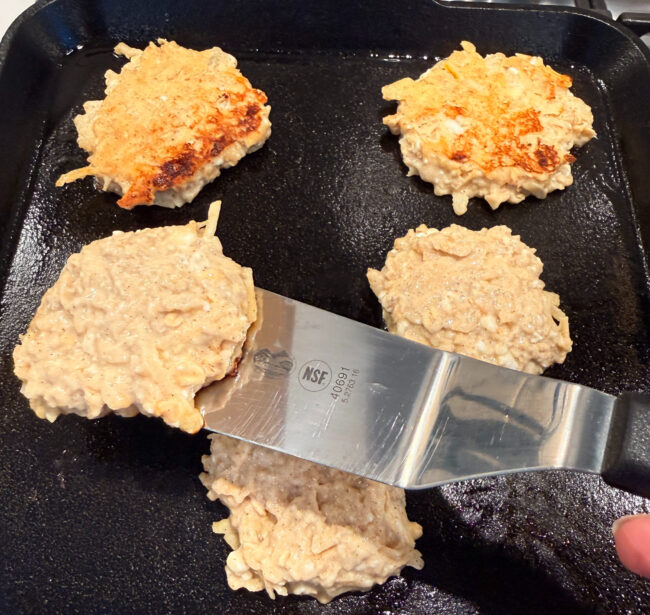
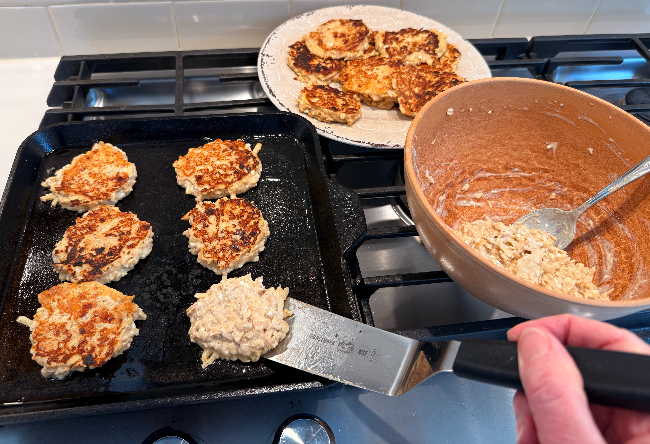
    Because of the overall course texture from the apples, oatmeal, and nuts, this pancake batter started looking more like fritter batter. So, that’s what I am calling these – pancake fritters!

    Here’s the recipe for Pancake Fritters:

    First, stir 1 Tablespoon of chia seeds into 1/3 cup of water and set them aside to soak for at least 10 minutes to use in the wet ingredients. This provides fiber and protein.

    Then, combine the dry ingredients in a large bowl:

    -1 cup gluten-free oatmeal
    -1 teaspoon of baking powder
    -1/2 teaspoon cinnamon
    -Pinch of salt
    -2 grated apples

    Optional: a handful of chopped walnuts.

    In a food processor or in a bowl using an immersion blender, blend the following wet ingredients until smooth:

    • Soaked chia seed mixture
    • 2 eggs
    • 1 Tablespoon of olive oil
    • 2/3 cup of Greek yogurt
    • 2/3 cup of cottage cheese
    • 1 banana, broken into pieces
    • Vanilla to taste

    Add the wet ingredients to the dry ingredients, and combine. Add milk of choice to thin batter as needed or, if the batter is too thin, stir in 1-2 Tablespoons of gluten-free flour at a time, until desired consistency is achieved.

    Rather than normal-sized pancakes, I created smaller, fritter-sized ones, using a spoon to pat down a small scoop of batter placed on the hot, oiled griddle.

    This recipe will feed a small crowd, so feel free to cut this in half – I will, next time, for the two of us.

    The apple, banana, vanilla, and cinnamon help create a ‘sweet’ profile that simply doesn’t need syrup.

    Please download this delishiness, PANCAKE FRITTERS, HERE:

    The high-fiber and protein elements support lasting fullness and satisfaction.

    There are so many ways to adjust this according to personal preferences and what is in the cupboard or fridge at the time.

    I hope you enjoy it!

    In health –

    Deidre

    If you enjoy this post, you can subscribe with the knowledge that, after the three two emails and one personal introduction, you will just receive an email each Tuesday with the link to the new post. No annoyances in your inbox and no irritating pop ups while you read.

    To subscribe, scroll to the bottom of your device or to the left top on your computer screen to fill out the form. Thank you!


    FAT! (No, It’s Not What You Think)

    It’s a holy trinity of sorts … the three macronutrients found in the food we eat: carbohydrates, protein, and fat. These three, along with the micronutrients in food – vitamins and minerals – are what keep our bodies functioning at optimum levels. Macronutrients are the three elements we need to consume the most, followed by the micronutrients we also need, but in lesser quantities.

    Like most things dealing with our health, each element is linked to others in ways which creates dependency for successful functioning.

    Case in point – a recent email from Chris Kresser, reminded me of one of these vital connections between a macronutrient having a crucial role in our ability to absorb micronutrients derived from vegetables.

    He emphasized – eating nutritious food is just half the battle. How we prepare that food, either in cooking or presenting it – with a sauce or dressing, totally influences how much of the vital micronutrients we will absorb. And, absorbing the nutritive elements is why we eat, right?

    How sad it would be if we bought the best organic produce we can find, only to miss out in absorbing the nutrients we need.

    Take the powerful carotenoids found in kale. Carotenoids are natural, fat-soluble yellow, orange, and red pigments synthesized by plants, algae, fungi, and bacteria. As powerful antioxidants, they protect cells from damage, support immune function, and are essential for eye health. 

    We want carotenoids, for sure!

    But in a 2025 study by the University of Missouri, researchers found that raw kale alone, produced very low carotenoid absorption, and cooking it slightly reduced the bioavailability further.

    A significant increase came when researchers added an oil-based sauce to either the cooking process or when the oil was added after cooking.

    You see, some of the micronutrients are fat-soluble nutrients, including vitamins A, D, E, and K – along with carotenoids like lutein, beta-carotene, and lycopene. These nutrients require dietary fat to be absorbed; and without it, a meaningful portion of these compounds pass through the digestive system largely unused.

    So, preparing and serving your healthy veggies without fat (eating raw or steaming), and then serving plain or with some kind of fat-free sauce or dressing, will work against your goal of absorbing the nutrients you are hoping to get.

    The no-fat craze definitely has its drawbacks.

    Another study by the University of Iowa found a dose-dependent relationship, with two tablespoons of oil producing a meaningfully greater absorption than smaller amounts.

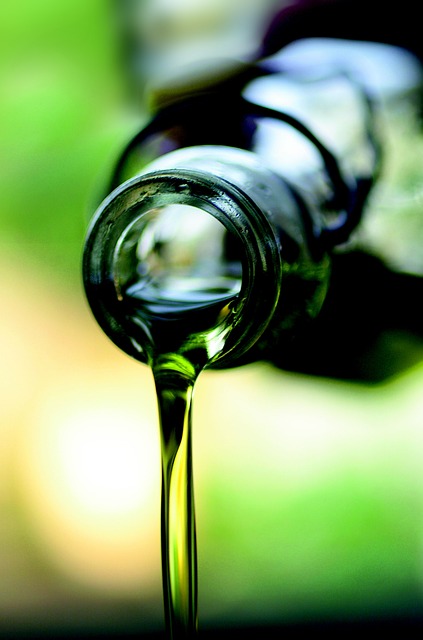
    Whether you are sautéing greens, roasting veggies using a drizzle of oil, or using an olive oil-based salad dressing – these oil-enhanced methods are effective in ramping up absorption of the critical elements we need.

    Next week, we will look at various kinds of oils because, of course, there’s a difference there, too.

    In health –

    Deidre

    Sharing is caring. Copy and paste the URL for today’s post or use the options in the MORE button below to share this post with others.

    Thanks.

    Oatmeal by the Slice?

    Oatmeal by the slice?

    Talk about seasonal foods!

    While I long for okra to use in my famous grits-eggs-okra breakfast scramble, any I find in stores will have traveled far—picked before full ripeness and preserved to survive the journey.

    Not great for flavor, nutrition, affordability, or sustainability.
    Plus, the natural rhythm of seasonal foods supports our needs:

    Summer produce tends to be hydrating and cooling.

    Fall and winter foods are often more grounding and energy dense.

    So, while our readers in the southern hemisphere are enjoying the bounty of summer foods, I am longing for warming soups and root vegetables – especially since ole man winter has decided to settle in for a spell.

    We covered Hasselback Potatoes recently. Now, I want to try that technique on sweet potatoes!

    But, on these chilly mornings, I am hearing the sirens of oatmeal calling once again.

    Breakfast cereals by themselves, however, don’t hold me because of their carbohydrate hit. What could I do to ramp up the protein component?

    While casually discussing my recipe with our editor, Sheree, I also mentioned I intentionally prepare more than needed so I can make a loaf of oatmeal to use later. What?

    Sheree was mystified.

    We’ll get back to that bit of magic in a minute.

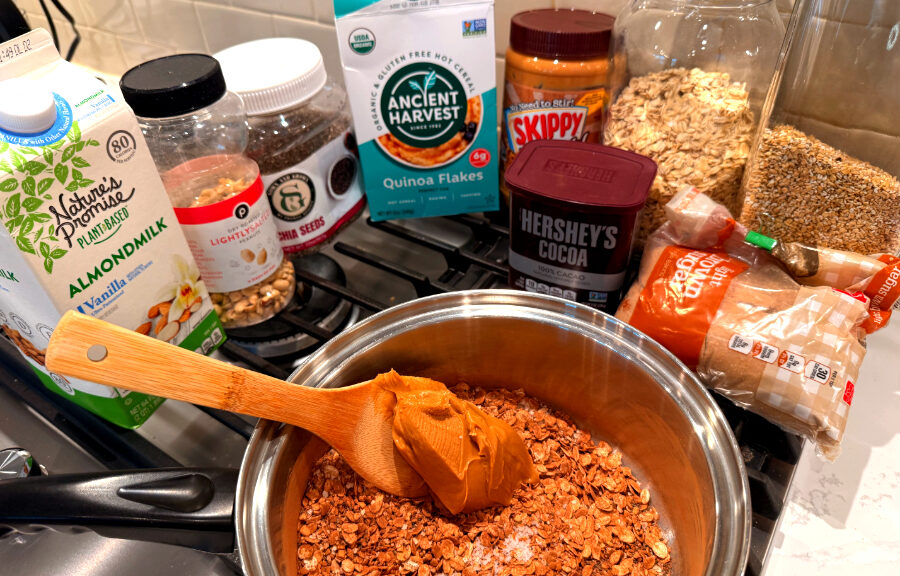
    First, for the current version of my vat of gruel, I can thank my disorganized pantry for allowing the can of Hershey’s cocoa to spontaneously eject from its perch to serve as inspiration!

    Yes! Add cocoa to oatmeal!

    What goes with cocoa? Peanut butter!

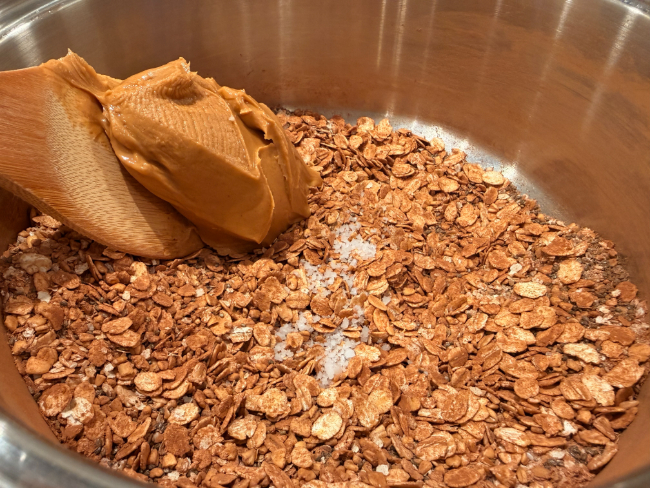
    And so, it went … See the downloadable recipe for the details on how I ramped up the protein content.

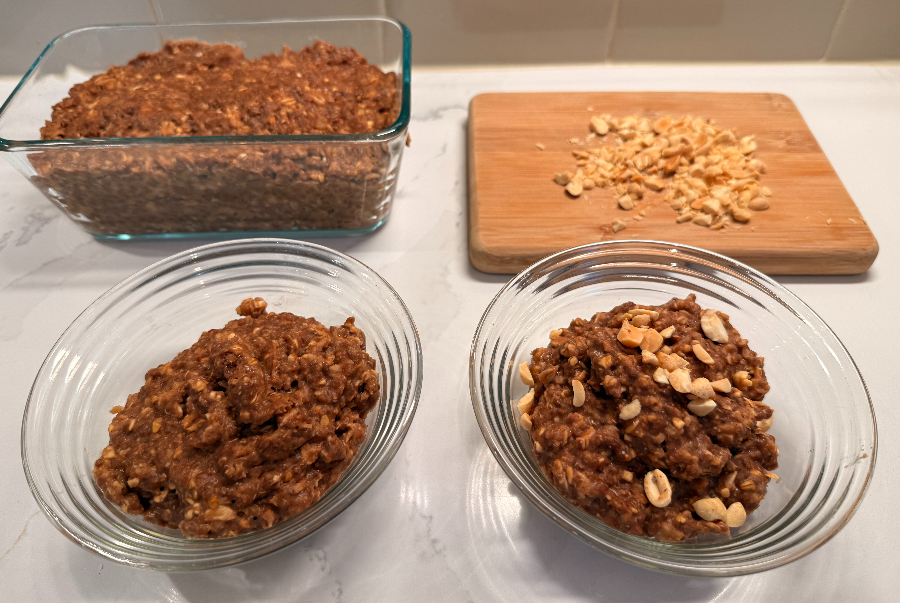
    The magic comes the following mornings when I don’t have to start from scratch for oatmeal because the leftover oatmeal was put into a loaf pan, covered, and refrigerated.

    Did you know oatmeal holds its shape when cooled?

    All that’s needed is to lift slices of now solid oatmeal out of the loaf pan and sauté them in a non-stick pan coated with butter.

    Oh, yum!

    Are you imaging your own version? Adding chopped nuts, dried fruits, fresh apples, applesauce, coconut?

    Maybe ingredients will jump out of your cupboard for inspiration!
    My next task is to own getting the pantry reorganized … aye, aye!

    In health –

    Deidre

    Oatmeal Recipes are found here!

    If you or your organization are looking to serve the needs of the caregivers in your group, reach out to me at Deidre@deidreedwards.com for more information on how I can help by offering a Caregiver Workshop.

    Come In, Sit Down, and Let’s Have a Cuppa!

    My first experience with coffee happened when I was three or four years old.

    Toddling around the house, I would happen upon a long forgotten cup of stone-cold coffee dregs my parents had left behind.

    Just a sip or two was left.

    Thinking I was doing something tantalizingly decadent, I would rescue those last sips! Tee-hee!

    Eventually, I became a ‘legal’ drinker of coffee.

    Fast forward to our post on 6 Sept 2022, where I shared about reading a comprehensive article concerning medicinal mushrooms – I’ve been on the lookout for ways to incorporate more varieties of cultivated mushrooms into my diet.

    Wait! Weren’t we just talking about coffee?

    Yes!

    For years, I have been seeing all kinds of ads and articles about mushroom coffees that promises nerve calming benefits – coupled with mental clarity and no coffee jitters.

    Earlier this year, I followed an article about mushroom coffee comparisons and roamed on the internet in search of the perfect purchase.

    I went to the sites of several brands and was immediately turned off by “starter packages” linked to initial purchases that would automatically renew.

    I just wanted to try their stuff. If I didn’t like it, I would have had to cancel a subscription. No thank you.

    Finally, I found a brand that seemed to check all the boxes and wasn’t asking me to make a life commitment.

    I tried it. I liked it. It was not hard to find them to reorder. Take that purveyors of subscriptions!

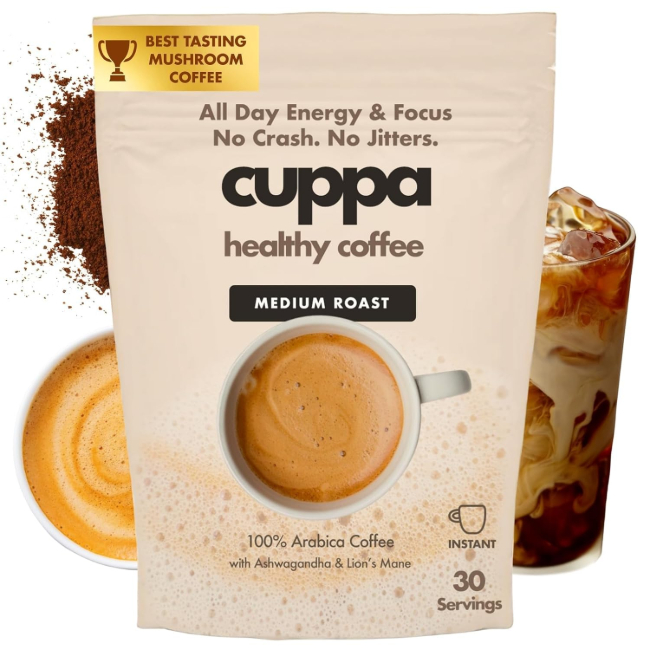
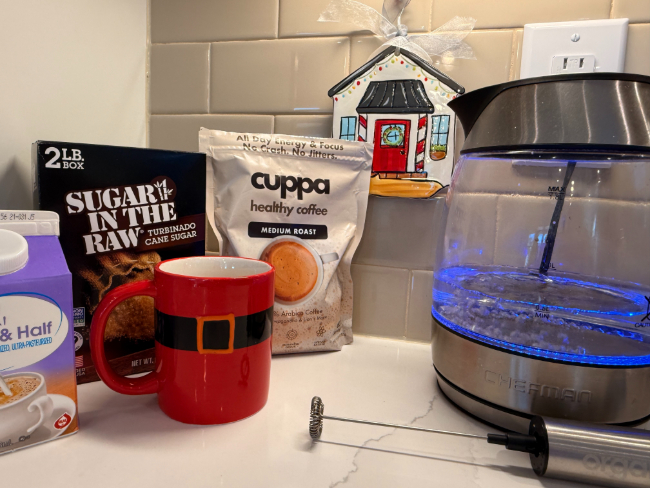
    So, I am using Cuppa brand mushroom coffee. I am not saying this will be good for you and, I am not affiliated with Cuppa. We just use it to replace that second cup of coffee when we want more to drink.

    Many people use Cuppa for all their coffee drinking.

    Cuppa contains:

    Coffee and Matcha for flavor, energy, and antioxidants.
    Ashwagandha for anxiety and stress relief, and concentration.
    Lion’s Mane for focus, mood, immune support, and brain health. Cordyceps for immune support, stamina, and anti-inflammatory support.
    MCT/Fiber for energy, gut health, and to reduce jitters.
    L-Theanine for stopping jitters, sleep support, and better focus.

    Of late, I have needed something extra to warm me up as our temperatures drop outside, and my mug of Cuppa has filled the bill.
    I can attest to no caffeine jitters.

    Mental clarity and focus? Perhaps.

    Improved immunity … I can’t say since I am already doing a lot of other things. Hey, I’m not sick.

    There is some Arabica coffee in this mix; so for us, the flavor is not strange. It is different – but satisfying.

    I have chosen to add a splash of creamer and just a pinch of Sugar in the Raw to the Cuppa powder, which I froth before adding the rest of the hot water.

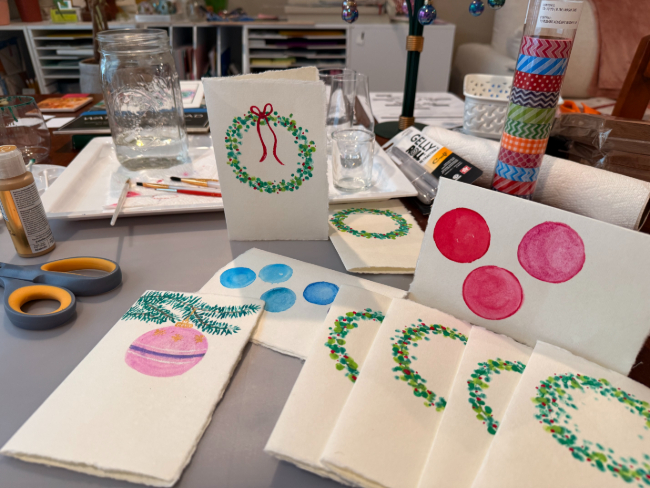
    Now, maybe Santa can get those Christmas cards created and mailed out soon!

    In health – Deidre

    Looking for that special present for a caregiver? A copy of Toolkit for Caregivers and Toolkit for Caregiver Emotions would be just the thing!

    Our subscribers can count on not being bugged with pop-ups or endless sales emails. When we send you something, it’s the link to our weekly blog – or occasionally – a thank you containing additional useful information.

    Reach out to me in the comments below or email me at Deidre@deidreedwards.com – your questions and comments are always appreciated!

    Don’t miss the next post! Subscribing is easy and hassle-free. Just one email every Tuesday morning with the link to the latest post. Scroll down from the top of this page on the left side of your device to fill out the subscribe form.

    Thank you!

    Rescued by Chia Seeds

    Well, I didn’t intend to ignore my obligations, but that’s what I almost did.

    Our trusty editor, Sheree, just sent a subtle message, “Hey … got a post for me?”

    In other words, “Hey, the Tuesday post is going out, uh … tomorrow … we don’t have anything for our readers!”

    Gulp!

    After completing the Caregiver Summit last week I had been preparing for since early spring, we celebrated the positive reception of my message, packed our bags, and headed out the next day for a long-awaited trip to Disney World!

    The cold snap that is affecting the mid-Atlantic on up north, is also affecting the southern Atlantic states. The low in Kissimmee, Florida, where we are staying is 36 F tonight – and the high tomorrow is slated to be 59 F.

    We abandoned the idea of seeing the fireworks-light show-water fountain display at Epcot again tonight because we didn’t bring parkas. To top that off, Sheree is making snow men in West Virginia!

    Since our accommodations have a full kitchen, I knew we would be taking many of our meals in whenever we were not at Disney World.

    How do you approach vacation cooking and meal prep?

    Our first stop coming into Kissimmee was to go to the grocery store.

    To compliment the assorted nuts, peanut butter, crackers, chia seeds, fresh berries (blueberry, black berry, and raspberry), and apples, we picked up almond milk, two bottles of protein-boosted smoothies, coffee, gluten free cereals, eggs, Greek yogurt, gouda, sliced ham, sour dough bread, mustard, butter, hummus, and guacamole.

    Travel and eating out can create havoc for the “smooth functioning of the intestines.”

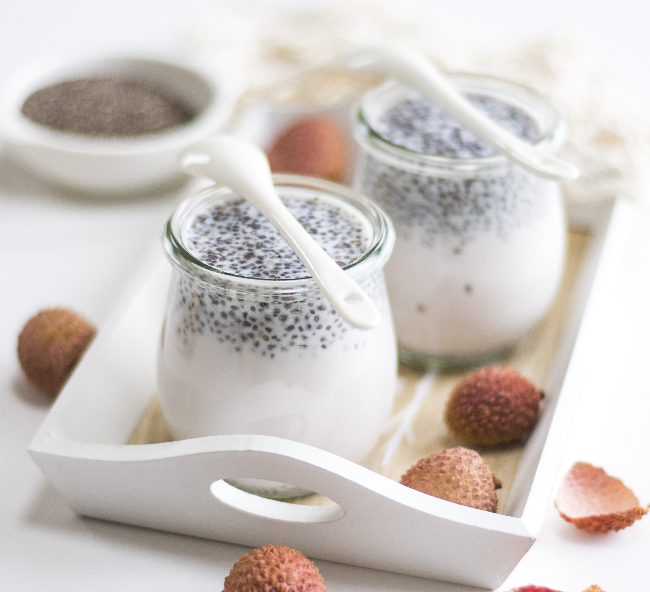
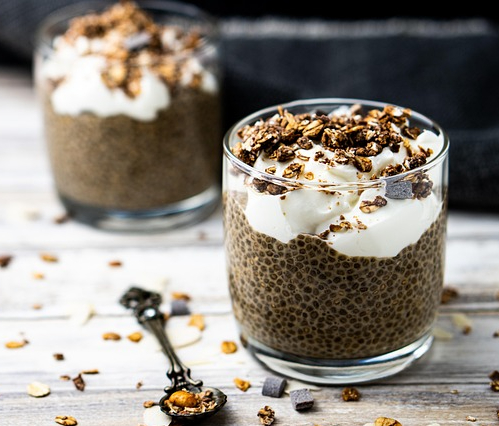
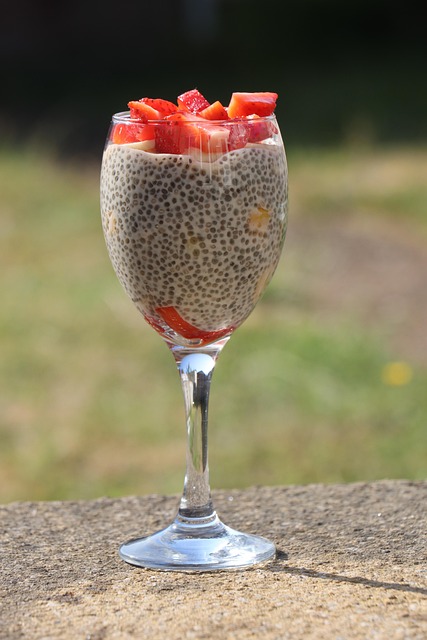
    To ward against getting “backed up” we regularly consume chia seed pudding. Recipes vary, but this is what I am currently doing:

    Chia Seed Pudding – per individual serving

    In a small bowl or a small glass (that will hold about 10 ounces) stir together:

    2-3 tablespoons chia seeds

    1/3 – 1/2 cup flavored smoothie (these can contain added sugar, so I don’t use a lot)

    1/3 – 1/2 cup almond milk

    2 – 3 Tablespoons of Greek yogurt (can be fruit flavored to blend in with the flavor of smoothie you use)

    A handful of fresh fruit that compliments the other flavors.

    Download your copy of Chia Seed Pudding below:

    Depending upon the amount of chia seeds and fluid used – and if you refrigerate this overnight – this “pudding” can thicken enough to need a spoon or can be thin enough to drink.

    Along with proper daily hydration, and eating whole food with lots of fiber, chia pudding can be our best friend – especially when traveling.

    In health –

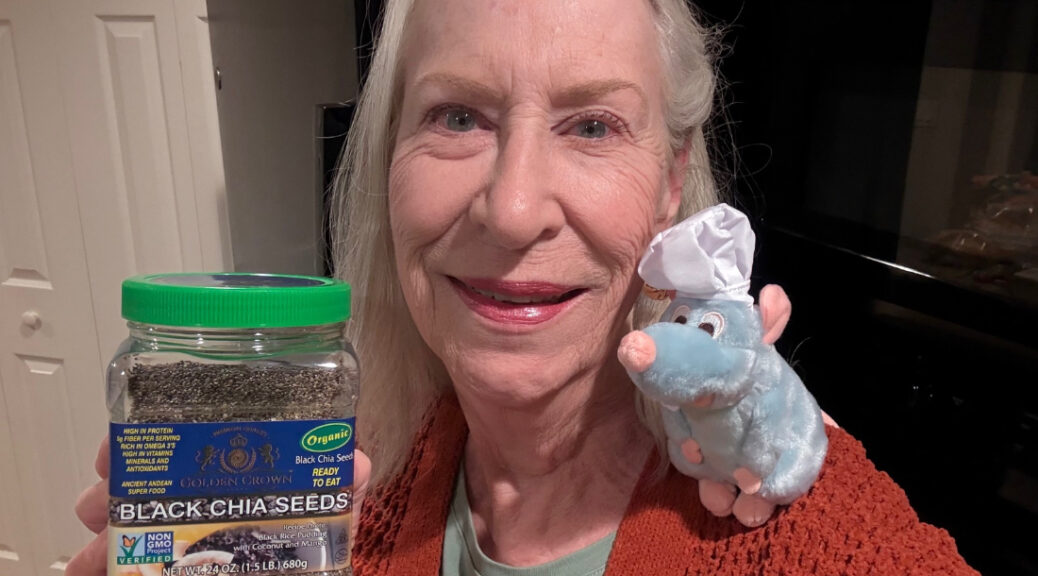
    Deidre and Remi

    I sure hope we get to see Remi’s Ratatouille Show in Disney this week! They were having technical difficulties today.

    Hunting For Hummus? We Can Help!

    We have always liked hummus. We buy it frequently, and I have made it on several occasions. But, during our Tucson adventure recently, we ate A LOT of it!

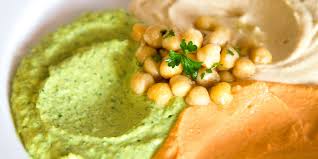
    A restaurant soon became our favorite in Tucson because of its hummus. The Pita Jungle offers an appetizer plate with three kinds of the delicious spread, along with enough pita bread to dip into – until your heart’s content.

    And we did!

    Especially our two-and-a-half year old grandson. We couldn’t figure out which of the three flavors was our favorite – tried as we might.

    So, upon returning home, we longed for some delicious hummus – homemade, please! Why? Because, there is a difference!

    Good hummus is, generally, thick and smooth; and gives you the impression of heaven – floating on a pillow-soft, airy-like fluffy cloud! Ahhhh!

    After perusing old messenger entries – I use messenger like a filing cabinet for things I want to remember. Do you do that? I found a video of some fellow who seemed to know his way around a chickpea, so I followed his lead.

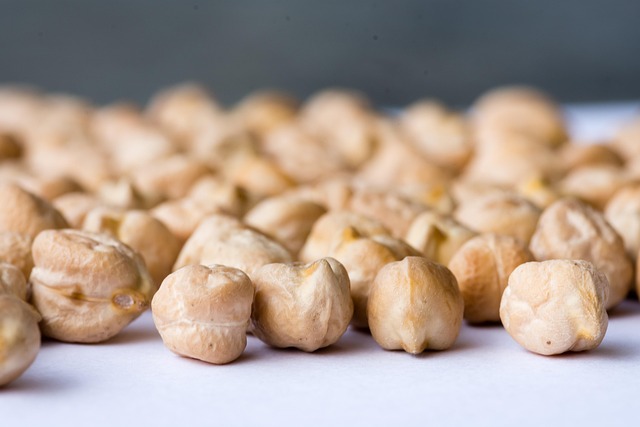
    While the ultimate recipe for hummus may start with dried chickpeas/garbanzo beans, I used the tried-and-true canned variety, using two cans – equal to 3 cups – of chickpeas.

    Before throwing those chickpeas into the food processor, however, there’s a secret first step!

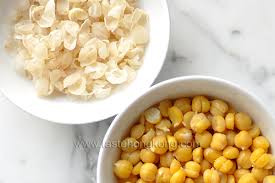
    After draining and rinsing the canned chickpeas, put them into a saucepan, cover with water, and add 2 teaspoons of baking soda. Bring it up to boil and lower it to a simmer for 5 minutes. The hull of each chickpea will be released.

    When the time is up and the hulls are starting to release, remove the pan from the stove, pour off the water and the hulls, adding cold water to stop the cooking and aid in eliminating the hulls.

    In practice, the hulls were released but did not easily pour off. I ended up skimming and manually removing most of the hulls as I placed the hull-less chickpeas into the food processor. I look forward to improving my pouring-off technique. If most of the hulls are removed, that will be fine.

    To the food processor with the chickpeas, add the juice of one lemon, ½ teaspoon of Kosher salt, and 2 cloves of garlic.

    Process this mixture for 7-8 minutes. The mixture will get warm so don’t be alarmed.

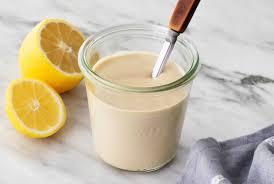
    Add 1/3 cup of tahini to the mixture, about 2 tablespoons of extra virgin olive oil, and process for 3 more minutes. The tahini is added late because its proteins would otherwise cause a coagulation of the hummus, which cannot be reversed.

    Taste test for any desired seasoning adjustments. We felt it needed more salt and garlic, but I couldn’t add more raw garlic at this point, so we settled on a couple additions of garlic salt with a tasting in between additions to guide us. A few pulses from the food processor did the trick.

    Transfer this very warm cloud of hummus to a bowl and place it in the refrigerator for three hours to cool.

    Please feel free to download the recipe below!

    At home, we used tortilla chips to scoop up this delightful dish. It can be stored for a week in the fridge.

    We served it at a party we held; and are now enjoying lunches consisting of a few chips and our hummus and some leftover homemade guacamole – you couldn’t ask for a healthier snack.

    I hope you will try making your own cloud of hummus soon!

    In health – (and hummus!)

    Deidre

    November is National Family Caregiver month! Show your love and concern for caregivers you know by sharing my caregiver series with them:

    Toolkit for Caregivers

    Toolkit for Caregiver Emotions

    Thanks!


    The Birthday Garden

    A cake with candles? Awesome!

    And people who sing happy birthday? Fabulous!

    But a garden? A birthday garden?

    This was a new idea for me and was a gift from a trusted resource to mark my own recent birthday.

    Our reflections of where we are now, and where we want to be in the future, often exist just in those few seconds it takes to catch a deep breath to blow out those candles on the cake.

    The Birthday Garden is a tool developed by Julia Poernbacher, M.Sc., which is a metaphor she uses to reflect on the past year, celebrating personal growth, and to set intentions for the future.

    Here’s a summary of the steps:

    Look at your garden

    With closed eyes, take a few deep breaths, and visualize your unique garden space:

    What does it look like? Is it thriving or does it need care?

    What’s growing? The flowers and plants represent your successes, joys, and potentials

    How about weeds? They represent your challenges, habits, and things that no longer serve you.

    Are there areas that need more attention or feel neglected?

    Celebrate the harvest

    Thefruits’ of your harvest are your successes, the moments of fulfillment through experiences and relationships of the last year.

    Identify three significant successes or joyful experiences.

    Reflect on what helped those successes bloom: what actions, people, or circumstances played a part?

    Reflect on what those successes taught you and how they made you feel.

    Pull the weeds

    Maintenance is a part of every garden’s upkeep. Consider the habits, limiting beliefs, people, or challenges that may have held back your growth, no longer serving you.

    Reflect on three things you are ready to release that have held back your growth. Perhaps, create a releasing ritual to help you let go of them. Consider writing them down on papers and holding each one close to your chest as you reflect on how it has affected you. Acknowledge its role in your life and how it made you feel. Then, with a deep breath in and out, set that paper down away from you.

    Plant new seeds

    Choose what you want to plant in your garden for the new year ahead.

    What personal qualities do you want to develop, and what are the exact steps you will take to nurture them?

    Reflect on three goals, qualities, or intentions for your garden, aligning your ‘seed’ with your action steps to keep it alive.

    Tending your garden

    As you create a plan for success, consider how you will maintain your garden through the coming year, asking yourself:

    What goal am I growing? What habits will help me? How will I stay accountable? Who or what can support my efforts? How will I know that I have succeeded?

    A vision statement

    Write one that summarizes your over-arching goals and keep it somewhere you can see a reminder.

    For example: “This year, I nurture a more-balanced approach to my efforts and interests. Being mindful that change takes time, I will celebrate the small victories all year long!”

    In health –

    Deidre

    It’s 100% live! Toolkit for Caregiver Emotions is now available both in print and as an eBook! Pre-orders have been delivered today by Amazon! Get yours today HERE.

    This has been a flower in my garden that has taken extra love, attention, and time for it to blossom! Please share this helpful resource with caregivers you know. The emotional tangle family caregivers experience is often the last topic to be addressed when, in fact, it should be top of the list!

    If you have read it – Thank you! Please leave a helpful review on Amazon to help others discover a path to resilience in caregiving.

    No Foolin’

    In America, it’s April Fool’s Day.

    Long associated with jokes, pranks, and Tomfoolery to make someone else look the fool, I want to assure you that this is no joke.

    Chris Kresser’s weekly newsletter is inspiring today’s post about seafood consumption by children.

    Seafood provides a host of nutrition including iodine, selenium, choline, and vitamin D, along with omega-3s, which are critical for brain development and function.

    A well-studied important dietary component during pregnancy, seafood has not been the target of many comprehensive studies for children.

    However, Kresser cited a study in the European Journal of Nutrition revealing that children consuming no seafood have a 35% higher chance of suboptimal social behavior compared to children consuming two portions every week. Children who regularly consume recommended amounts each week often demonstrate better emotional controls and focus.

    Cost factors, availability, and awareness of mercury concentration in seafood may be influencing the inclusion of this food source into children’s diets, but we may be avoiding it at our peril. If you scroll way down this NIH resource, you will find this table showing how little seafood children in the U.S. are eating:

    ABLE 3-12Weighted Seafood Meal Frequency, U.S. children, 2–19 Years

     n, Weighted0 Meals per Month, Percent (n)Less than 2 Meals per Week, Percent (n)2 or more Meals per Week, Percent (n)
    Overall74,270,80843 (5,372)51 (6,631)6.4 (926)
    Males (years)
    2–57,908,05946 (698)49 (735)5.9 (103)
    6–1112,925,78343 (945)50 (1,185)6.9 (164)
    12–1917,022,52542 (1,131)51 (1,364)7.0 (199)
    Females (years)
    2–58,029,34839 (602)55 (828)5.9 (124)
    6–1111,739,99843 (909)52 (1,183)5.7 (163)
    12–1916,645,09644 (1,087)50 (1,336)6.2 (173)
    Race/Ethnicity
    Hispanic17,869,76644 (1,734)50 (1,936)5.4 (186)
    Non-Hispanic Asian3,428,65431 (343)50 (574)19 (234)
    Non-Hispanic White10,429,46336 (1,186)56 (1,896)8.1 (274)
    Non-Hispanic Black38,447,67845 (1,708)50 (1,762)5.0 (159)
    Other4,095,24743 (401)48 (463)9.1 (73)
    Income (IPR)
    Less than 1.325,389,48146 (2,488)49 (2,788)5.7 (325)
    1.3–4.9937,715,36743 (2,448)51 (3,172)5.8 (455)
    5+11,165,96036 (436)54 (671)9.8 (146)

    NOTES: IPR = income-to-poverty ratio. Values in parentheses are unweighted sample sizes. Seafood frequency measured using a 30-day food frequency questionnaire based on the total number of meals per month for all seafood species. Respondents not reporting food frequency are not presented in this table; n = sample size. See NHANES Data Analysis Methodology in Appendix E.

    SOURCE: NHANES cycle years 2011–2012 through 2017–March 2020.

    The next table below shows serving size based upon age, the best and the good choices for seafood, and which kinds to avoid based upon concentration of pollutants (mercury).

    Ask any teacher, kids are not learning as well, and their behavior is declining. Why?

    Is consuming seafood the answer to this question?

    Absolutely not.

    But it may be one factor parents and grandparents can look at to improve the chances the children will have every opportunity for success in learning and socializing.

    I often get on jags of preparing one kind of protein – usually the versatile and affordable cuts of chicken – and forget to mix things up a bit.

    Omega-3s are great for all of us, so I am trying to be more mindful of including wild fresh caught Alaskan salmon on a more regular basis. It’s a matter of watching the sales; salmon this week, shrimp or white fish the next.

    Maybe Taco Tuesday can become Fish Taco Tuesday!

    In health –

    Deidre

    If this post was valuable to you, please share it using the options under the MORE button below. Thanks!

    That’s Nuts!

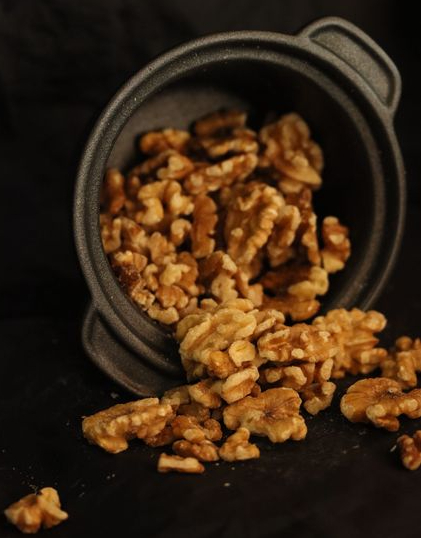
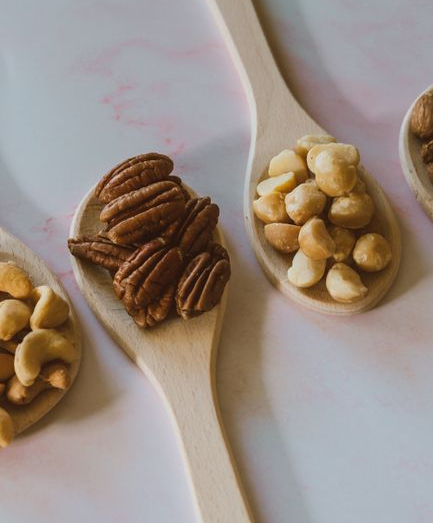
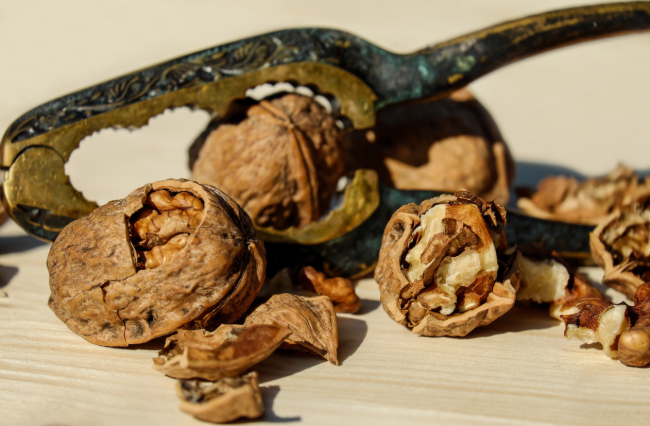
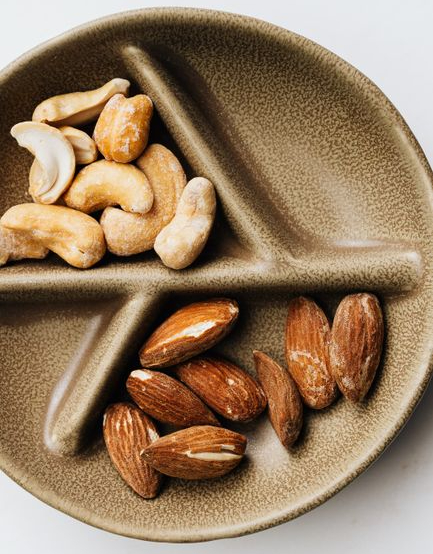
    With the holiday party and baking season upon us, we turn to the subject of nuts. We’re talking about walnuts, pecans, cashews, and the like.

    Nuts can be a powerhouse of nutrition with fiber, healthy oils, and beneficial phytonutrients that cut down on inflammation and ramp up heart health, blood sugar balance, and so much more.

    But there can be a downside to nuts, depending on how they are treated.

    Longtime readers of this blog or my book, Toolkit for Wellness, know that raw nuts are better than nuts highly processed in unhealthy oils.

    But raw nuts still have factors in them that can inhibit proper absorption of nutrients and can contribute to unhappy tummies.

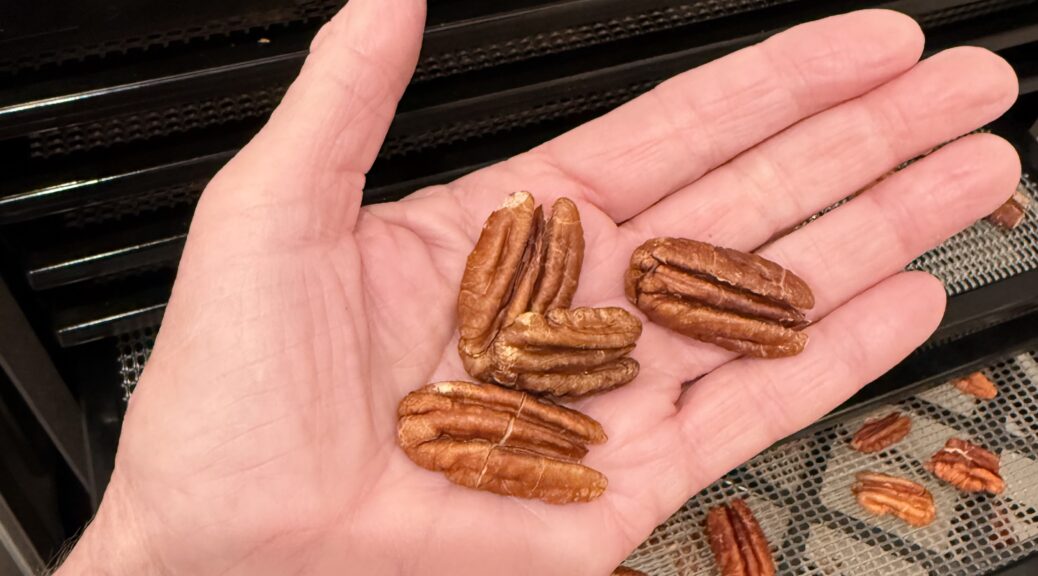
    Enter the ‘activated nut,’ which has been handled in such a way as to eliminate the anti-digestive phytates and to activate beneficial digestive enzymes instead.

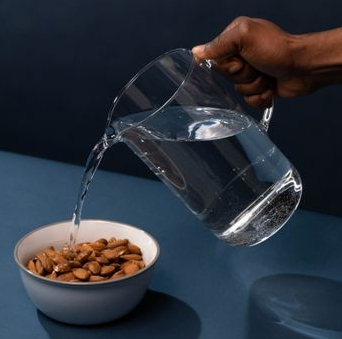
    Activated nuts require soaking first, followed by dehydrating.

    To soak:

    Use glass bowls, if possible. Metal bowls may discolor but can be cleaned using Bar Keeper’s Friend.

    Dissolve approximately 1 teaspoon of sea salt in 6 cups of water, add raw nuts, and soak. I buy large bags of nuts, so this requires multiple bowls.

    Walnuts, almonds, and pecans can soak 12+ hours; cashews take just 6 hours. The water will turn quite brown.

    Using a large colander, thoroughly rinse soaked nuts and spread out on towels. I have a large bath towel dedicated to this process – some staining may occur. Roll the towel up and let the towel soak up any extra moisture for a few minutes.

    If nuts are to be used in a blender or food processor, they can be used now; but if long-term storage is desired or if they are to be used in baking, dehydrating is necessary.

    To dehydrate:

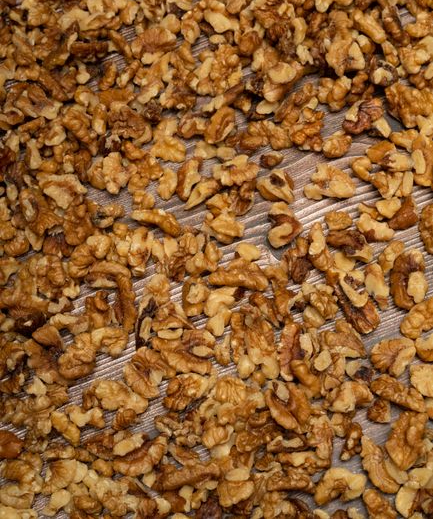
    If using a dehydrator, spread nuts out in a single layer on each tray needed, allowing for good circulation of air around the nuts. Do not crowd them. Place trays in dehydrator. Set temperature to 115-125 degrees and set timer for 12 hours.

    When time is up, check for dryness and lengthen the time as needed. Store in a closed container in a cool environment.

    If using the oven method, spread nuts out on large baking trays without crowding them. Set the oven at its lowest temperature. Since oven heat will be higher than the dehydrator, the drying time will be shorter. Stir nuts every hour and check for crispness after 6 hours.
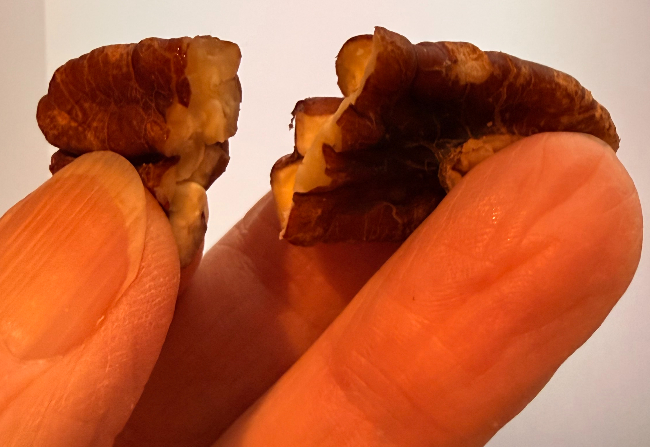
    Freezing nuts will lengthen their shelf life.

    The resulting nut is light, crisp, and brimming with goodness!
    I mostly activate pecans and walnuts, but now that my trusty dehydrator has found a place in my new home, I will return to activating almonds and cashews again as well. The brown outer covering of the soaked almond can be pinched off prior to dehydrating if desired.

    Happy, healthy snacking and baking –

    Deidre

    Sharing is caring! Use the options under the MORE button below to share with family and friends.
    Humming for Hummus

    Do you realize we are well into the holiday season?

    The weekend before Halloween, I couldn’t find a parking place at the local grocery store! The scene before me resembled the mad crush we see just prior to Thanksgiving that continues all the way through New Year’s.

    Party season is already in full swing!

    Whether we are geared toward gathering to cheer for our favorite team, celebrating an event or holiday, we do love a good party.

    Spanakopita

    And that means having a few recipes up our sleeves to whip up in short notice that will please a crowd. Sure, it’s handy to have some packaged frozen delights we can throw into an oven with practically no effort – mini quiche and spanakopita are some of our favorites – but sometimes I just want to share something I have made.

    I do not remember how the concept of pumpkin hummus entered my mind. I may have been looking to pair pumpkin with cream cheese, but what I discovered is way better!

    After the requisite Google search for recipes, I compared the ingredients of the top two, side-by-side. You can see how my quick notes were dripped on and blurred.

    The result is a hybrid of the two, plus my personal tweaks.

    This dip was a big hit at a recent gathering and is so easy to pull together with ingredients that are generally on hand. The exception to that might be tahini – which may not be a staple for you, but it’s easily found at the grocery store.

    The recent discovery of pumpkin chips at Trader Joe’s provided the perfect dipping complement to this savory pumpkin hummus.

    The downloadable recipe is below. You pretty much throw everything into the food processor and that’s it!

    As recommended by one recipe, I drained the chickpeas/garbanzo beans, saving the liquid. After the initial blitzing of the ingredients, I added about 2 Tablespoonfuls of the liquid to thin the hummus just a bit.

    The second time making this, I remembered to process the hummus even more. The first time around, I noticed some thin slices of chickpeas had escaped becoming pureed.

    Tasting the hummus before finishing is crucial. Both times, I determined a few more shakes of all the spices would be beneficial to boost flavor.

    I opted to use a few shakes of red cayenne pepper in lieu of red pepper flakes – my goal was to give interest to the naturally gentle profile of hummus – not to give a spicy kick that would result in reflux.

    Pepitas/pumpkin seeds provide the perfect garnish after swirling the plated hummus with the back of a spoon and drizzling a bit of extra virgin olive oil on top.

    Yum for hummus!

    In health –

    Deidre

    Don’t miss a single issue of foodtalk4you. You can subscribe to this pop-up-and-ad-free blog by scrolling to the bottom of your device or by going to the upper left of your computer screen to fill out the simple subscription form. We will not bug you with endless come-ons, and we will never share your information. Thanks.