Category Archives: Recipes

Kitchari – Oh, So Good For You!

The spellings of Kitchari and the recipes are varied, but the purpose remains the same.

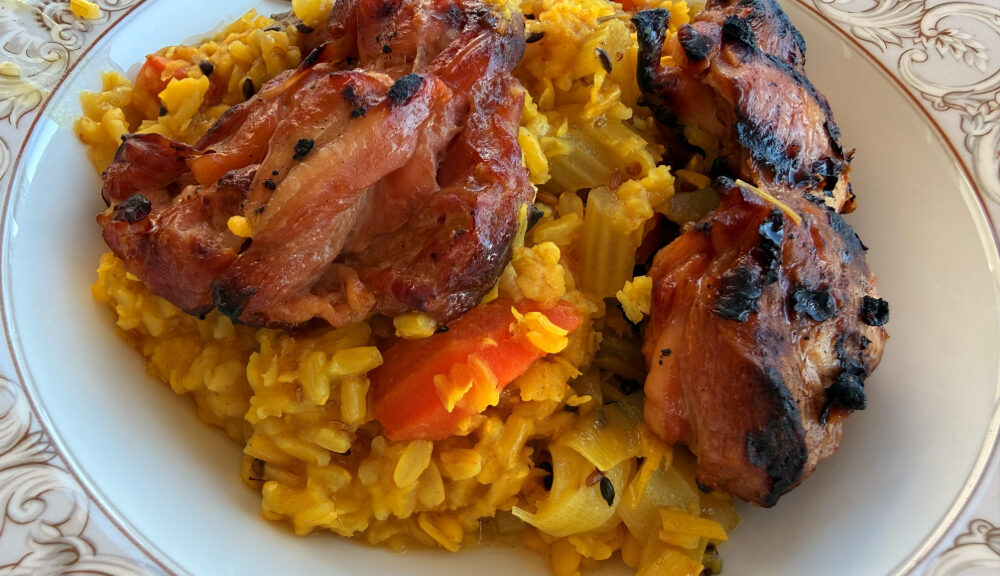
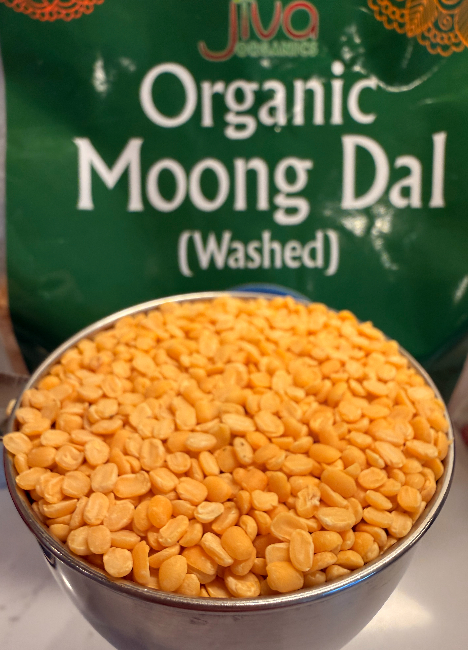
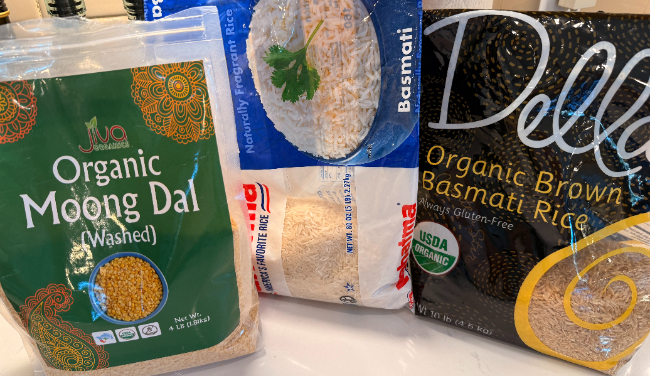
Kitchari is a traditional Ayurvedic dish made with a mixture of yellow moong dal (split mung beans), Basmati rice, and spices – all created for the purpose of a gentle reset and cleansing of imbalances within the body.

People reminisce about their mothers making this dish for them – especially when they were not feeling well or were still recovering from being sick. Kitchari became comfort food for them – not unlike the beloved bowl of chicken soup.

This one-pot meal is gentle on the tummy and can assist in any kind of needed reset – after long travels, in times of mental or physical stress, at the change of seasons, or during or after illness.

There is always the option of adding 2 cups of vegetables, and I often serve this with a side of easy-to-digest protein such as grilled chicken.

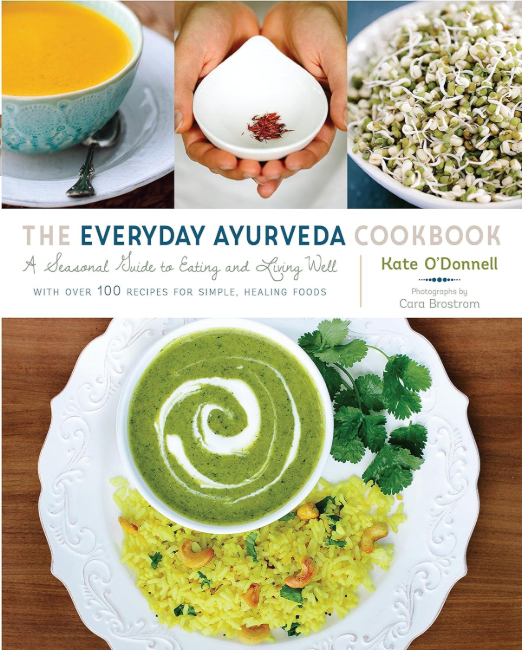
Combining elements from The Everyday Ayurveda Cookbook by Kate O’Donnell, Banyon Botanicals, Real and Vibrant, and urbanfarmie.com, I settled on my own version. The complete downloadable recipe will follow.

Kitchari is pretty straight forward and hassle-free, but before starting the Kitchari, it is important to get the spices prepared for both the cooking phase and the tempering phase.

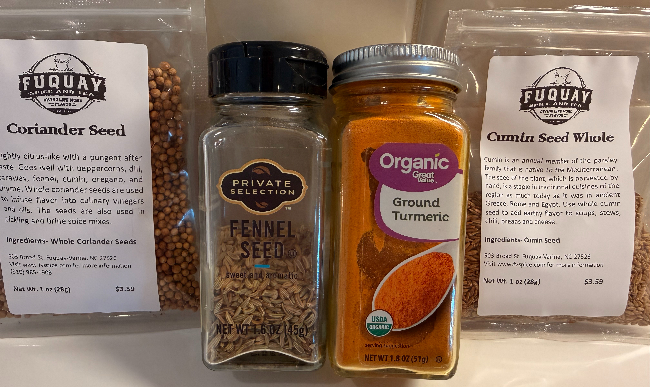
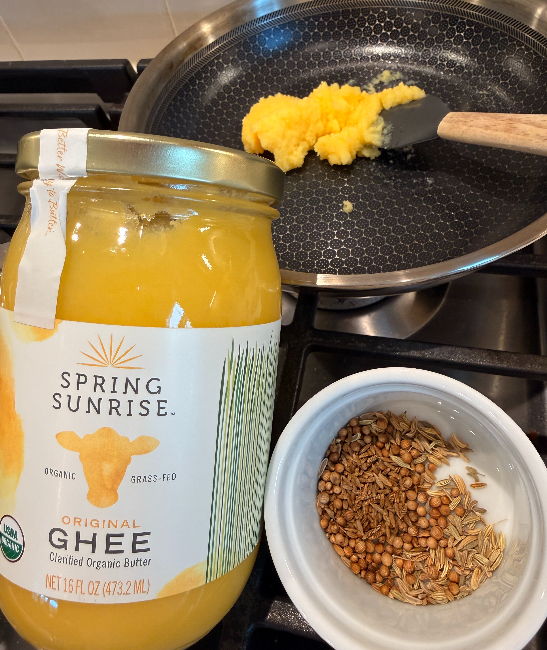
Ayurvedic recipes are often prepared using whole seeds of cumin, coriander, and fennel that are either dry roasted, cooled, and ground fresh or lightly cooked in ghee until they become fragrant and start to pop. Powdered turmeric is also an essential.

These spices are a traditional blend that enhances and balances digestion.

The rice and split mung beans will cook in water with the spice blend, and near the end of the cooking time, a tempering of spices will be added. Prepare the spice blend in advance and have the tempering spices set up and ready to be warmed in the ghee for the finish.

Mung beans and the split moong dal beans were new to me, but they have now earned a permanent place in my pantry. They are rich in protein, essential amino acids, antioxidants, fiber, and important nutrients that may help support healthy blood pressure, lower LDL cholesterol, and reduce heart disease risk.

Because mung beans are high in resistant starch, fiber, and protein, they also help slow the release of sugar into the bloodstream, making them an excellent choice for supporting stable blood sugar levels.

Find out more about the benefits of mung beans here.
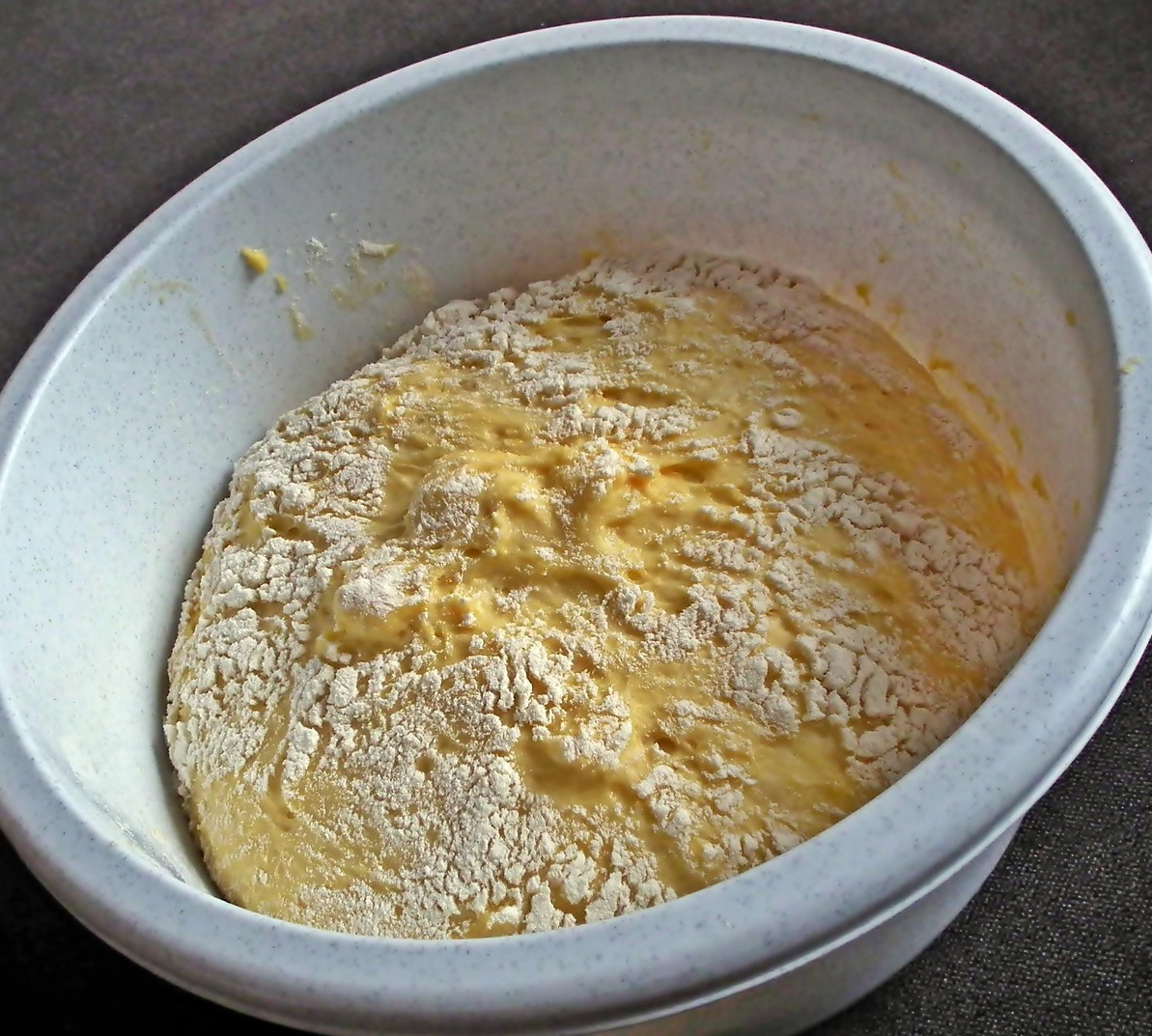
There are choices to consider before preparing Kitchari:

First the rice. For tender tummies, white basmati would be the choice, but I chose brown basmati today because we wanted the added fiber and slightly nutty taste.
Your second choice is the proportion between the rice and the (split yellow) moong dal. 1:1, 1/2 cup rice to 1 cup mung beans, or 1 cup rice to 1/2 cup mung means. My first version relied upon more rice; today’s version was equal parts of each – which we liked because it felt less starchy.

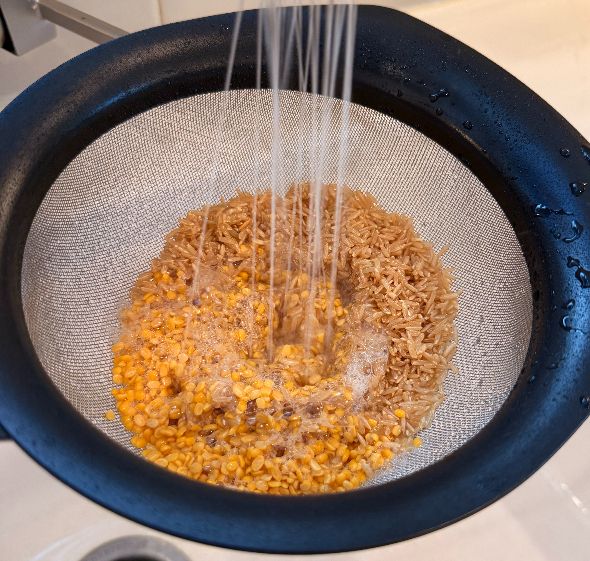
Some recipes advise rinsing the rice/mung bean mixture well before cooking, while others also advise soaking for 30 minutes after rinsing to shorten cooking time and increase tenderness. Today, I rinsed the dry grains using a fine mesh strainer and then let them soak by putting the strainer over a bowl of fresh water while I prepped the vegetables.

To learn more about the pros and cons of rinsing rice, check out this.

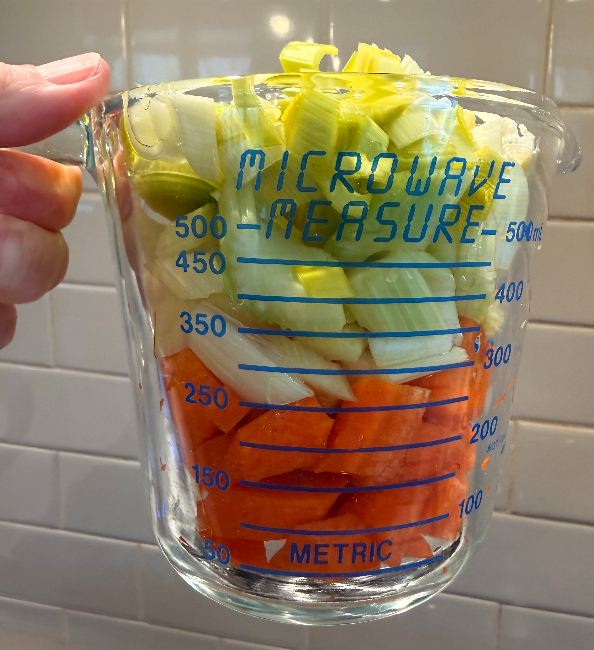
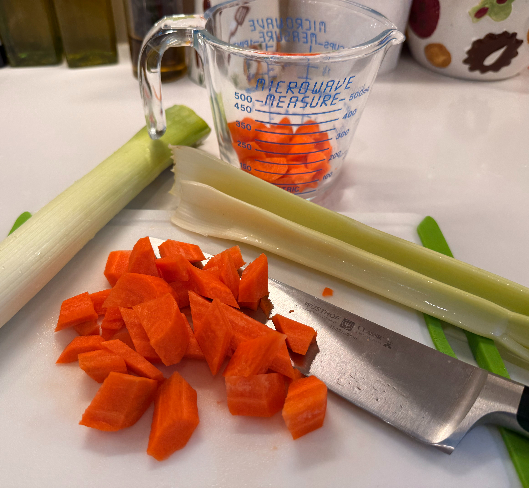
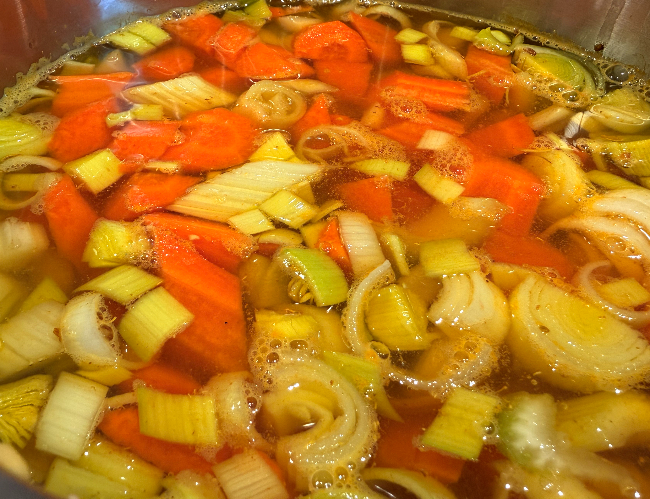
I wanted to add the optional 2 cups of veggies using what I had on hand: leek, carrot, and celery. Nothing dramatic. I put all of these in the pot at the beginning. If you have leafy or more tender additions, those can be put in after the initial 20 minutes of cooking.

Many eat Kitchari on a regular basis, and others will eat this for lunch and dinner for several days as a part of a digestive reset.

As you get familiar with the basic recipe, changing ratios, rebalancing spice blends, and offering a variety of colorful vegetables with different textures will make this a fun go-to flavorful, yet gentle, comfort food that will balance out your system.

In health –

Deidre

Download the delicious Kitchari recipe below!

Dear readers: I am exploring the Substack platform as a means of sharing this foodtalk4you content and to offer additional regular posts helpful to family caregivers. Many people are following multiple authors on Substack already, and I wanted to make information more accessible to those folks who prefer reading on that platform. Check me out on Substack here.

One Small Step …

… leads to a gentle transformation.

Vata, Pitta, and Kapha – discovering my dosha seemed like the most sensible first step. Have you Googled, “what dosha am I,” yet?

Haha! I’m still noodling around with that one! Banyanbotanicals.com is proving to be a useful, user-friendly, free resource which also offers an assortment of free next steps, including yoga variations, to help each dosha.

Those questionnaires are a bit tricky because it’s important to understand the point of reference for each item and to be mindful of how you used to be – versus how you are now, including when you were at your most-balanced state – versus – when you were stressed.

Taking assessments from various free sources would be beneficial to more accurately zero-in on your dosha. Banyan recommends retaking the quizzes to get a feel of how you are changing over time.

So, doshas aside, the text I am using to launch my journey of self-discovery is Kate O’Donnell’s The Everyday Ayurveda Cookbook.

Just starting with her introduction, I was already finding myself skipping around her excellent book to learn more about each of the concepts I was discovering. There are bookmarks and Post-it notes everywhere!

Which brings us back to the grounding philosophy I have always used: make any changes to your life in teeny, tiny bites that are sustainable.

As you get comfortable with that one thing, add another teensy adjustment – that is hardly even a blip on your radar – and incorporate that into the fabric of your life.

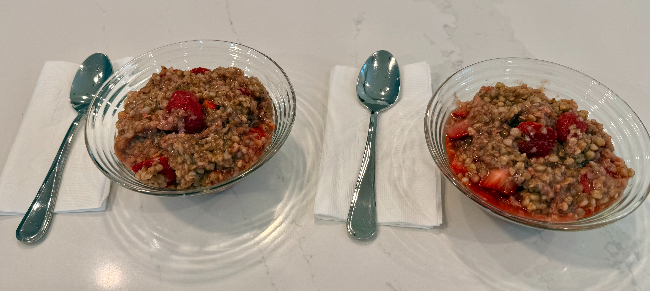
I chose to start with a simple cooked breakfast cereal.

Longtime readers of foodtalk4you know my fascination with variations on the theme of ‘gruel’ – often adding everything I could think of (chia, ground flax seed, pumpkin seeds, etc.), and using what I called ‘sweet spices’ plus vanilla, to trick the palate into not needing much or any added sugar.

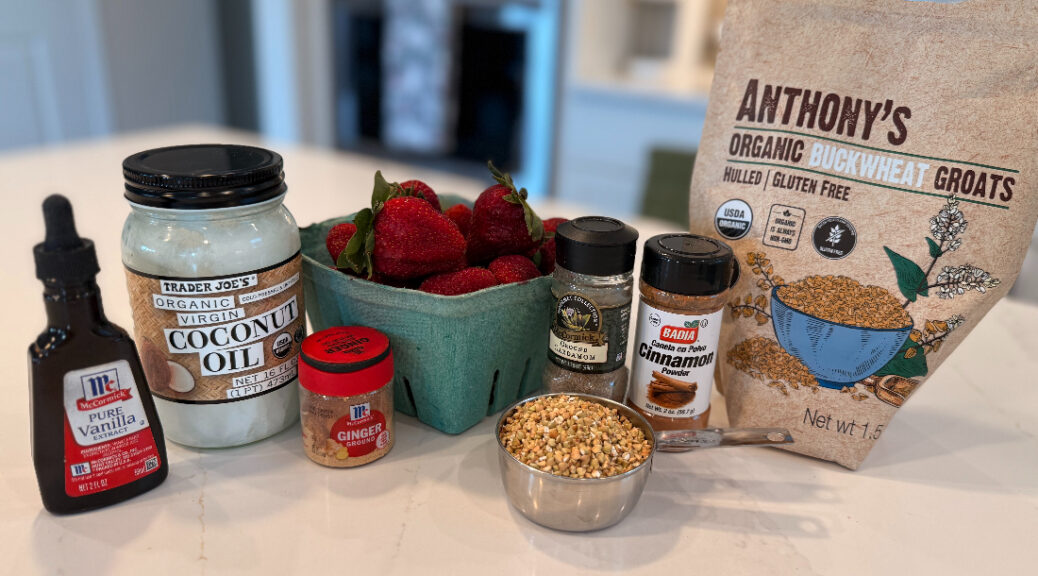
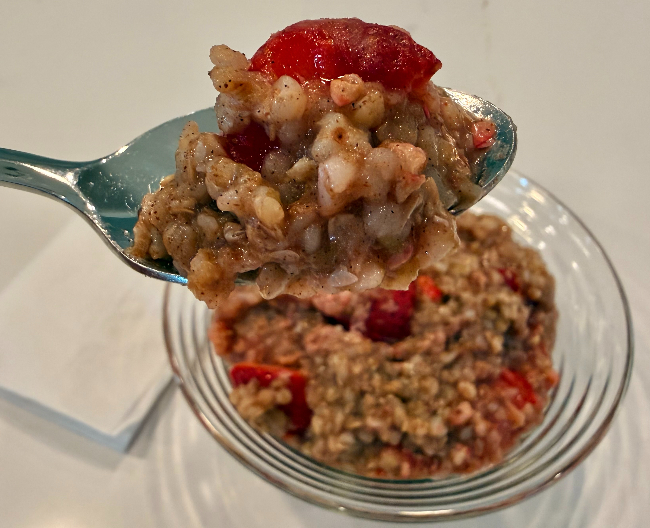
The recipe in O’Donnell’s book features just buckwheat – not a grain, but a seed – and is gluten-free. She flavors this with her trio of sweet spices: cinnamon, ginger, and cardamom, plus vanilla extract.

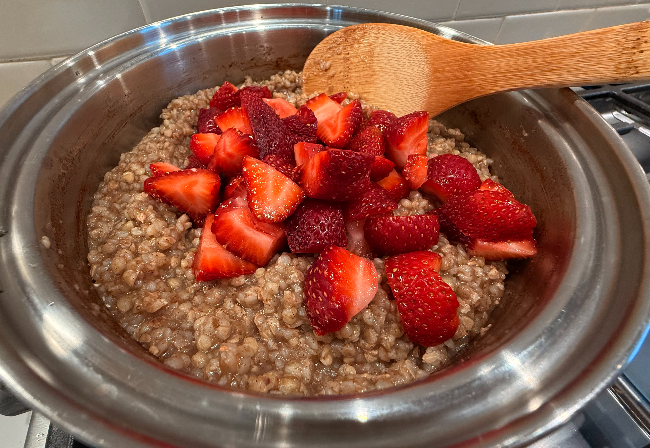
After the 1/2 cup of buckwheat, sweet spice mix, and 2 cups of water have cooked, 1 cup of fresh strawberries and 2 teaspoons of coconut oil are stirred in and allowed to rest for 5 minutes before serving – along with 1/4 cup toasted, unsweetened-shredded coconut sprinkled on top of the two bowls.

The next time we made this, we found adding a pinch of salt to be beneficial.

Holding power? Our bowl of her ‘berry buck-up cereal’ not only felt easy on the tummy, but sustained us all morning.

The rational behind this?

Seeking more ways to calm inflammation, which is the first domino to fall leading to ‘dis-ease.’

Whether you believe yourself to be sensitive to the effects of gluten or not, gluten is pro-inflammatory.

Take a tiny first step to start your day with less inflammation on board. You don’t have to jump into the deep end – just a few times a week. Start there.

Our next post will dive into a balancing staple food of Ayurveda, which is good anytime, anywhere, for anyone – and is perfectly neutral, adaptable, and an excellent resource for the change of seasons we are all experiencing right now.

In health –

Deidre

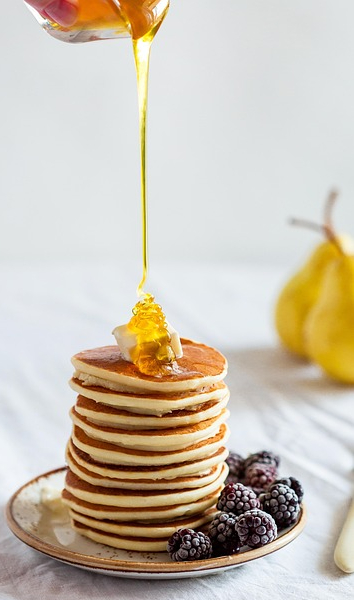
The Pancake of Champions

Once again, I saw something healthy and yummy online and tried it – tweaking the ingredient’s list as always.

There was already a great lineup of gluten-free, high-protein ingredients, but when I was through, it kind of looked like a recipe list for Kitchen Sink Pancakes!

Any recipe for pancakes – for me – is more of a concept recipe. I might not have all the ingredients and/or I might make substitutions.

So, knock yourself out with this one.

The core of the concept is to create pancakes that are:

1. Naturally sweet – needing no syrup to raise blood sugars

    2. Gluten-free – to be non-inflammatory and to support a happy belly

    3. High in fiber – to aide in digestion

    4. High in protein – to support growth and repair

    Pancakes are often the antithesis of these concepts because they are high carbohydrate, pro-inflammatory sponges begging for tons of butter and rivers of syrup.

    The original recipe featured 2 grated apples – which was great because I had two apples that needed to be used. I also had one last banana needing a home, so I added that, too.

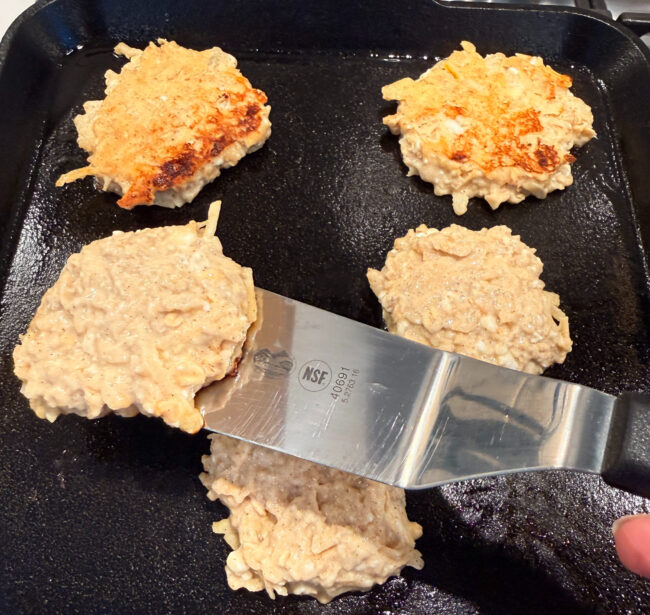
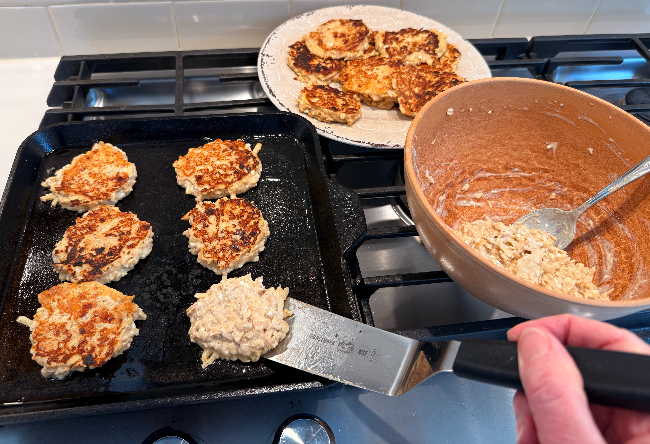
    Because of the overall course texture from the apples, oatmeal, and nuts, this pancake batter started looking more like fritter batter. So, that’s what I am calling these – pancake fritters!

    Here’s the recipe for Pancake Fritters:

    First, stir 1 Tablespoon of chia seeds into 1/3 cup of water and set them aside to soak for at least 10 minutes to use in the wet ingredients. This provides fiber and protein.

    Then, combine the dry ingredients in a large bowl:

    -1 cup gluten-free oatmeal
    -1 teaspoon of baking powder
    -1/2 teaspoon cinnamon
    -Pinch of salt
    -2 grated apples

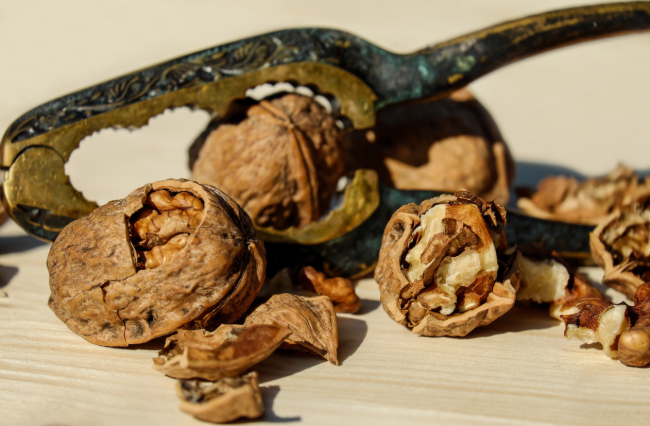
    Optional: a handful of chopped walnuts.

    In a food processor or in a bowl using an immersion blender, blend the following wet ingredients until smooth:

    • Soaked chia seed mixture
    • 2 eggs
    • 1 Tablespoon of olive oil
    • 2/3 cup of Greek yogurt
    • 2/3 cup of cottage cheese
    • 1 banana, broken into pieces
    • Vanilla to taste

    Add the wet ingredients to the dry ingredients, and combine. Add milk of choice to thin batter as needed or, if the batter is too thin, stir in 1-2 Tablespoons of gluten-free flour at a time, until desired consistency is achieved.

    Rather than normal-sized pancakes, I created smaller, fritter-sized ones, using a spoon to pat down a small scoop of batter placed on the hot, oiled griddle.

    This recipe will feed a small crowd, so feel free to cut this in half – I will, next time, for the two of us.

    The apple, banana, vanilla, and cinnamon help create a ‘sweet’ profile that simply doesn’t need syrup.

    Please download this delishiness, PANCAKE FRITTERS, HERE:

    The high-fiber and protein elements support lasting fullness and satisfaction.

    There are so many ways to adjust this according to personal preferences and what is in the cupboard or fridge at the time.

    I hope you enjoy it!

    In health –

    Deidre

    If you enjoy this post, you can subscribe with the knowledge that, after the three two emails and one personal introduction, you will just receive an email each Tuesday with the link to the new post. No annoyances in your inbox and no irritating pop ups while you read.

    To subscribe, scroll to the bottom of your device or to the left top on your computer screen to fill out the form. Thank you!


    Raspberry Tarts

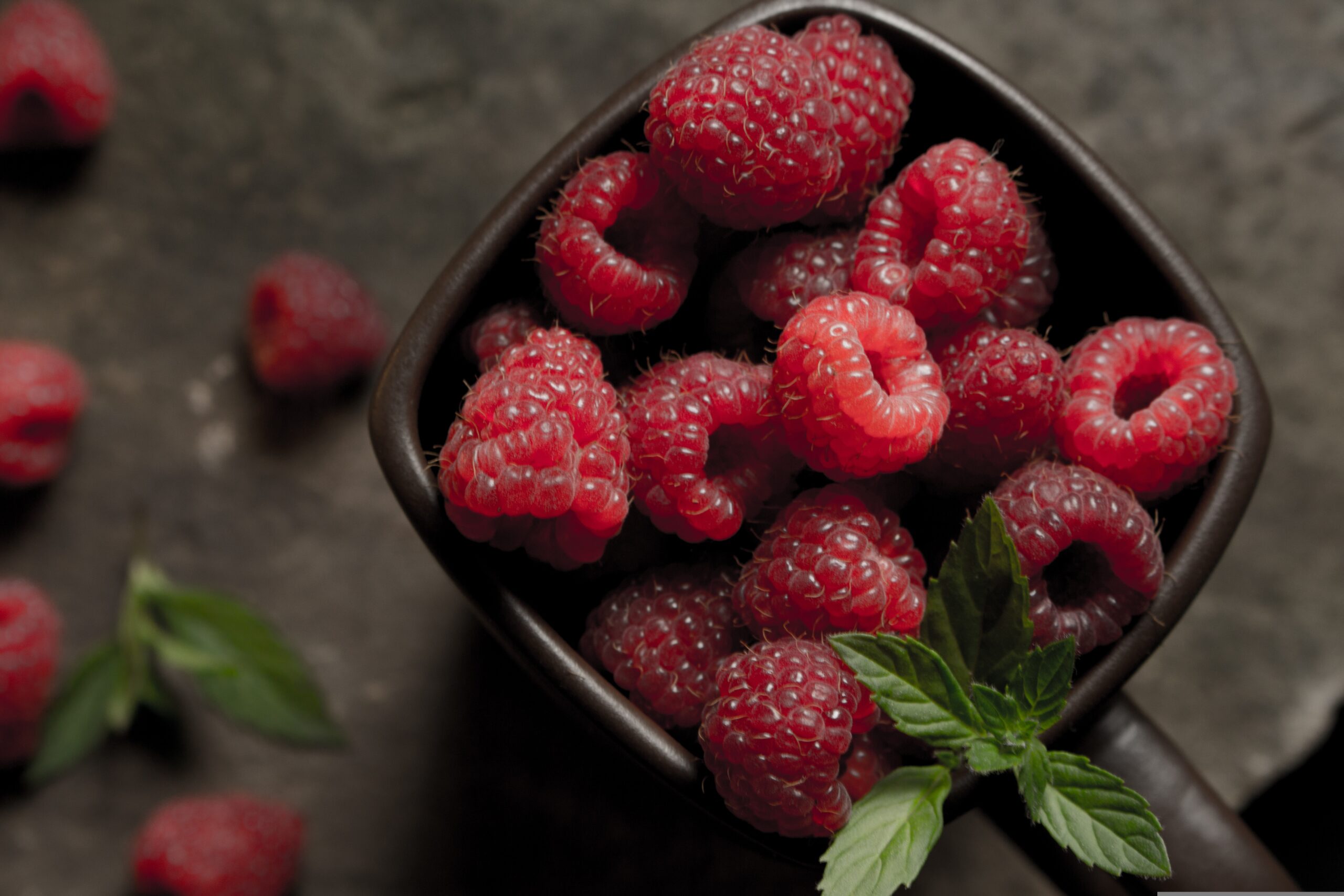
    Ahhh … Raspberry!

    Raspberries are beloved by many; although there is a small cadre of folks who aren’t fans of their little, tiny seeds. That’s why I put cooked raspberries through a strainer at Thanksgiving, when I add the resulting raspberry ‘essence’ to my cranberry sauce.

    Today’s recipe does not require using a strainer. In fact, additional seeds are added just seem to melt away!

    Back story: I was in search of a tasty, light dessert which would offer the right touch of sweetness after a hearty meal that would not overwhelm.
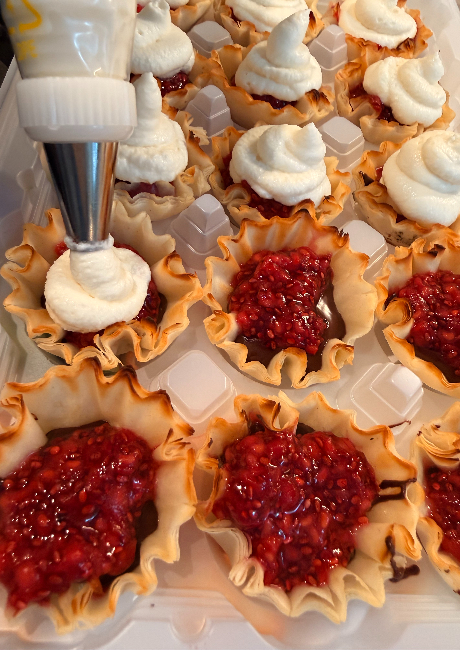
    Inspired by a reel in my Facebook feed that paired raspberries with chia seeds in a crustless frozen dessert, I went in a different direction using phyllo shells – adding a creamy layer – and using refrigeration to set the creation.

    The result was everything I had hoped for, and our guests are still raving about it!

    Here’s what you do using two packages of the Athens Foods Mini Phyllo Dough Shells.

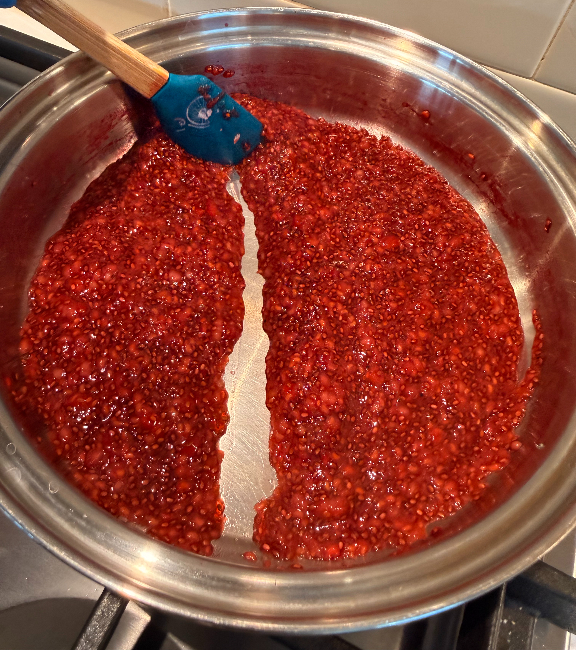
    Start with a cup of fresh raspberries in a small saucepan with 1 Tablespoon of chia seeds, along with 4 Tablespoons of water over medium low heat, stirring constantly to combine and to help break apart the raspberries.

    Continue to cook until the stirring spoon/spatula leaves a drag mark that lingers in the sauce as it crosses the pan’s bottom. (PIC)

    Remove pan from heat when desired thickness is achieved. Let cool while you prepare the chocolate.

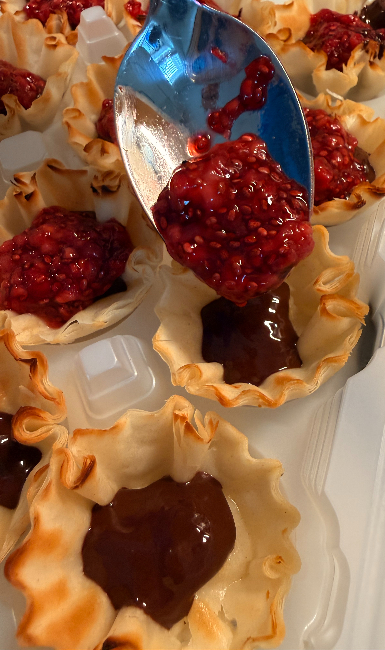
    Melt approximately 2/3 of a bar of a 60 – 72% dark chocolate. I used Ghirardelli’s 60% chocolate, but Lindt’s 72% works fine.

    Using the tip of an iced-tea spoon, a baby’s spoon, or some other very small spoon, (PIC) put just enough melted chocolate in the mini-tart shell to cover the bottom.

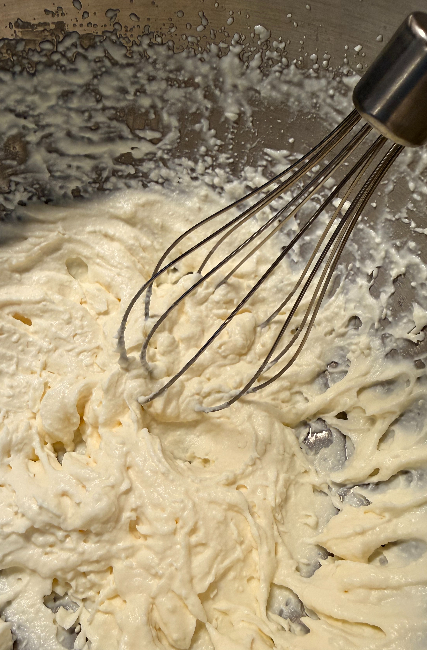
    Prepare the creamy filling. Using the whip attachment to your hand mixer, beat 1/3 cup ricotta cheese, 1/2 cup cream cheese and 1/2 cup powdered sugar. I added a few drops of vanilla extract. The consistency needs to be suitable for piping and holding its shape. (PIC)

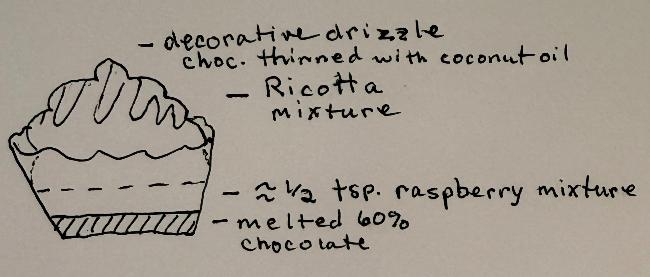
    Continue assembling the tarts by spooning in about 1/2 teaspoon of the raspberry mixture – enough to cover the chocolate. (PIC)

    Fill a piping bag fitted with a size 12 round tip with the cheese mixture. Pipe filling onto each tart. (PIC)

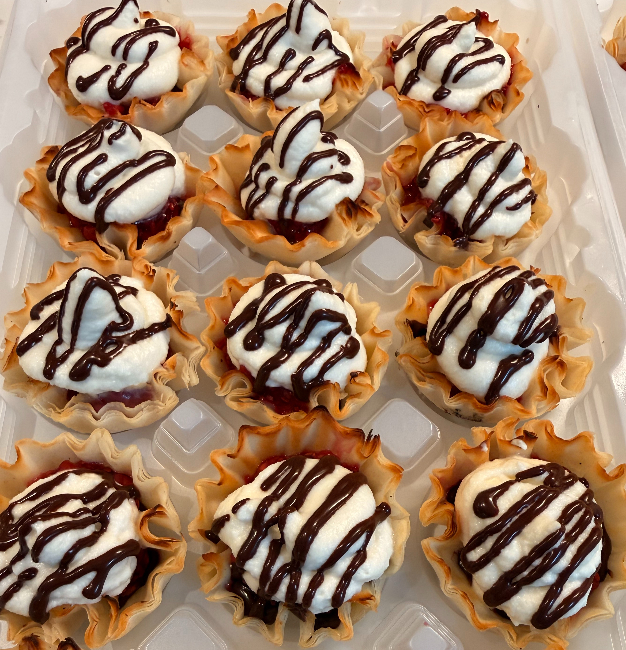
    There should be leftover chocolate, (otherwise, melt a bit more), adding just a touch, (1/2 pea-sized amount), of coconut oil to thin it for drizzling.

    Fill a small piping bag or a plastic sandwich bag. Snip off the tip/corner to create a small opening for drizzliing.

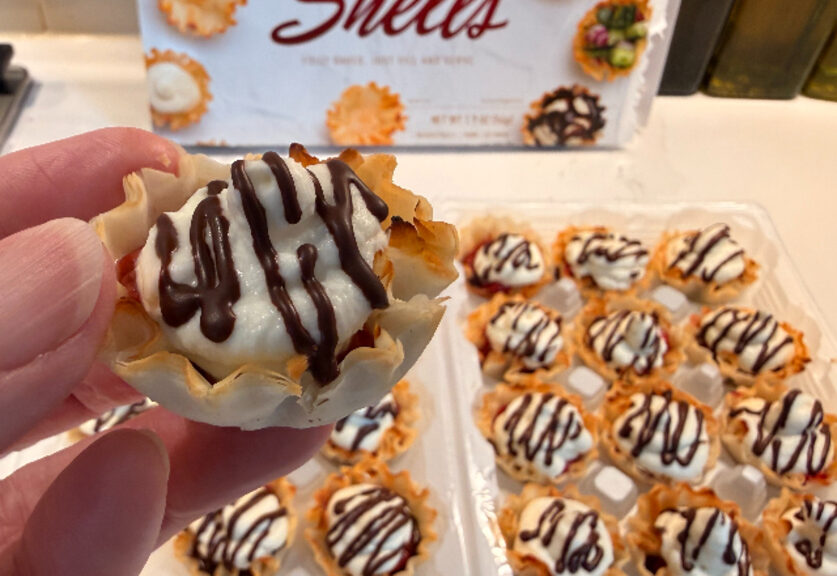
    Don’t skip the drizzle – it is the WOW Factor! (PIC)

    There you have it. The perfect light dessert with a big visual appeal!

    The chia seeds thicken the raspberries, yet there is no noticeable seediness. Refrigerate for 30 minutes to set the tarts before plating.

    Dark chocolate, chia seeds, raspberries – why, one could almost call this health food!

    In health –

    Deidre

    Shout-out to my friend, Cathy DuFour, who helped me finalize the proportions for the cheese mixture!

    Download our Raspberry Bite Tarts recipe below:

    Next week, I’ll share a recipe that promises to be The Pancake of Champions! Thank you for being a reader and for sharing our ideas with your family and friends using the options under the MORE button below.

    Welcome 2026 With Hasselback Taters!

    Sheree and I wish everyone a deeper sense of personal health, inner balance, and daily joy!

    My Word of the Year is “Captain,” and I can hardly wait to paint my little sign to set up as a reminder. When I get that done, I’ll share with you how I will apply this one word.

    Have you set your intention for 2026 yet? Let me know in the comments.

    Okay!

    New topic for the new year!

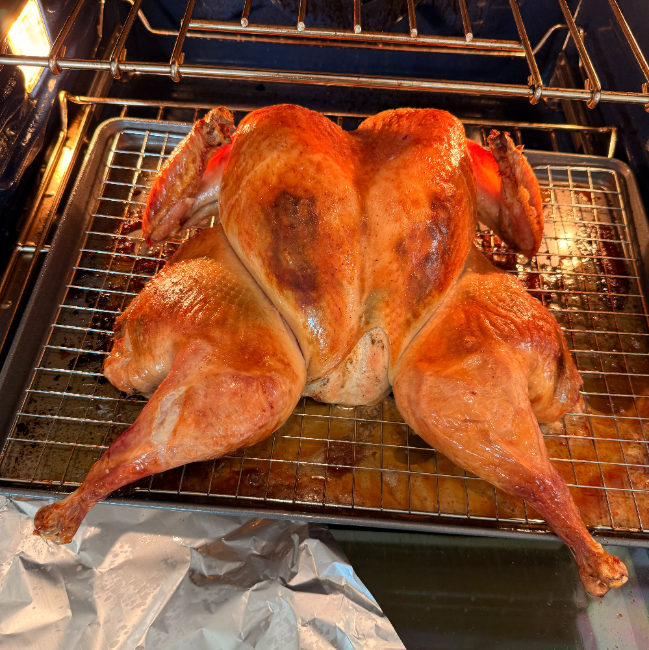
    First, we conquered ‘spatchcocked,’ when we opened the turkey for a more even roasting process that yielded the juiciest meat ever for Thanksgiving.

    It’s interesting to note that ‘spatchcock’ comes from 18th century Ireland and Britain. It seems it is a shortening or degradation of the phrase, “to dispatch the cock.”

    Cock, meaning a rooster or young chicken.

    Dispatch, meaning to prepare or cook it quickly – and, in my imagination, to grab the bird, put an end to it quickly and efficiently, and then prepare it.

    Just saying.

    In any case, we have DISPATCH + COCK, to become SPATCHCOCK – which perfectly describes how removing the backbone and flattening the bird will cook it faster and more evenly. Doing this was popular in the taverns of old to save time and was often done with chickens and small game birds.

    Now, for today’s strange term, Hasselback baked potatoes!

    No. Nobody is getting hassled.

    Hasselback potatoes comes from a place name and a dish that was created there.

    In the 1950s, a chef-in-training named Leif Elisson, developed this technique at the Hasselbaken Restaurant in Stockholm, Sweden.
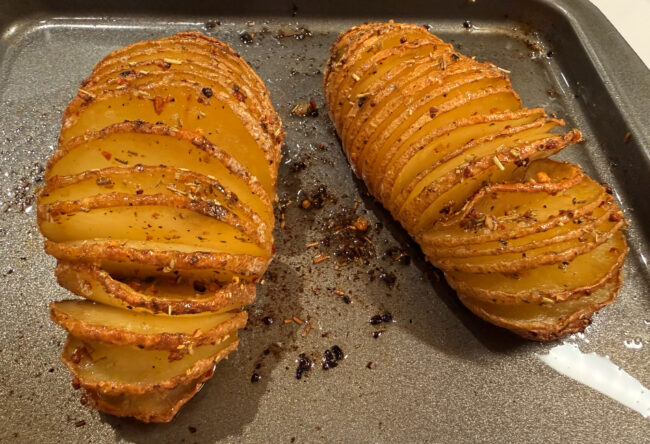
    Potatoes were thinly sliced – but not all the way – then baked until crispy on the outside and tender on the inside.

    While being aware of this technique for years, I resisted doing it. I can only ask myself ‘why,’ because not only is it easy to do, but it’s a rip-roaring crowd pleaser!

    Here are the steps for Hasselback Potatoes (Download Below):

    Preheat oven to 425 degrees F.

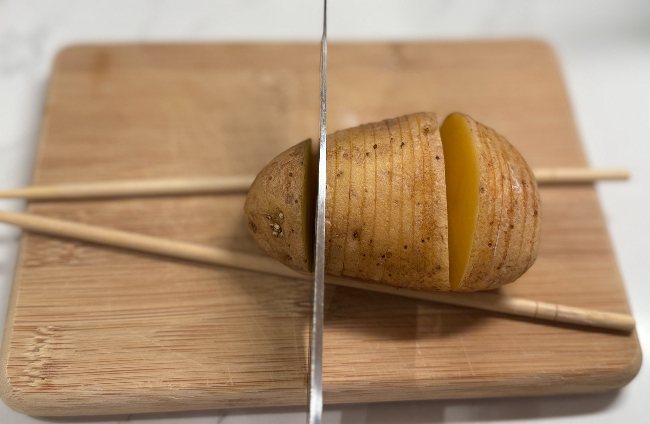
    Using a cutting board, place the potato between chopsticks, which will prevent the knife from completing the cuts. Make thin cuts – about 1/8 inch thick (a little less than 1/2 cm). Be mindful that the first cut or two may go through all the way depending upon the shape of the potato, so stop cutting at the ends before hitting the chopsticks.Melt a combination of butter and Extra Virgin Olive Oil to equal 2 tablespoons for two potatoes – along with salt, pepper, and seasoning of your choice. I like to add snipped chives or a herb mixture.

    Brush half the oil on top of the two potatoes.

    Bake uncovered in a baking dish for 30 minutes.

    That’s it! Serve and enjoy!

    Visually appealing and oh, so yummy!

    In health –

    Deidre

    We welcome our new subscribers and hope our weekly tidbits help you out – one meal, one breath, and one movement at a time!

    Rescued by Chia Seeds

    Well, I didn’t intend to ignore my obligations, but that’s what I almost did.

    Our trusty editor, Sheree, just sent a subtle message, “Hey … got a post for me?”

    In other words, “Hey, the Tuesday post is going out, uh … tomorrow … we don’t have anything for our readers!”

    Gulp!

    After completing the Caregiver Summit last week I had been preparing for since early spring, we celebrated the positive reception of my message, packed our bags, and headed out the next day for a long-awaited trip to Disney World!

    The cold snap that is affecting the mid-Atlantic on up north, is also affecting the southern Atlantic states. The low in Kissimmee, Florida, where we are staying is 36 F tonight – and the high tomorrow is slated to be 59 F.

    We abandoned the idea of seeing the fireworks-light show-water fountain display at Epcot again tonight because we didn’t bring parkas. To top that off, Sheree is making snow men in West Virginia!

    Since our accommodations have a full kitchen, I knew we would be taking many of our meals in whenever we were not at Disney World.

    How do you approach vacation cooking and meal prep?

    Our first stop coming into Kissimmee was to go to the grocery store.

    To compliment the assorted nuts, peanut butter, crackers, chia seeds, fresh berries (blueberry, black berry, and raspberry), and apples, we picked up almond milk, two bottles of protein-boosted smoothies, coffee, gluten free cereals, eggs, Greek yogurt, gouda, sliced ham, sour dough bread, mustard, butter, hummus, and guacamole.

    Travel and eating out can create havoc for the “smooth functioning of the intestines.”

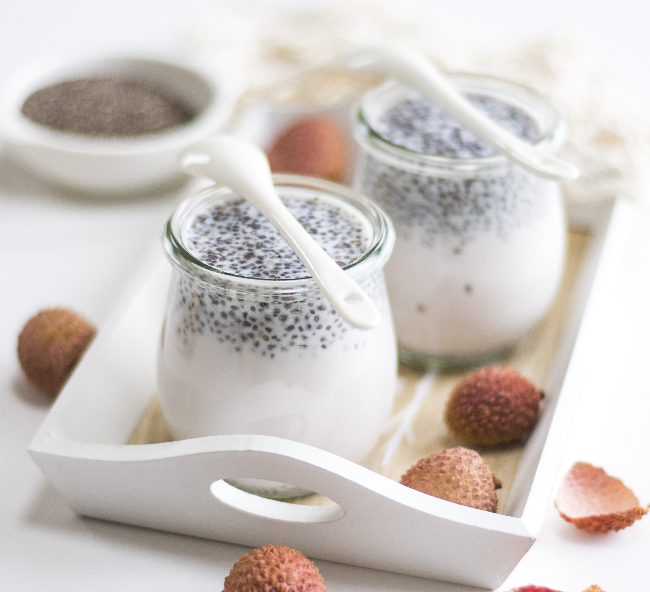
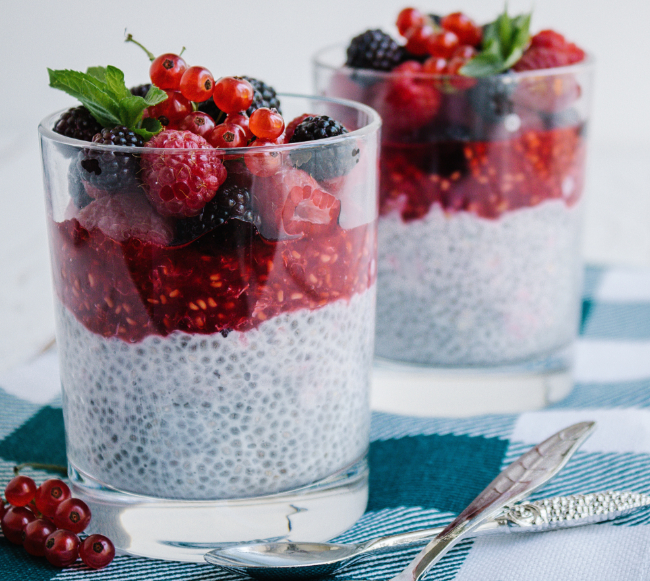
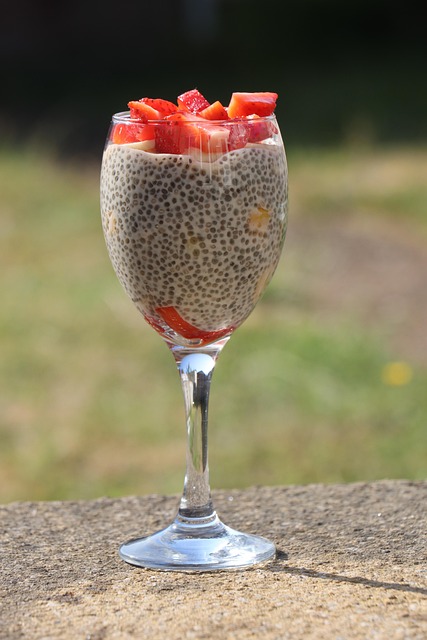
    To ward against getting “backed up” we regularly consume chia seed pudding. Recipes vary, but this is what I am currently doing:

    Chia Seed Pudding – per individual serving

    In a small bowl or a small glass (that will hold about 10 ounces) stir together:

    2-3 tablespoons chia seeds

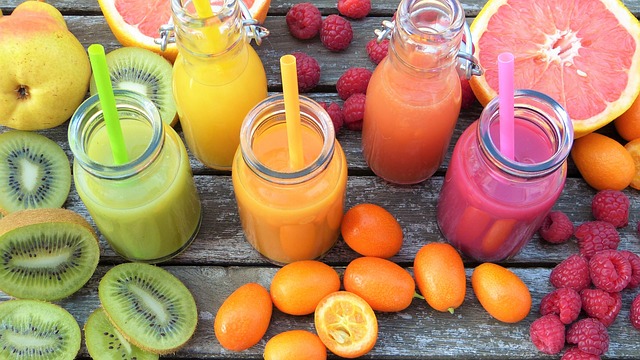
    1/3 – 1/2 cup flavored smoothie (these can contain added sugar, so I don’t use a lot)

    1/3 – 1/2 cup almond milk

    2 – 3 Tablespoons of Greek yogurt (can be fruit flavored to blend in with the flavor of smoothie you use)

    A handful of fresh fruit that compliments the other flavors.

    Download your copy of Chia Seed Pudding below:

    Depending upon the amount of chia seeds and fluid used – and if you refrigerate this overnight – this “pudding” can thicken enough to need a spoon or can be thin enough to drink.

    Along with proper daily hydration, and eating whole food with lots of fiber, chia pudding can be our best friend – especially when traveling.

    In health –

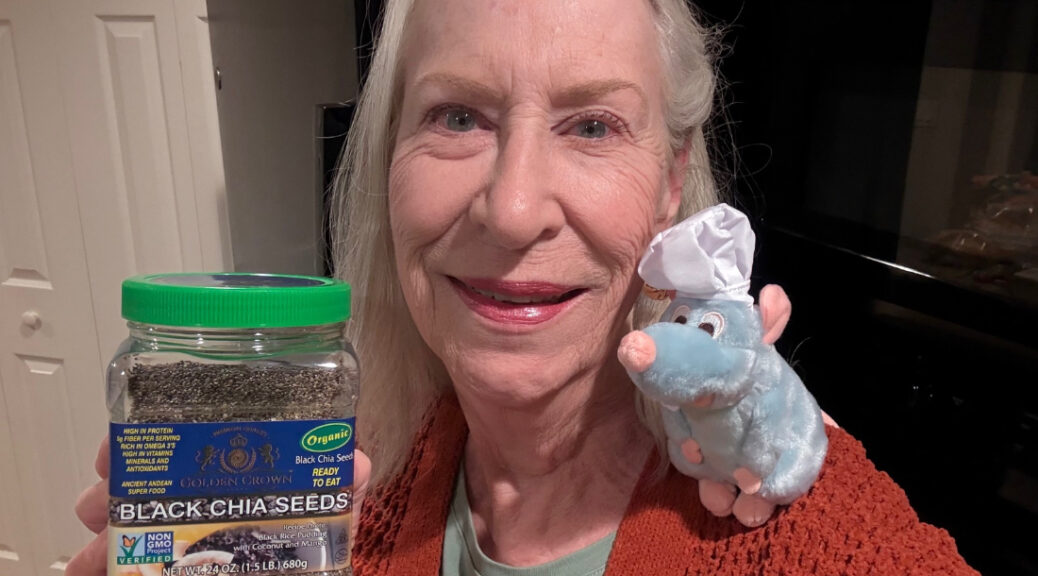
    Deidre and Remi

    I sure hope we get to see Remi’s Ratatouille Show in Disney this week! They were having technical difficulties today.

    Hunting For Hummus? We Can Help!

    We have always liked hummus. We buy it frequently, and I have made it on several occasions. But, during our Tucson adventure recently, we ate A LOT of it!

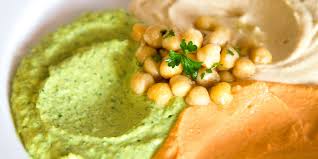
    A restaurant soon became our favorite in Tucson because of its hummus. The Pita Jungle offers an appetizer plate with three kinds of the delicious spread, along with enough pita bread to dip into – until your heart’s content.

    And we did!

    Especially our two-and-a-half year old grandson. We couldn’t figure out which of the three flavors was our favorite – tried as we might.

    So, upon returning home, we longed for some delicious hummus – homemade, please! Why? Because, there is a difference!

    Good hummus is, generally, thick and smooth; and gives you the impression of heaven – floating on a pillow-soft, airy-like fluffy cloud! Ahhhh!

    After perusing old messenger entries – I use messenger like a filing cabinet for things I want to remember. Do you do that? I found a video of some fellow who seemed to know his way around a chickpea, so I followed his lead.

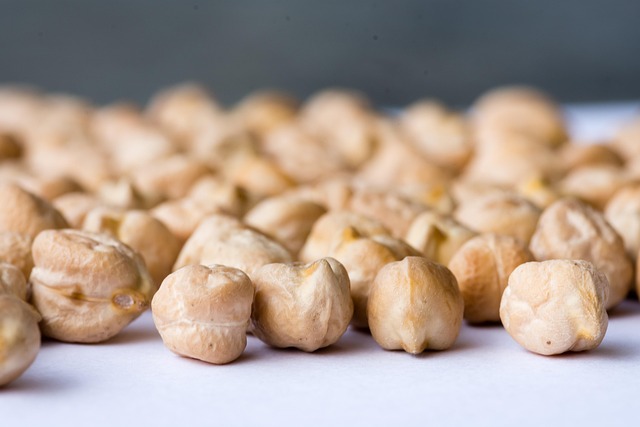
    While the ultimate recipe for hummus may start with dried chickpeas/garbanzo beans, I used the tried-and-true canned variety, using two cans – equal to 3 cups – of chickpeas.

    Before throwing those chickpeas into the food processor, however, there’s a secret first step!

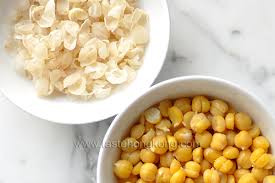
    After draining and rinsing the canned chickpeas, put them into a saucepan, cover with water, and add 2 teaspoons of baking soda. Bring it up to boil and lower it to a simmer for 5 minutes. The hull of each chickpea will be released.

    When the time is up and the hulls are starting to release, remove the pan from the stove, pour off the water and the hulls, adding cold water to stop the cooking and aid in eliminating the hulls.

    In practice, the hulls were released but did not easily pour off. I ended up skimming and manually removing most of the hulls as I placed the hull-less chickpeas into the food processor. I look forward to improving my pouring-off technique. If most of the hulls are removed, that will be fine.

    To the food processor with the chickpeas, add the juice of one lemon, ½ teaspoon of Kosher salt, and 2 cloves of garlic.

    Process this mixture for 7-8 minutes. The mixture will get warm so don’t be alarmed.

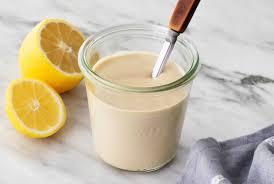
    Add 1/3 cup of tahini to the mixture, about 2 tablespoons of extra virgin olive oil, and process for 3 more minutes. The tahini is added late because its proteins would otherwise cause a coagulation of the hummus, which cannot be reversed.

    Taste test for any desired seasoning adjustments. We felt it needed more salt and garlic, but I couldn’t add more raw garlic at this point, so we settled on a couple additions of garlic salt with a tasting in between additions to guide us. A few pulses from the food processor did the trick.

    Transfer this very warm cloud of hummus to a bowl and place it in the refrigerator for three hours to cool.

    Please feel free to download the recipe below!

    At home, we used tortilla chips to scoop up this delightful dish. It can be stored for a week in the fridge.

    We served it at a party we held; and are now enjoying lunches consisting of a few chips and our hummus and some leftover homemade guacamole – you couldn’t ask for a healthier snack.

    I hope you will try making your own cloud of hummus soon!

    In health – (and hummus!)

    Deidre

    November is National Family Caregiver month! Show your love and concern for caregivers you know by sharing my caregiver series with them:

    Toolkit for Caregivers

    Toolkit for Caregiver Emotions

    Thanks!


    Feeling Hot, Hot, Hot!

    It’s too darn hot!

    Ninety-five percent humidity can take its toll!

    It is summertime here in the Northern Hemisphere, and finding cooler ingredients and cooking methods is a priority.

    Got meat? Grill it outside, please – no added heat in the kitchen!

    For the rest of the meal? I keep turning to salads.

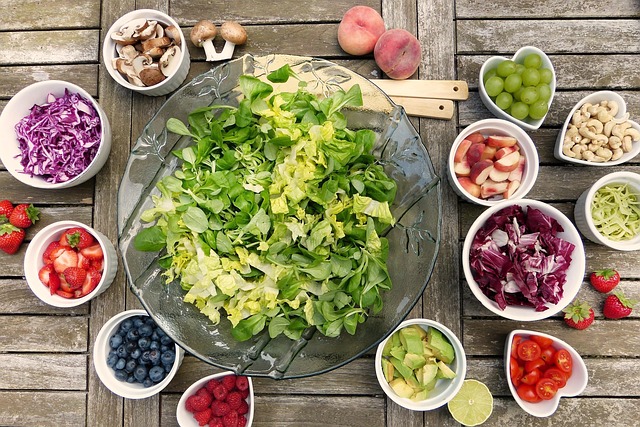
    Cool, crisp, full of veggies salads.

    No label reading is needed for these whole foods.

    Until …

    Maybe we think using bottled dressing would be an okay shortcut?

    Truth be told – I have succumbed to the sirens of bottled dressing from time to time – even the pricey ‘good ones’ touting no chemicals – but they break all the rules for homemade goodness and freshness.

    I know folks who always splash on just enough oil, balsamic vinegar, salt, and pepper to do the job.

    That sort of works for me in the winter, but …

    Lately, I’ve been into whole meal salads featuring high protein, gluten-free pastas!

    First, we need some flavorful salad dressing to pull it all together!

    So, grab a small mixing bowl and add as many of these ingredients as possible – I didn’t have the shallot, or enough lemon juice and it turned out fine!

    Dressing

    ½ cup extra virgin olive oil

    ¼ white wine or champagne vinegar

    2 Tablespoons lemon juice

    2 teaspoons Dijon mustard

    1 Tablespoon fig preserves (honey will do nicely)

    1 small shallot finely chopped

    2 cloves garlic, finely chopped

    ½ cup mixed fresh herbs: dill, oregano, basil

    Salt and pepper to taste

    A sprinkle of chili flakes, if desired

    Whisk the ingredients well and set aside.

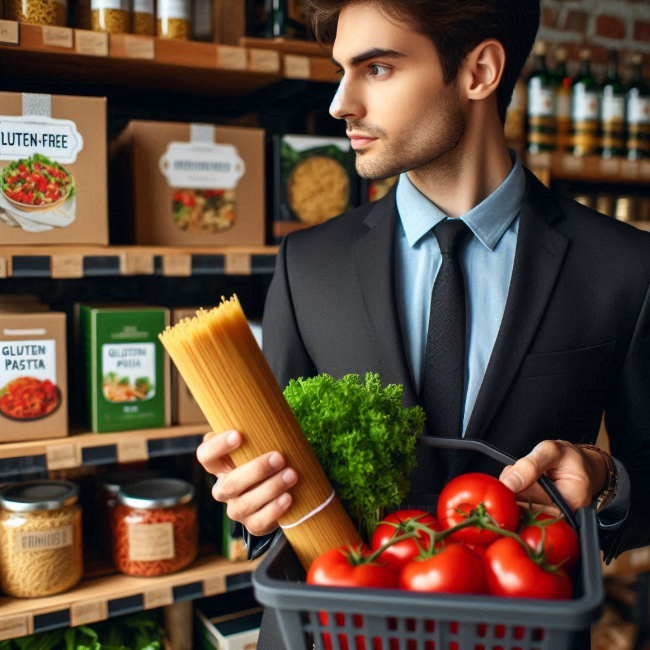
    Then, cook 1 lb. or 1 box of salad pasta of choice to al dente. I like using chickpea or red lentil pasta for the protein boost, which makes this salad a full meal.

    Once cooked to al dente, drain the pasta and toss with the dressing so all those yummy flavors can coat each piece!

    Assemble a montage of ingredients in an over-sized salad bowl such as:

    Two heads of Romaine lettuce, sliced

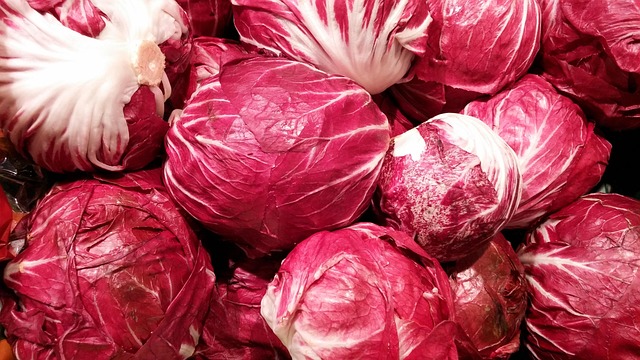
    ½ of a head of Radicchio, sliced

    A sampling of nitrate-free salami, pepperoni – I use turkey based when available – sliced

    1-2 cups of cherry tomatoes, halved

    A variety of olives, torn or sliced

    Bell pepper, chopped

    2-4 Tablespoons of sliced pepperoncini

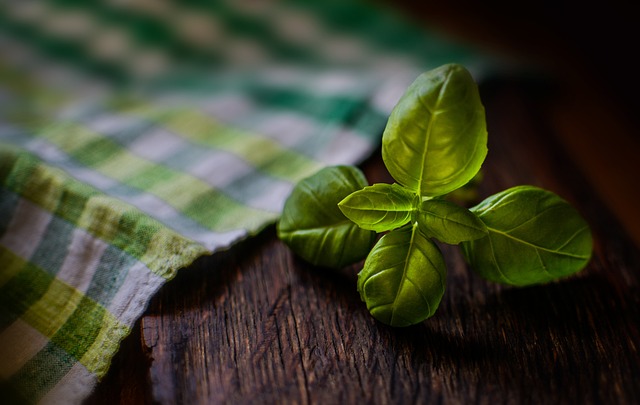
    A cup or more of fresh basil leaves, torn

    A cup of mozzarella cheese balls – these may be halved or quartered if they are not mini size

    A cup of provolone cheese, cubed

    Shaved Parmesan to taste

    As a concept recipe, I never always have all the ingredients, so types and quantities of ingredients will vary.

    Once the salad is assembled and tossed, add the pasta with its dressing and toss thoroughly.

    Served fresh with the pasta still warm, or cold from the refrigerator, this is a satisfying meal!

    If we have some grilled meat, I will thinly slice the hot meat and arrange the slices on top of each serving of salad.

    Bring on the iced sangria!

    In health –

    Deidre

    Dear Readers:

    Be a surprise blessing to a friend or family member who is a caregiver by sharing this link with them to Toolkit for Caregiver Emotions. Better yet, buy a copy for them as a gift! Also, the eBook is on pre-order for $0.99 with delivery on August 19th!

    Time For Some Egg Stretching!

    Eggs have long been my main source of breakfast protein. With the price of eggs going crazy right now, I have had to rethink how many we are consuming.

    Hmmm. How do you stretch an egg?

    I’ve shared a couple recipes recently that have featured cottage cheese – an often-overlooked source of protein.

    Thankfully, I do consume dairy without serious adverse effects. A little more flatulence, perhaps, but with the price of eggs, it’s worth it – and its creamy deliciousness is delightful.

    Recently, I tried out a frittata recipe featuring sauteed minced potatoes, assorted veggies, optional meat, and – EIGHT … count them – EIGHT EGGS!

    Egads!

    I cracked one into the mixing bowl. Two. Three. Four. Gulp … Five …

    Okay! No more! Nuh-huh!

    Clearly, I needed more protein – more stuff – to complete the liquid required to pour over everything.

    Enter three dollops of cottage cheese.

    The result was yummy in every respect.

    “Wait!” you say.  Your family turns its nose up whenever you offer cottage cheese? No worries!

    Simply blitz your egg/cottage cheese mixture using an immersion blender or food processor and voila! You have turned the combination into creamy wonderfulness! No one will be the wiser.

    Shhh! Our little secret.

    Below is how I tweaked the JenSmiley@substack.com recipe. Again, this is a concept recipe that is perfect for modifications based on what’s in the refrigerator.

    How are you dealing with the rising egg prices in the United States?

    In health –

    Deidre

    Don’t miss the next post! Subscribing is easy and hassle-free. Just one email every Tuesday morning with the link to the latest post. Scroll down to the bottom on your device to fill out the subscribe form. Thank you!

    Stuffed French Toast – A Different Kind of Yum!

    Before you entertain visions of thick sliced bakery bread cleverly slit open and stuffed with a fluffy, cheesy, sweet cloud of decadence … hold it right there. We are going in an entirely different direction.

    Think yummy, eggy French toast topped with savory goodness.

    Think making it the night before, if you wish, so there’s only the baking to be done the next morning.

    Think enjoying the leftovers the next day with no effort!!!

    Yes!

    Best of all, it’s a ‘concept recipe’ that’s easily adaptable to ingredients on hand.

    We’ve developed a saying at home to describe using the last dab of anything. We call it ‘community service.’

    We are performing an act of community service when we eat that last piece of cheese, drink that last half-glass of kombucha from the bottle, or heat up that half-bowl of soup languishing in the refrigerator.

    When preparing this week’s version of Stuffed French Toast, I used the last four okra, looking for a home. The week before, there were a few seasoned oven-roasted potato wedges that were put to good use.

    As you look over this concept recipe, imagine how you might adapt the ingredients to what you have on hand.

    Stuffed French Toast

    Grease a baking dish sized to fit a single layer of the bread component.

    Place slices of bread at the bottom of the dish to cover the entire area. Sourdough is our bread of choice.

    In a sauté pan, crumble and cook ground breakfast sausage. For a square 8–9-inch glass pan, I used 1/2-pound ground sausage.

    When the sausage is almost cooked, add some diced onion, maybe bell pepper, mushrooms, fresh okra (oh, yes!), cut up leftover roasted or baked potatoes, or anything else that suits you and might assist in community service.

    Continue to cook and brown the mixture until the sausage is cooked, the onion becomes translucent, and the veggies begin to brown.

    Meanwhile, in a medium bowl, whisk eggs, a dollop of heavy cream (half and half will do, but the heavy cream is the yummiest – having said that, you can ‘thin’ the heavy cream with water if more fluid is needed). Season with salt and pepper. For the square baking dish, I used six eggs.

    Spread the sausage and vegetable mixture over the bread layer. If desired, sprinkle grated cheese on top.

    Pour the egg mixture evenly over the top.

    At this point, you can cover and refrigerate this overnight or put it into a preheated 350-degree oven and bake for 30-35 minutes or until a knife comes out clean.

    Download the recipe here:

    The square pan made four servings – two for now and two for later! I left it in the oven a few minutes too long and things got a bit browner than I had wanted, but we both agreed that it was a yummy breakfast!

    Now, that’s community service in the kitchen at its finest!

    In health –

    Deidre

    Next week, I will post the results of my following my own advice: how I found energy and a mindset that changed the path of my day. Make sure to subscribe to foodtalk4you so you will not miss a single post delivered directly to your in-box Tuesday mornings!