

Category Archives: Blogging for good health!

So … Did You Spatchcock Your Thanksgiving?

The results are in!

What could go wrong?

We enjoyed the largest turkey I’ve ever bought.

Harboring serious doubts about having a pan and rack large enough to accommodate the bird all splayed out; but comforted by the adequate instructions I shared last week – bolstered by the insider tips my daughter gave over the phone.

After securing the great find of a Wilton Mega Baking Sheet and Cooling Grid at Walmart, I felt pretty confident going into the spatchcocking arena.

Plus, I had a partner in crime to share duties.

The day before Thanksgiving, I removed the mostly thawed bird from the fridge, freed it from the package, and placed it on the cutting boards set up on the counter. In retrospect, I should have covered the countertop with an opened up garbage bag, and used just one large cutting board on top.

Things will get juicy. Have paper towels close at hand.

After removing the apparatus, keeping the drumsticks together and setting the neck and giblets aside for gravy duty, we were ready!

The newly purchased poultry shears worked flawlessly. This process does take some strength – especially when navigating around the bird’s hip juncture. Thanks to my daughter’s tip, we manipulated the leg every which-a-way and avoided plowing through the bones themselves.

I often used a two handed grip on the shears to avoid hand strain.

My sweetheart and I took turns and we assisted each other when doing the cut around the turkey’s hip. Once the spine was removed, we repositioned the turkey with the inside surface facing the cutting board.

Some describe flattening the breast like CPR. I followed my daughter’s excellent tip of getting up on a step stool to put myself above the bird while doing ‘compressions.’

But, unlike CPR, the goal IS to hear and feel the crunch as the breast cage gives way and flattens out.

Still with me?

Somewhere in here, we were either ready to never eat turkey again or to become vegan!

But there was a high-five moment as we celebrated our accomplishments, and we were very grateful for this turkey feeding us and our friends the next night – and providing us with meat for countless meals in the future.

After salting both sides, and separating the skin over the breast, thighs, and any where we could reach to deposit the savory butter compound (unsalted butter, garlic, herbs combined by the food processor), it was time to let the salt do its job overnight as the uncovered turkey in its huge pan somehow found a way into our refrigerator to rest.

Whew!

The baking process was just as I shared with you last week in the link to Crispy Edges. Pull the turnkey from the fridge two hours before oven time to bring the meat closer to room temperature.

When it’s time to roast the turkey, preheat the oven to 425F. Roast the spatchcocked turkey for 45-60 minutes. When the breast hits 150-155F, pull it and let it rest for at least 30-60 minutes.

Resting results in juicy meat! I covered mine with foil to retain heat; but after resting, the turkey can return to the oven set at 400F for 10-12 minutes to bring back up to temp.

Then, be prepared for the juiciest breast meat ever as you slice it to serve.

Thank you, Mr. Turkey! We honored your life by making your meat the best we have ever eaten!

In health –
Deidre

Spatchcock For the Holidays? Hmmmm

If you have never heard of it before, ‘spatchcock’ just sounds intimidating. Is it a person, place, or thing? Some terrorizing Halloween thing?

Buahahahaha!

No. It’s just something I have never attempted to do before: splitting open poultry to lie flat for grilling or baking.

And now … I’m going to do it for the first time on this year’s Thanksgiving turkey!

Thanks to the inspiration from Chef Josh Gale and his Crispy Edges emails to me, I have been emboldened to do turkey like a pro this year!

Chef Josh convinced me that baking a whole turkey dooms the breast meat to be dried out – that by opening the bird to lie flat allows all areas to cook more evenly by being equidistant from the heat source. To top it off, spatchcocking dramatically shortens cooking time!

But could I spatchcock a turkey? After watching this video, I ordered my heavy duty kitchen shears to do the job.

It’s going to be fun following a new way of handling turkey baking this year. While I have not had horrible problems with dry breast meat using the old method, I wanted to take out the cross-your-fingers-and-hope-for the-best approach during the big reveal … I mean, you never know …

Next week, I will share the results.

In the meantime, I highly recommend a (paid) subscription to Chef Josh’s Crispy Edges. He is full of easy prep ideas and recipes that ramp down the stress factors and ramp up flavor, making for a relaxed cook and host!

Always happy to share something good!

What will you be sharing with others in this season of Thanksgiving? I especially enjoy the tradition of going around the table sharing with others what each person is thankful for.

Gratitude creates happier hearts and minds, rebalancing the hormones that circulate in our bodies.

Do you practice gratitude? Regular entries into a simple gratitude journal or slips of paper in a blessings jar can make a big difference in how we feel about and react to the circumstances of our lives.

Happy Thanksgiving to one and all – whenever you celebrate it – and please know Sheree and I are grateful for all of you!

In health –
Deidre


Humming Eases Your Vagus Nerve

A couple weeks ago, we were humming for hummus, when I shared a recipe and a technique that would yield the softest, fluffiest hummus ever.

Today, we are going to hum to de-stress!

BACKGROUND INFORMATION

But first, we will return to the classroom to review a very important nerve.

Behold, cranial nerve number ten, the vagus nerve. It’s also known as the “great wandering nerve” because it leaves the cranium and connects to organs throughout the body. The vagus nerve helps regulate essential functions like heart rate, breathing, and digestion.

By controlling those processes, the vagus nerve contributes to the body’s “rest and digest” response – helping to calm the body after stress, lower heart rate, improve digestion, and keep the body in balance.

But, what’s your point about that vagus nerve, you ask? Good question!

What if you could stimulate the vagus nerve to increase its calming effects?

We know yoga and mindfulness meditation help to calm the body as does breath work such as box breathing.

Today, we are adding humming to breath work because it increases the calming, de-stressing effects on the vagus nerve.

When we breathe through our noses, we produce nitric oxide in our nasal cavities. Nitric oxide (NO) is a colorless gas that relaxes the inner muscles of the blood vessels. This relaxation causes the blood vessels to widen and increases circulation.

This humming breath work I describe causes an increase in the release of nitric oxide, which in turn, increases the calming effects it has on the total body.

Nitric oxide also helps your body keep inflammation in balance. Under normal conditions, it supports healthy circulation and can calm inflammation; but when you’re fighting an infection, your immune cells make extra nitric oxide to help kill off bacteria, viruses, fungi, and parasites.

TECHNIQUE

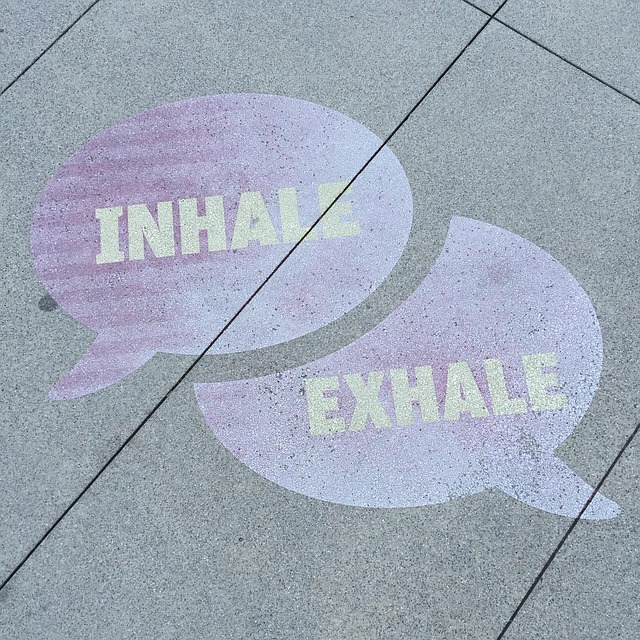
A simple explanation for this humming technique is found HERE and simply involves inhaling through the nose and slowly exhaling by making a humming sound with closed lips.

You will notice a mild vibration happening in the nasal cavity. Interestingly, you can modulate the pitch of your humming to move the vibration more to the nasal cavity.

That’s it. Inhale through the nose and exhale as a hum – nice and easy, using all your breath.

It’s an excellent opportunity to practice “belly breathing” by feeling your belly fill and push out as you inhale, and gradually “deflate” as you expel your breath in a hum.

Gargling warm water is another technique that can contribute to the nasal vibrations that enhance nitric oxide release.

Check it out HERE.

In the world of yoga, this technique is called Bhramari pranayama or “humming bee breath” and is beautifully demonstrated in the following video.


People have shared that regular vagus nerve stimulation through humming has been very successful in their ability to control chronic anxiety. Whatever your need, try some regular humming to get your day started off on a calmer note.

You know, there are no extra hours in the day to add a few minutes – even if it’s something good for me – but as a student of “habit stacking,” I now have a calming activity to do while I brew coffee each morning!

I have it on good authority that humming along with your toddlers as they play cars/trucks/tractors with their motor sounds going, can count for your regular daily humming sessions!

Humming along in health – Deidre


Rescued by Chia Seeds

Well, I didn’t intend to ignore my obligations, but that’s what I almost did.

Our trusty editor, Sheree, just sent a subtle message, “Hey … got a post for me?”

In other words, “Hey, the Tuesday post is going out, uh … tomorrow … we don’t have anything for our readers!”

Gulp!

After completing the Caregiver Summit last week I had been preparing for since early spring, we celebrated the positive reception of my message, packed our bags, and headed out the next day for a long-awaited trip to Disney World!

The cold snap that is affecting the mid-Atlantic on up north, is also affecting the southern Atlantic states. The low in Kissimmee, Florida, where we are staying is 36 F tonight – and the high tomorrow is slated to be 59 F.

We abandoned the idea of seeing the fireworks-light show-water fountain display at Epcot again tonight because we didn’t bring parkas. To top that off, Sheree is making snow men in West Virginia!

Since our accommodations have a full kitchen, I knew we would be taking many of our meals in whenever we were not at Disney World.

How do you approach vacation cooking and meal prep?

Our first stop coming into Kissimmee was to go to the grocery store.

To compliment the assorted nuts, peanut butter, crackers, chia seeds, fresh berries (blueberry, black berry, and raspberry), and apples, we picked up almond milk, two bottles of protein-boosted smoothies, coffee, gluten free cereals, eggs, Greek yogurt, gouda, sliced ham, sour dough bread, mustard, butter, hummus, and guacamole.

Travel and eating out can create havoc for the “smooth functioning of the intestines.”

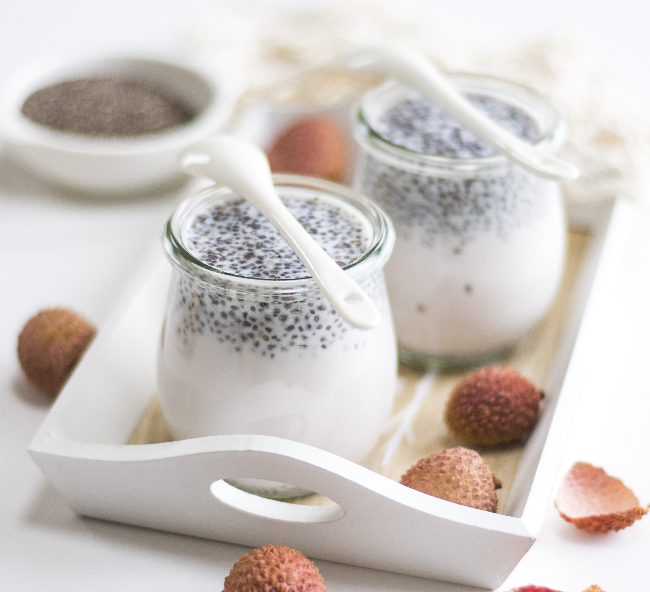
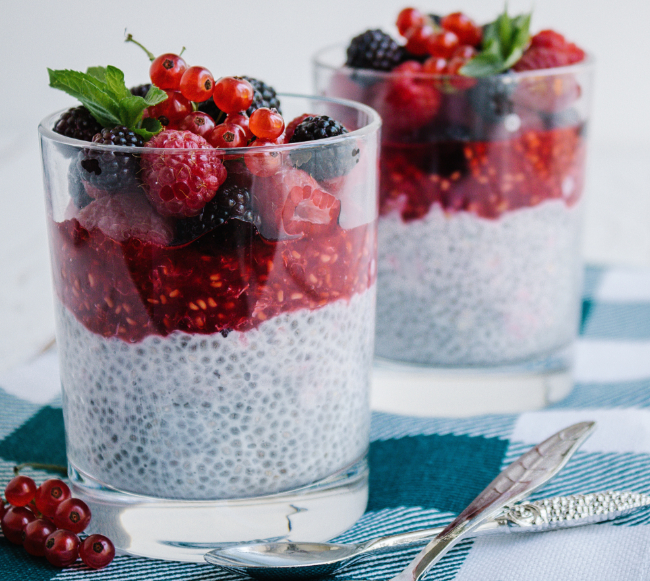
To ward against getting “backed up” we regularly consume chia seed pudding. Recipes vary, but this is what I am currently doing:

Chia Seed Pudding – per individual serving

In a small bowl or a small glass (that will hold about 10 ounces) stir together:

2-3 tablespoons chia seeds

1/3 – 1/2 cup flavored smoothie (these can contain added sugar, so I don’t use a lot)

1/3 – 1/2 cup almond milk

2 – 3 Tablespoons of Greek yogurt (can be fruit flavored to blend in with the flavor of smoothie you use)

A handful of fresh fruit that compliments the other flavors.

Download your copy of Chia Seed Pudding below:

Depending upon the amount of chia seeds and fluid used – and if you refrigerate this overnight – this “pudding” can thicken enough to need a spoon or can be thin enough to drink.

Along with proper daily hydration, and eating whole food with lots of fiber, chia pudding can be our best friend – especially when traveling.

In health –

Deidre and Remi

I sure hope we get to see Remi’s Ratatouille Show in Disney this week! They were having technical difficulties today.

Hunting For Hummus? We Can Help!

We have always liked hummus. We buy it frequently, and I have made it on several occasions. But, during our Tucson adventure recently, we ate A LOT of it!

A restaurant soon became our favorite in Tucson because of its hummus. The Pita Jungle offers an appetizer plate with three kinds of the delicious spread, along with enough pita bread to dip into – until your heart’s content.

And we did!

Especially our two-and-a-half year old grandson. We couldn’t figure out which of the three flavors was our favorite – tried as we might.

So, upon returning home, we longed for some delicious hummus – homemade, please! Why? Because, there is a difference!

Good hummus is, generally, thick and smooth; and gives you the impression of heaven – floating on a pillow-soft, airy-like fluffy cloud! Ahhhh!

After perusing old messenger entries – I use messenger like a filing cabinet for things I want to remember. Do you do that? I found a video of some fellow who seemed to know his way around a chickpea, so I followed his lead.

While the ultimate recipe for hummus may start with dried chickpeas/garbanzo beans, I used the tried-and-true canned variety, using two cans – equal to 3 cups – of chickpeas.

Before throwing those chickpeas into the food processor, however, there’s a secret first step!

After draining and rinsing the canned chickpeas, put them into a saucepan, cover with water, and add 2 teaspoons of baking soda. Bring it up to boil and lower it to a simmer for 5 minutes. The hull of each chickpea will be released.

When the time is up and the hulls are starting to release, remove the pan from the stove, pour off the water and the hulls, adding cold water to stop the cooking and aid in eliminating the hulls.

In practice, the hulls were released but did not easily pour off. I ended up skimming and manually removing most of the hulls as I placed the hull-less chickpeas into the food processor. I look forward to improving my pouring-off technique. If most of the hulls are removed, that will be fine.

To the food processor with the chickpeas, add the juice of one lemon, ½ teaspoon of Kosher salt, and 2 cloves of garlic.

Process this mixture for 7-8 minutes. The mixture will get warm so don’t be alarmed.

Add 1/3 cup of tahini to the mixture, about 2 tablespoons of extra virgin olive oil, and process for 3 more minutes. The tahini is added late because its proteins would otherwise cause a coagulation of the hummus, which cannot be reversed.

Taste test for any desired seasoning adjustments. We felt it needed more salt and garlic, but I couldn’t add more raw garlic at this point, so we settled on a couple additions of garlic salt with a tasting in between additions to guide us. A few pulses from the food processor did the trick.

Transfer this very warm cloud of hummus to a bowl and place it in the refrigerator for three hours to cool.

Please feel free to download the recipe below!

At home, we used tortilla chips to scoop up this delightful dish. It can be stored for a week in the fridge.

We served it at a party we held; and are now enjoying lunches consisting of a few chips and our hummus and some leftover homemade guacamole – you couldn’t ask for a healthier snack.

I hope you will try making your own cloud of hummus soon!

In health – (and hummus!)

Deidre

November is National Family Caregiver month! Show your love and concern for caregivers you know by sharing my caregiver series with them:

Toolkit for Caregivers

Toolkit for Caregiver Emotions

Thanks!


Camino

Traditionally, a Camino journey refers to the Camino de Santiago, The Way of St. James, which is a Christian pilgrimage to the Cathedral of Santiago de Compostela in Spain, where the remains of the Apostle James are said to rest.

Pilgrams walked this route as an act of faith, repentance, and devotion as they sought forgiveness, spiritual renewal, or a closeness to God.

Today, the spiritual roots of taking this Camino have evolved into a profound, personal experience that draws people from all faiths, perspectives, and walks of life.

The actual Camino in Spain is a walk of hundreds of miles, testing physical strength, determination, and fortitude. Yet, the steady rhythm of walking becomes meditative, allowing travelers a chance to listen to their inner voice.

Also, the Camino is a shared experience as fellow pilgrims from around the world connect with conversation, kindness, and the shared effort – creating a sense of community amid simplicity, generosity, and mutual care.

Little did I know that our family’s week-long visit to Tucson, Arizona, and specifically, the Arizona-Sonora Desert Museum, would become our Camino experience.

From the moment we arrived at the hotel campus, we had started our journey. Every day, we absorbed this new terrain, climate, flora, and fauna.

We learned how to correctly pronounce “Saguaro” – the remarkable sentinels of the desert landscape. Hint: replace the “gu” with a “w” to make: “sa – war- o.”

This incredible cactus reminded us of nature’s time frame – so different from our frantic, connected world. You can appreciate this landscape more deeply by viewing this growth chart for the Saguaro:

Then, we capped off our week with a visit to the Arizona-Sonora Desert Museum. Just driving through the mountains on narrow winding roads, sharing the way with cyclists and motorcyclists, provided a much slower pace deserving of our awe and wonder.

The whole outdoors seemed to span space and time, reminding us of the broader truths we each were seeking.

Getting out of the car at the museum, we experienced the rhythm of our steps trough vistas of dessert beauty.

Our communal experience as a family appreciating the desert animals – a Puma napping; two very large, speckled squirrels; black bear; prairie dogs, and others – along with a landscape that cannot be contained by words or pictures – was so personally moving.

On the path through the winding roads, we experienced yet another view of the mountains on our return trip back to our hotel.

Each new curve around the mountains seemed to take our breath away.

Then it happened.

As we approached one particular mountain view, we were all silent. Tears started to form in my eyes. One of us started to sniff.

Still now, I can cry just recalling the experience.

We were on our own Camino.

The intimate messages of this journey are still being absorbed. So much had transpired that week for our family – so much to savor, ponder, and cherish.

I will be forever changed.

Have you had a Camino experience?

In health – Deidre


A Season Of Rest

I was putting the finishing touches on a presentation I will be delivering at the Caregiver Summit on November 6th when I took to heart my own words: we are living in a season of our lives – it’s not forever – it’s a season.

Seasons come and go – we do not become the season – we go through the seasons.

Going full speed ahead; facing delays; healing; giving; receiving … are some of the seasons we experience.

I feel at my best when I am doing and creating, but the energy for those activities comes from cycles of rest and renewal.

Sure, we are hopefully getting rest each night, but sometimes … sometimes we need more than a few hours.

Sometimes, we need to embrace a season of rest.

While my mind has been saying, “but I want to …” – my body and spirit are saying, “Whoa! Slow down!”

I’ve just felt a little ‘off’ lately.

There have been half-day holidays from productivity. There have been whole days of very limited accomplishments when only major ‘fires’ are being put out.

You know what? That’s okay.

While my get-up-and-go has not vanished by any means, it hasn’t been lasting as long.

Today, I just woke up to the truth. Rather than feeling ‘less-than,’ I am feeling ‘enough.’

That fragrant cup of tea needs to be savored – the Asian persimmon from the corner fruit stand is slowly enjoyed and appreciated for its subtle flavor.

The warmth of the sun on my back is enjoyed longer as I read yet another chapter of a good book.

Who am I to turn away from the natural ebb and flow?

It may be your season to rest for a spell, also.

Let the ordinary become a source of building up your inner strength:

As you hydrate with water, feel its life-giving energy filling you.

As you linger over a cup of herbal tea, imagine its steam taking your concerns away.

Gently stretch each morning to open pathways that allow the natural flow of inner cleansing and nourishment.

Pause to embrace a sense of gratitude throughout the day. Open you eyes to the blessings that surround you, even on challenging days.

Reward your body with simple, nourishing, and colorful whole foods. Let go of the processed food with labels.

Am I sounding Zen? Perhaps … why not?

As the seasons surround us in a purposeful change, so too can we embrace our seasons with acceptance – so its purpose may be fulfilled.

Writing this is one of just a few accomplishments for me today – and that is enough!

Time to catch the sunset!


In health –

Deidre

Rolling The Genetic Dice

Did you get Dad’s green eyes? How about Mom’s curly hair?

It’s always interesting to see how children turn out – who they will favor and what they will look like.

All lighthearted musings for most of us.

What if there was a 50/50 chance you could have inherited an incurable, always fatal disease from one of your parents?

What if that parent didn’t clearly show anything very out of the ordinary and didn’t even know they had that disease?

Would you even want to know if you inherited it?

That’s just a few of the endless questions family members of loved ones with Huntington’s Disease (HD) ask themselves.

With approximately 41,000 Americans symptomatic for HD and 200,000 at risk of having inherited the disease, there is a chance you might not know much about this disease.

Because of two of my new author friends, Sarah Foster and Lori Jones, my eyes have been opened to the poignant minefield of how this disease can unfold in individuals and in the families that surround them.

Reading this quote from Spared: A Memoir of Risk and Resolve by Lori Jones, you can begin to appreciate the weight of an HD diagnosis:

“Often called “the world’s cruelest disease,” according to the Huntington’s Disease Society of America, HDSA, Huntington’s disease is described as, “having ALS, Parkinson’s, and Alzheimer’s simultaneously.”

This article from HDSA contains part of Sarah Foster’s story:

Sarah Foster has written two books, Me and HD (2015) and This Is Me Smiling (2025). In both, she holds nothing back in recounting her decision to get tested for HD; how her diagnosis confirmed her mother’s own – untested – diagnosis, and the ever-changing landscape of living with HD.

When Sarah shared this article from the BBC:

I joined the jubilation!

To quote:

“An emotional research team became tearful as they described how data shows the disease was slowed by 75% in patients.

It means the decline you would normally expect in one year, would take four years after treatment – giving patients decades of ,”good quality life,” Prof. Sarah Tabrizi told BBC News.

The new treatment is a type of gene therapy given during 12 to 18 hours of delicate brain surgery.”

Clearly, with this lengthy brain surgery, treatment will be incredibly expensive – but there now is a treatment they can work with!

Yay, science!

Yay, to funding researchers!

If you know of someone with HD or not, both author’s stories deserve to be read and understood because their stories are a part of our collective humanity.

In health –

Deidre


Finally! The Book Signing!

Telling the Story!

But first – a message from Deidre and Sheree. We thought we could do it. Get enough posts written and ready to publish in advance of Sheree’s major surgery and my book release to carry us through the thick of things. There’s a saying about “best laid plans” …

What was not on the radar was a life-threatening surgical complication that necessitated yet another serious surgery and lengthy recovery for Sheree.

Thankfully, she seems to finally be on the mend. I can tell – Sheree’s practically begging me to send her some more posts to put in.

So, here we go – a short message of a recent event for me and a hint of what is to come for our foodtalk4you readers.

During a recent book signing event, I shared with a roomful of people from my neighborhood how I came to be a caregiver and then an author. Hint – the teacher in me could still teach others; but this time it is through books and the speaking presentations I am able to give. The messages I share come from having been a caregiver to a loved one.

It was tough selecting just the right passages from my latest book, Toolkit for Caregiver Emotions, that would both give an idea of what was inside the book and also tell a cohesive story.

I think I was able to paint the story correctly, and the audience seemed engaged and excited to implement the coping strategies and techniques they heard about, practiced together, and will finish reading about in their copies of my book.

After door prizes, I signed a lot of books!

That’s my story.

Now, what’s to come for you, my dear readers, will include several opportunities for you to learn about some new releases from authors you might not know.

I have reviewed so many new releases these past few months and several of them are superb. I will be sharing books containing stories of resilience, struggles and recovery, hope found in grief, and so much more!

There will be a Reader’s Corner post every so often, interspersed with our usual array of health tips, recipes, and some of the latest on how to bring your best self to each new day.

In health –

Deidre
A note from Sheree: I just wanted to thank everyone who thought about me, sent good wishes, and prayed for my recovery. I believe I am on the healing side of things, which has proven to be much longer than anyone expected. I appreciate every one! God bless …

Honesty

Everything I write is honest, from the heart, and from a mind seeking truth in all things.

So, being honest with myself and taking that truth to you, I am finding another teaching/sharing moment! Always a win!

I am putting into action more of what I preach – namely, knowing when it’s time to step back, take a breath, and prioritize my energies, and those of Sheree.

With our FoodTalk4You editor, Sheree preparing for surgery in a couple of days, (as I write this in mid-August), and with me involved with the book launch, preparing for a book signing later in September, and practicing for the Caregiver Summit presentation for November – I’m spinning all the plates I want.

Therefore, this is a short post containing a reminder to us all that it’s okay to pause, recharge, and concentrate in a better way on fewer things.

Next week, we hope to be back up to speed.

Is it time for you to reassess where your energies are going? How can you make the adjustments to give yourself space?

In health – hopefully – working and living smarter –

Deidre – and Sheree (who will be rehabbing in September)