

Category Archives: Habit Building

Got Minerals?

Remember the old ad campaigns? 

Got milk?

Cute little chalky white milk mustaches as simple reminders to get another glass of milk?

The recent reminders given to me about certain minerals/electrolytes weren’t so cute.

Nope. 

Imagine an early morning leg and foot stretch that instantaneously morphs into a full blown muscle spasm sending toes in unnatural directions and creating balls of muscle knots in the calf – relieved only by getting out of bed to stand and tenderly walk around in the dark pre-dawn house.

Upon returning to bed my foot had sinister ideas about doing it again. Sigh. And again. Grrr.
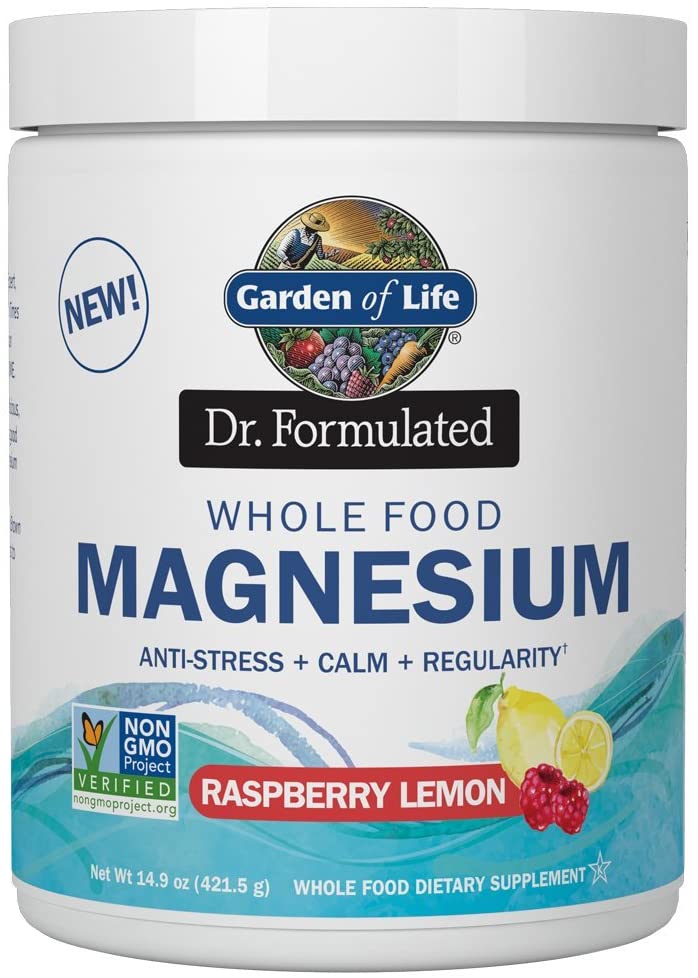
I was taking an excellent magnesium supplement, Garden of Life, that was doing wonders for calming before bed – what was out of balance?  

I’ve touched on this topic before, but my application of knowledge was clearly faulty, or I hadn’t learned enough.

Back to the drawing board.

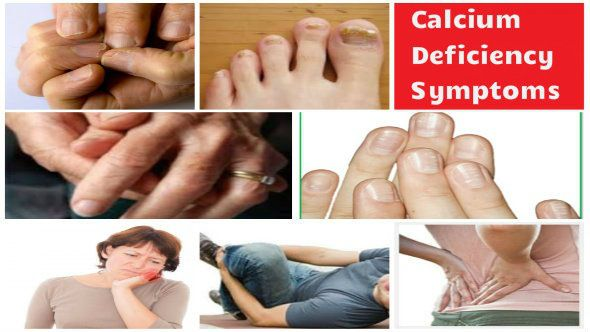
Muscle cramps are related to deficiencies in the following minerals/electrolytes: 

Potassium, sodium, calcium, and magnesium + water

Most of us know about athletes eating bananas before a big workout or prior to the BIG GAME. But there’s more to the picture than just bananas. 

Using this, Foods That May Help With Muscle Cramps, as a basis, I compiled a chart for your easy reference:      

____________________________________________________________________

Here’s a summary of what I’ve learned:

Abbreviations are Pot = potassium, Sod= Sodium, Cal= Calcium, Mag= magnesium

Bananas Pot Cal Mag

Sweet Potatoes Pot Cal-6x more than bananas Mag Water

Potatoes, pumpkins Pot Cal Mag Water

Avocado Pot- 2x more than sweet potatoes/bananas, 975 mg/whole avocado

Beans/lentils Mag + fiber

Melons Pot some Sod Cal Mag Water

Watermelons Pot Water – 92% by volume

Milk Pot Sod Cal+ protein Water

Pickle Juice Sod Water – may set off a nerve reaction that stops the cramps

Dark leafy greens Cal Mag

Orange Juice Pot, 500 mg/cup Cal Mag Water

Nuts/seeds Cal Mag- sunflower 37 mg/ounce, Almonds 2x more than sunflowers

Salmon Pot- 326 mg/3 oz. Sod- 52 mg/3 oz.

Tomatoes, tomato juice Pot Water

Coconut water Pot Sod Cal Mag Water+ NO sugar

Water Water

__________________________________________________________________________
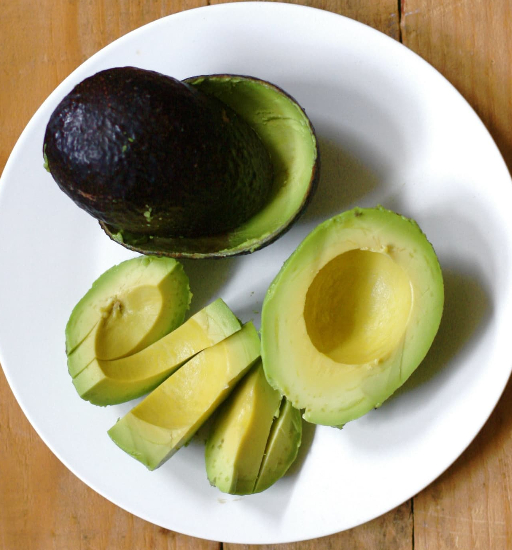
Wouldn’t you know, the next night my evening snack was half of an avocado and there were no cramps in the wee hours.

Since then, I’ve been more diligent in adequate hydration augmented with electrolytes and in having two or three of these items from this list every day. 

We are designed for health. If there’s a problem, I’m always on the lookout for what I am doing wrong.

If you found this helpful, please share with others using the MORE button options below.

In health with no more cramps-

Deidre

As an Amazon Associate, I earn from qualifying purchases.

Getting Grounded and Chasing May Rays

It’s always national something month or national something day. Going to nationaltoday.com can be such a hoot and might give us an excuse for an indulgence.

For instance, with next Tuesday’s posting deadline looming, and editor, Sheree, is starting to panic because this is Thursday, I have discovered that today is National May Ray Day. Who knew we would recognize the rays of sunshine lighting our lives with hopes of spring and an eye toward the summer?

Ahhh.

Or, that it’s the National Devil’s Food Cake Day as well? Many of us could really get behind that one.

Tomorrow is something I may have to honor: National Quiche Lorraine Day. Yes!

Today is also National Barber Mental Health Awareness Day – which is also recognizing that May is National Mental Health Awareness Month.

Talk about a hot topic in today’s world.

Clearly better mental health is something we should all be striving for in our lives. Any reminders and skills we can get to boost our personal approach to balancing, centering, or being grounded should be appreciated.

Case in point. Last night, I went to a presentation titled, Mental Health and Well Being, led by Sarah A. Patterson, D.Min., LCSW, from WakeMed. She pointed out that life changes – births, deaths, marriage, divorce, new job, moving, etc. – create emotional responses that are colored by our respective past experiences.

The research into resilience building I am doing for my next book in the Toolkit for Caregivers series, has taught me that emotions are just thoughts, and that we can learn to guide/direct/control our thoughts. If our emotional responses in the past have only created more anxiety for us, then it is possible to retrain ourselves to achieve better outcomes.

One difficulty we often face is our inability to calm down in stressful situations that are eliciting all kinds of anxiety. At foodtalk4you, we have explored techniques in box breathing, gratitude and blessings jars, forest bathing, naming our emotions, exercise, and journaling to help de-stress.

That tried-and-true method of slowly breathing and counting to ten may help somewhat if we are short on time, but I learned from Sarah last night that researchers have found it takes a full two minutes – or more – to really calm down and regulate our responses.

What to do in those magic 2 minutes?

Sarah showed us two new things I want to pass on to you: Guided Grounding and The Pretzel Move.

Guided Grounding is as easy as a 5-4-3-2-1 in focusing on each of our senses:

Find a quiet spot to leisurely survey what you are sensing as follows:

5 things you are seeing right now – colors, objects, textures, smiles, sunshine

4 things you are physically feeling/sensing – feet feeling the ground, pressure of chair on your back, the warmth or coolness of the environment, hair falling on your face

3 things you are hearing – voices, birds chirping, your breathing

2 things you are smelling – coffee brewing, fresh air

1 thing you are tasting – the lingering taste of your toothpaste

This survey of your senses helps to focus thinking and concentration on something other than the object of your anxiety triggers.

The Pretzel Move we did was a stationary hold of position; an active version for children can be found at healthymindstherapy.blog, “Pretzel Breathing Technique for Children,” which is complete with a child-led video. Here’s how we did The Pretzel last night:

Find a quiet spot to do the following – otherwise, you’ll have to explain why you look so funny

Sit with your ankles crossed

Hold your arms out straight in front of you, palms facing together

Turn your palms with thumbs down

Cross your dominant hand/arm over your nondominant hand/arm

Join your palms and lace your fingers

Bring your joined palms down and in toward your chest and up toward your chin

Hold for two minutes while you box breathe (count of 4 in, hold for 4, exhale for 4, hold for 4, repeat)

If you are unable to bring your crossed arms/palms into your chest and up, just keep your crossed arms extended in front of you.

You can see that both techniques are basically ruses to get your mind to concentrate on something other than its source of anxiety – but these simple methods are effective in bringing us back to center to be “grounded.”

Sarah reported that she’s seen this Pretzel technique stop an anxiety attack quickly.

If the source of your anxiety or your response to it is too overwhelming, there is still help for you. Sarah shared with us that psychologytoday.com can be used to find resources in your own community based upon the specific needs you may have such as symptoms, diagnosis, availability of health insurance or not, transportation, and more. https://www.psychologytoday.com/us

Being healthy physically, spiritually, and mentally does not mean we accomplish it alone. On the contrary – when we break a bone, we don’t think twice about getting medical help – when our minds are challenged beyond our capabilities to treat, we should think nothing about seeking outside help.

We continue to gather tools to help ourselves as in these grounding techniques shared here but being proactive about our mental health also includes seeking help from others.

If this post was helpful to you, you can help others by sharing it using the options under the MORE button below.

In health-

Deidre

As an Amazon Associate, I earn from qualifying purchases.

It’s Our 8th Birthday at FoodTalk4You!!

Today, exactly 8 years ago, foodtalk4you.com was born.

We have covered quite an assortment of topics over the years – all to uplift and edify those who knew there must be a more natural way to get and stay healthy.

Research in the last 12 months has revealed new paths to self-renewal that I have shared with you. As a nod to our anniversary number, here are what I believe are our top 8 by reader popularity.

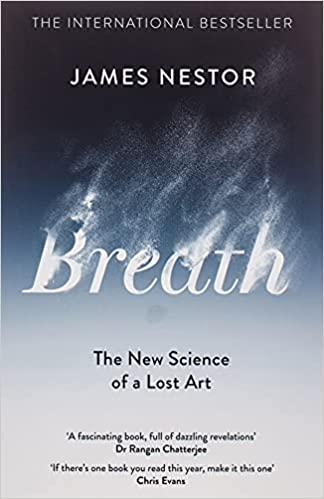
  1. Last April, I introduced you to Breath – The New Science of a Lost Art, by James Nestor, which sets the stage for optimal health through how we breathe. Who knew our very anatomy and physiology would be so dependent upon how we get air into our bodies? Nestor dramatically shows how he reversed his mouth breathing and a host of common health problems. All breathers should read this book.
  • A post in May shared how to do a Body Scan prior to, and just after, exercise. Why did this make the top 8? Because this easy 2-minute body scan is yet another way to be more mindful of our bodies. Our thoughts are so often directed away from ourselves that we seldom “check in” with how we are doing.
  • Combining two posts featuring crockpot soups from Creamy Fascination and Game Day Crock Pot Soup , we are reminded that home cooking from scratch can involve minimal preparation and effort yet yield wholesome goodness.
  • With supplies as simple as a fine-tipped pen and a shading pencil, creating a relaxing artistic process with little-to-no skills was shared in October with Zentangles. How I love to grab a small piece of paper to practice organized doodling. There are Facebook groups, ZIA Tangling for beginners and Zen Tangle 101 to learn and share – including how people are managing their personal limitations by exploring this art form.
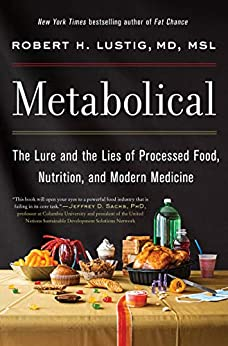
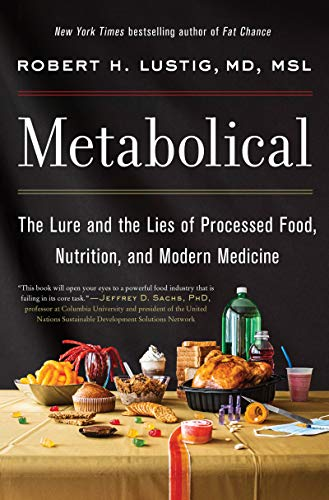
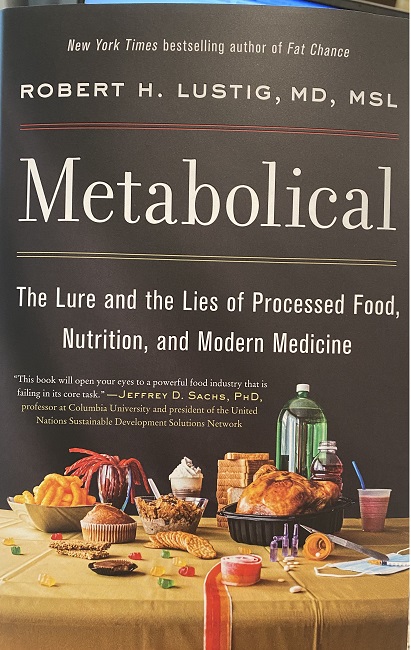
  • My foray into a better understanding of how to avoid human infirmities started off in 2022 when I discovered Metabolical by Robert H. Lustig, MD. Lustig is putting things together for me with more clarity than I’ve read before. If you believe we are designed for health like I do, this one is for you. It set the stage for me to read the eighth article in our list.
  • Whether you are a person of faith or not, the writings of John Roedel in his Hey, God, and, Remedy, books speak to the souls of anyone who has ever had self-doubt, trauma, depression, or personal angst of any sort with words of understanding and compassion. Both of his books provide me with a helping hand that comes through the page and into my own.
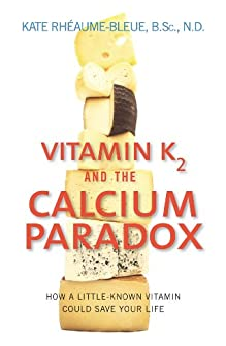
  • I saved the best for last. The one written resource that is improving my natural health is undoubtedly, Vitamin K and the Calcium Paradox. As shared in early March, I am learning about, not just one vitamin, but several. There will be more posts about this in the future, but by applying the wisdom from this one book, you could save your life.

That is our top 8. Sheree and I hope you have enjoyed FoodTalk4You so far and you have learned helpful knowledge over the years to improve your health.

You keep reading and we’ll keep sharing!!

In health-

Deidre

If you found this useful, please share with someone using the MORE button options below. Thanks.

As an Amazon Associate, I earn from qualifying purchases.

Three-Legged Stools

Sometimes we need reminders – that includes authors of healthy lifestyle blogs.

Yes, even me.

You see, we were wondering why something wasn’t working so well as I bustled around the kitchen this morning – “being all healthy.”

Soaking chia seeds for my sweetheart’s smoothie. Grinding up flax seeds for us both. Sautéing unbreaded okra slices for my gluten-free breakfast bowl. Drinking a glass of water as our first fluids of the day. Vitamins.

All the good things … Except.

Someone was complaining of “death balls” after a trip to the bathroom.

And someone else left the bathroom in happy amazement and relief.

What was the difference between the two of us?

It goes back to that truth-giving, three-legged stool. Take away just one of those legs, and the stool no longer functions.

Regardless of age, the human body needs three things in consistent daily supply for optimal bowel function. Yes, we’re talking about poop – and I’ve done this before HERE – but it bears repeating. Not sorry if this is TMI.

Repeat after me –

MY BODY NEEDS:

  1. WATER
  2. FIBER
  3. EXERCISE

There should be enough water to lighten up the color of urine – which will be darker first thing in the morning. The number of 8-ounce glasses varies depending upon the level of hydration and if there is sweating. Generally, the number is 8 glasses.

Fiber minimums for adults are 21-25 grams for women and 30-38 grams for men. Most of us are dramatically deficient in getting enough fiber. You can read about ramping up fiber in our March 8th post.

Okay. That’s two legs of the stool. Isn’t that enough? No, foodtalk readers, it is not.

Nothing takes the place of exercise.

When I took my walk early yesterday morning at a jauntier pace than usual, and then did a repeat walk in the afternoon, I left the bathroom smiling today.

What with doing taxes at the computer for days and sitting to write a bit more, the walks were less peppy and not as long. The resulting disappointments in the bathroom were predictable.

Duh!

In health-

Deidre

If you found this useful, please share with someone using the MORE button options below. Thanks.

As an Amazon Associate, I earn from qualifying purchases.

Consider the Egg – Broken Yet New

Is it the end of the road, or the beginning of an amazing new chapter of our lives?

Are we broken and losing pieces of ourselves or are we shedding what we no longer need?

A Facebook friend shared someone’s thoughts about feeling broken, and I felt inspired to pass on few ideas to you. Maybe your day will take on a brighter focus as you grapple with breakage.

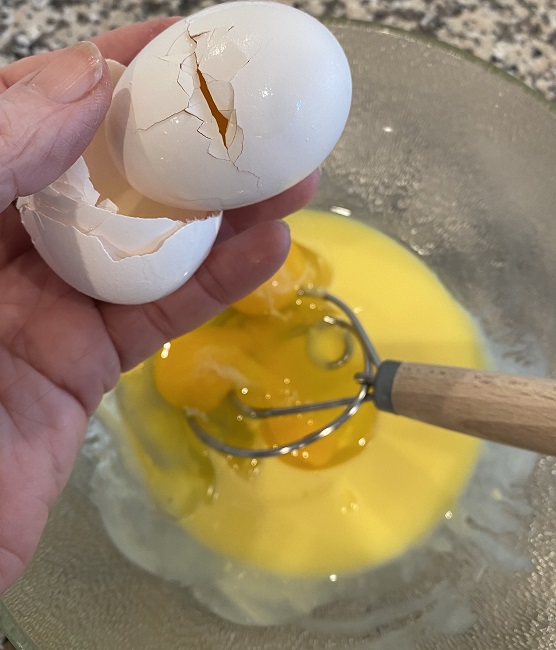
Next time you crack an egg, consider what is transpiring.

There’s something good inside of that egg. To use that goodness – to turn it into a glorious soufflé, cake, or a humble plate of scrambled eggs – we first must destroy that perfectly constructed shell.

Broken.

Being broken may simply be that opportunity to break out to become something new, better, certainly changed, and full of untold possibilities.

We may not have asked for that change – I bet that egg didn’t either – but life is less about our opinions, about our circumstances, and more about what we do with what we have.

So, there we are.

Broken.

What are we going to become?

In health-

Deidre

If you enjoyed this post, please share using the MORE button options.

As an Amazon Associate, I earn from qualifying purchases.

Celebrating The Orange and Green!

Saint Patrick’s Day conjures up images of the Chicago River waters running emerald, or a draught of green Guinness from the local pub.

As most of the northern hemisphere is still trying to shake off the hoary frosts of winter – it was 19 degrees F in our area this past weekend – and as our southern hemisphere readers are gearing up for fall, I was looking for some warming comfort food.

Most decorations for this festive season’s nod to all things Irish, which center on everything green; but in search of the perfect comfort food, I was reminded of the other Irish color: orange.

So, I’m pulling up a blast-from-the-past – Good, Better, Best Butternut Squash Soup – that dishes up orange and a bowlful of yumminess.

Plain butternut squash soup is – good.

When caramelized onions and garlic are added, you get something – better.

Add anti-inflammatory spices, creamy good fat from coconut milk and bone building gelatin, and you’ll have the best steamy bowlful of butternut squash goodness you’ve ever had! It’s the BEST!

By using my trusty immersion blender, I simply blitzed the cooked soup ingredients into creamy wonderfulness. No more using a dripping ladle to fill a blender in small hot batches to blitz, then having to pour the soup into ANOTHER pot to finish. Yay! I can’t recommend my immersion blender enough!

This recipe was originally crafted with the flesh of a previously roasted butternut squash. Peeling this hard gourd was dangerous with a knife. Then I picked up a new vegetable peeler that was shaped differently, so now peeling thicker skins is a breeze. 

Armed with the most effective equipment, let’s dive into our soup recipe:

GOOD – BETTER – BEST BUTTERNUT SQUASH SOUP

Into a large soup pot on medium heat add:

1 yellow onion, chopped*

½ bulb of garlic (that’s about 5-6 cloves), peeled, smashed, and chopped*

*Make sure to let these prepared allium family vegetables rest at least ten minutes before cooking. See my book, Toolkit for Wellness, page 162, to learn why.

Extra Virgin Olive Oil to cover the bottom of the pot

A dollop of grass-fed butter for an extra yummy factor (about a tablespoon or so)

Slowly sauté onion and garlic in oil and butter until clear. Reduce heat and add a tablespoon or two of water to continue cooking to caramelize veggies. This may take 7-10 minutes.

Add the following seasonings and ingredients:

2 teaspoons of curry

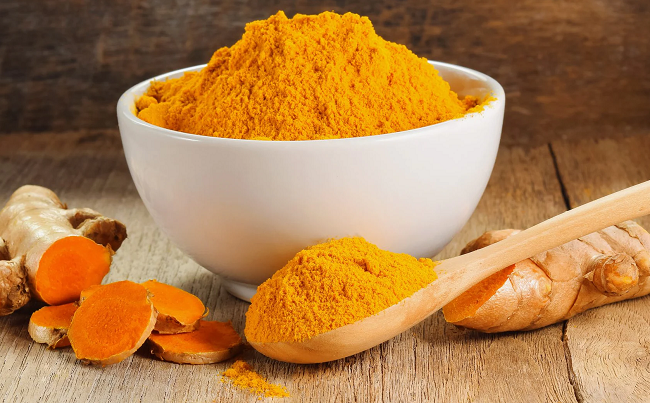
1 tablespoon of turmeric

Salt to taste

Pepper to taste

½ can full fat coconut milk (if the cream is solid, scoop out about half to use and pour about half of the clear fluid into soup pot)

¼ cup of Great Lakes unflavored gelatin, evenly sprinkled over the top of the ingredients

1 – 32-ounce organic free range chicken broth with about ½ cup of water to rinse out container

Flesh of one raw butternut squash, peeled and cubed

Simmer with lid on until the squash is tender – about 30 minutes depending upon the size of the squash pieces.

When the squash is tender, use your immersion blender to turn this soup into creamy goodness.

There’s nothing left to do but serve and enjoy! A dollop of sour cream, crema, or Greek yogurt on top of each bowl is a nice flavor touch, as well.

Butternut squash is low in calories, has no cholesterol, and is a rich source of antioxidants and vitamins. In fact, it has more Vitamin A than pumpkin. Vitamin A is an antioxidant and is vital in skin and eye health. Butternut squash also is a great source for flavonoids which convert into Vitamin A and is a rich source of B-complex vitamins.

The onions and garlic add to the anti-inflammatory features of this soup as do the spices which are very beneficial to fighting inflammation.

The gelatin is an excellent source of protein and is extremely helpful to bone and joint health.

The coconut milk is a source of good fats that help power you through your day.

The taste? Mmmm good!

Keeping warm and in health-

Deidre

If you enjoyed this post, please share using the MORE button options.

*As an Amazon Associate, I earn from qualifying purchases.*

Cha – Cha- Cha – Chia!

The information I shared from recent readings HERE and HERE, discussions about a more holistic approach to wellness with my daughter has spurred me on to being more pro-active with my health.

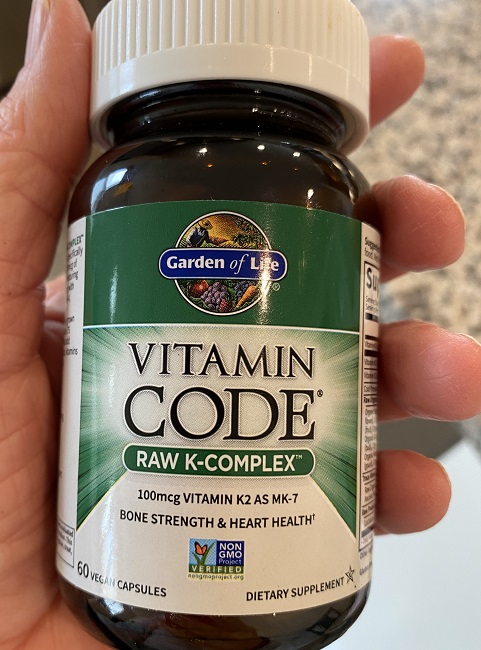
Some changes are easy enough to do such as taking Vitamin K2, fish oil with EPA/DHA, Vitamin C, Vitamin D, and a nightly magnesium supplement.

But incorporating my daily servings of flax and chia seeds had been hard because the weather is still too cold for me to drink smoothies; otherwise, these seeds would be a cinch. They are perfect for adding to a blender.

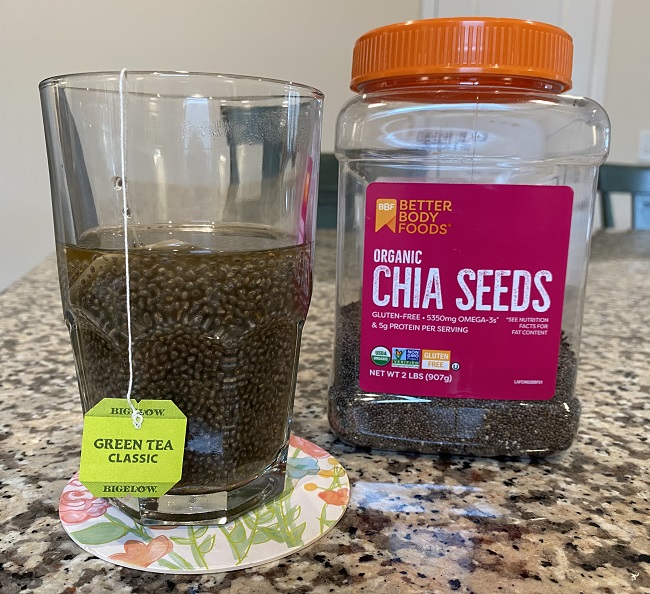
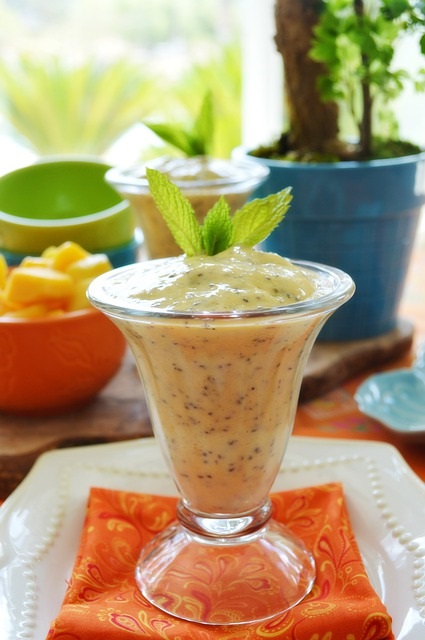
What I like to do for smoothies is briefly presoak the scoop of chia seeds in some warm water, allowing them to swell up and gel. This one step prevents them from sticking to the sides of the blender.

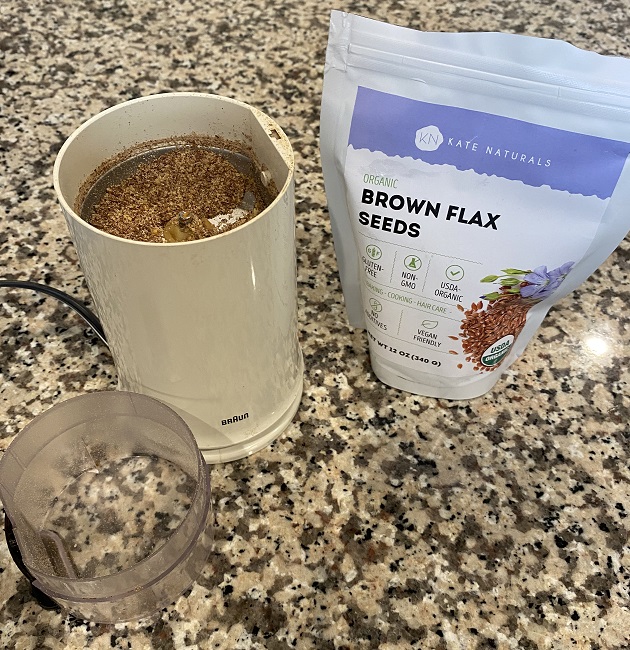
Since learning that ground flax seeds quickly go rancid, I now grind just the amount I’ll be using that day in a coffee/spice grinder. The goodness in both flax and chia seeds is found on the inside of the seed; consuming them whole can be counterproductive if all seeds are not thoroughly chewed.

Let’s review what both seeds contain and how we are helped:

Omega-3 fatty acids – associated with heart health, lowering cholesterol, decreasing inflammation

Soluble Fiber –absorbs water and slows down digestion. Soluble fiber can help lower cholesterol, stabilize blood sugar levels, and lower the risk of heart disease.

Protein – a good source of plant protein

Antioxidants for general health, heart health, and blood pressure control

Lignans

An array of minerals including the high levels of potassium in flax seeds, which is vital to proper muscle function and helps maintain lower blood pressure.

Flax seeds also contain lignans – a phytoestrogen associated with reduced risk for osteoporosis and has protective antioxidant properties

If you are new to consuming these fiber-rich seeds, start with a teaspoon of each seed, freshly ground, and gradually increase to 2 tablespoons each. While fiber is one of the desired critical elements in these seeds, new users may experience bloating, gas, or abdominal discomfort.  These little guys absorb A LOT of water.

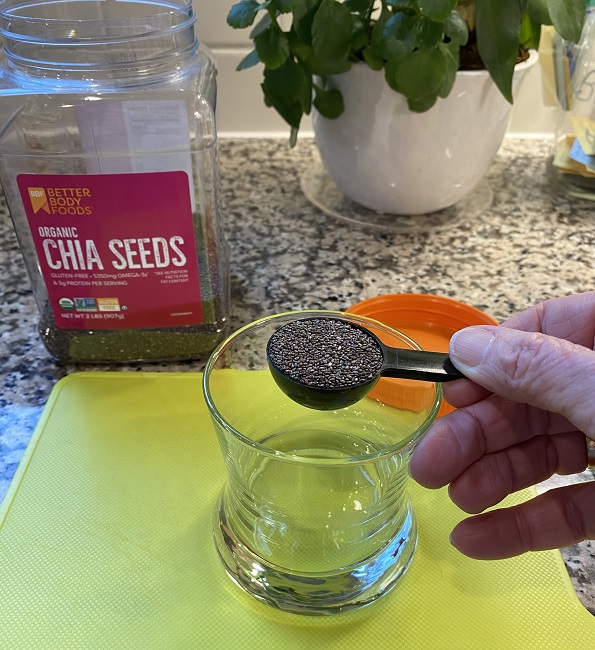
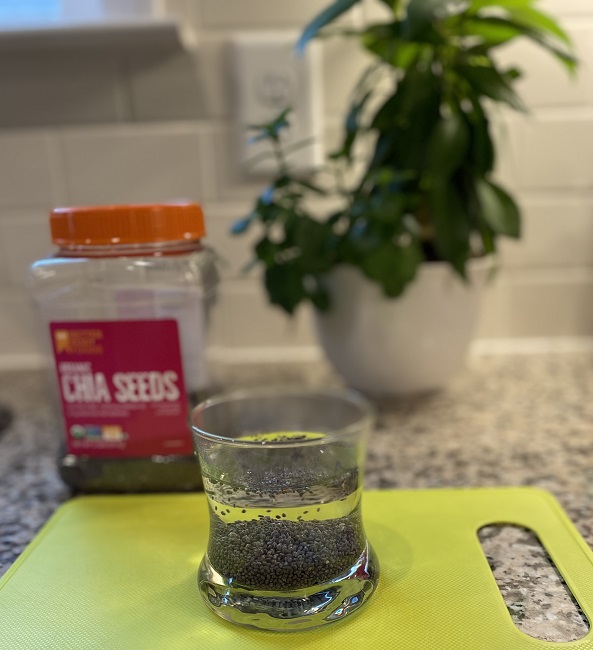
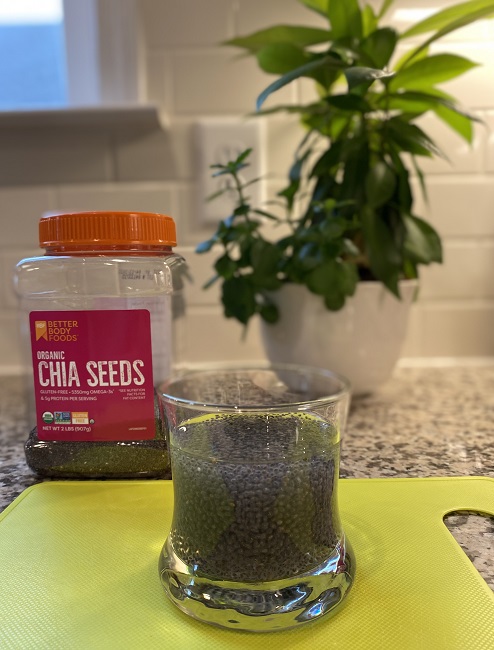
Check out these three photos showing one scoop of chia seeds with almost a cup of water added. After just two minutes, see what happened! This is part of the benefit – fiber absorbs water – but if you are not drinking enough water, instead of assisting in smooth digestion through the intestines, fiber can contribute to constipation.

It is important to note that before starting any kind of supplementation or dietary changes, users should contact their health care professional to check for any conflicts with pregnancy, lactation, medications, or allergies.

If you’re not throwing these gems into a smoothie every day, how are they supposed to be consumed?

I have found many ways to add these seeds to what I was already eating. Check this out:

Ground flax seeds can be added to most dry ingredients for baking without significantly changing flavors or appearance. Ground chia seeds, which are virtually flavorless, will show up as dark specks. Your muffins, breads, and cookies will have a slight crunch.

In baking, ground flax seeds can be an egg substitute when combined with water at the ratio of 1 tablespoon of ground flax seed to 3 tablespoons of water – let sit for a few minutes before using.

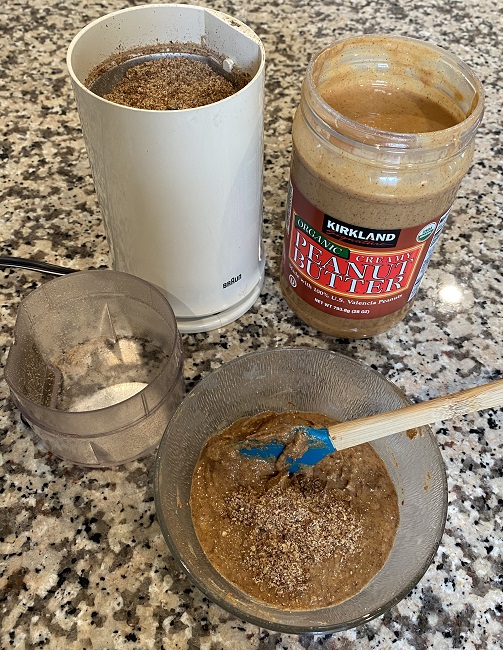
Stir ground seeds into peanut butter. The peanut butter I use has just two ingredients – peanuts and sea salt, whereas my sweetheart prefers Skippy peanut butter – whose ingredients are peanuts, sugar, palm oil, and salt (what’s wrong with that label, Foodtalk readers?).

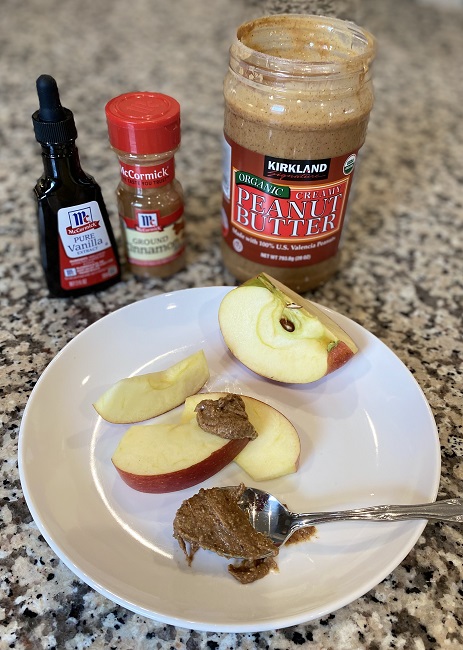
To compensate for the pinch of sweetness missing from Skippy, I added my go-to sweet spices of cinnamon and a few drops of vanilla, along with the ground flax seed.  Result? I was thrilled with my tasty new creation, and he was pleased with the flavor and texture! It was so good and the satiety from ground flax seeds lasts for hours.

Sprinkle whole flax seeds on your salad for a crunchy topping.

Combine ground flax to meat balls, meatloaf, and casseroles. This is also a sneaky approach to disguise new ingredients to unadventurous family members.

Use ground seeds in breading ingredients for an extra crunch factor.

Add both ground seeds to your cooked cereals.

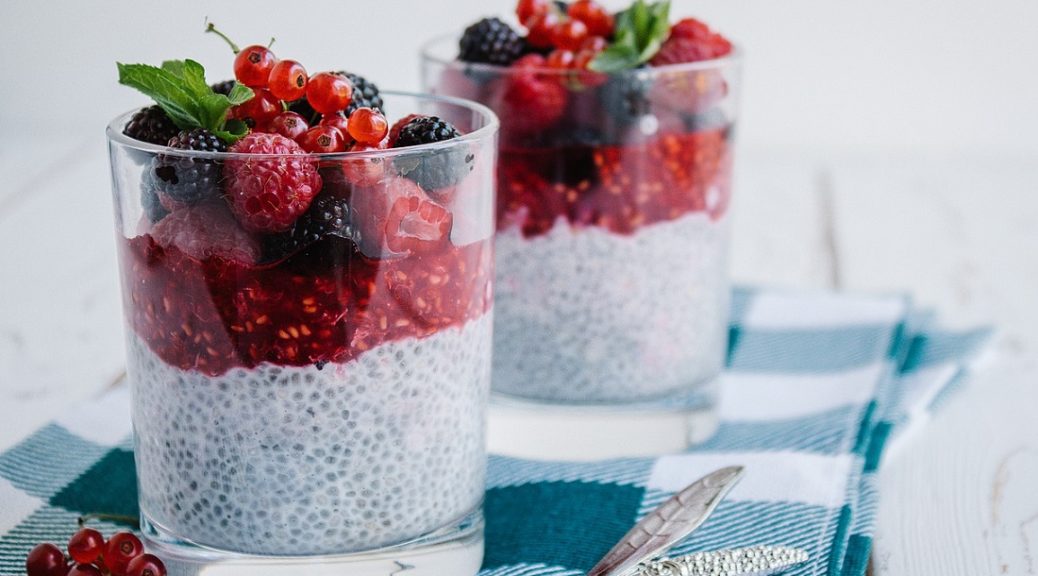
Try whole seeds as a part of your Overnight Oats recipe, soaking them in your preferred choice of milk – perhaps with a touch of sweet spices such as cinnamon and vanilla. Add some berries in the morning and you are set for an easy breakfast.

Use whole or ground flax seeds instead of croutons. Simply crisp in a pan over medium heat for a few minutes, stirring constantly.

Add ground or whole flax seeds to your homemade granola.

Add ground flax seeds to your salad dressing.

Boost your soup recipes with ground flax.

Use ground flax as a thickener to your gravies.

Let me know of your own flax and chia seed successes, and please share this post if you have found it useful by using the options in the MORE button below.

In health-

Deidre

“Open Wide!”

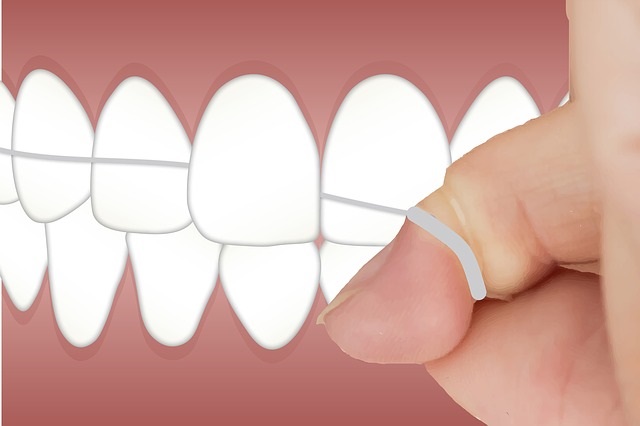
Few people seem to get too excited about dental care.

If you haven’t developed the habit of regular flossing – chances are, you dig your heels in by saying, “Meh. I’ve never gotten into that so much – it’s not for me.”

BUT…

What if I were to share with you some things I am just learning about good teeth through the eons, good teeth today, the cheap way to improved teeth, and … what new research has found in the brains of Alzheimer’s victims that goes back to their mouths!

This is shocking!

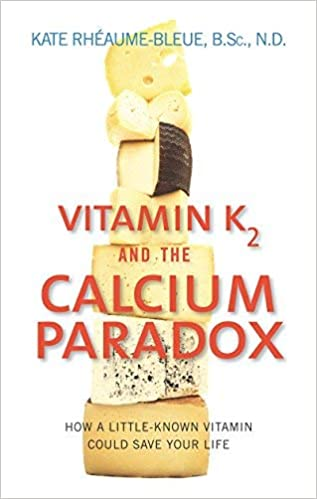
Let’s start with A BOOK I’m reading by a Canadian author who reveals the results of Dr. Weston Andrew Price’s quest to answer the simple question, “Why were his patients experiencing so much dental decay?”

Dr. Price traveled the globe studying people who were not exposed to the influences of modern civilization. Good thing he was doing this in 1899, because the spread of modern civilization today is so complete, there are hardly any corners of the world left untouched.

The bottom line of Dr. Price’s investigations is that once introduced to a modern diet, patterns of change result, predictably, causing dental caries (cavities), gum disease, heart disease, crowded teeth, smaller jaws, infections, and more.

The patients of Dr. Price were not living on Mountain Dew and McDonalds. What was modern about the diets of North Americans in the late 1800’s? This was the time when a major shift to white flour, white sugar, white rice, vegetable fats, and the introduction of canned foods, occurred.

What was missing in the late 1800’s from previous diets were vast resources of minerals, water- soluble vitamins (B and C) and especially fat-soluble vitamins – all sacrificed in the name of longer shelf life, and in creating filling foods that easily survived unrefrigerated transportation.

While Dr. Price could not pinpoint the exact identity of his dietary activators, (later identified as Vitamins A and D), he knew that restoring certain elements to his client’s diets would transform their dental health better than merely filling and pulling teeth.

He started prescribing diets high in fish eggs, egg yolks, some organ meats, and – especially –    butterfat from cows grazing on rapidly growing green grass.  

Fast forward to 2007, and another element Dr. Price had called Activator X is identified as Vitamin K, which is a group of K vitamins K1-K7.

Vitamin K, Vitamin D, Vitamin A, and even chlorophyll, all does an intricate dance with each other that facilitates processes mandatory for our strong bones and teeth, healthy heart, arteries, and other things.

Turns out, Vitamin K2 is needed to put the calcium into our bones and teeth. A diet low in K2 results in the calcium getting put into the linings of our arteries – that’s called atherosclerosis. Bones without a supply of calcium equal osteoporosis.

In fact, K2 deficiencies are also associated with:

  • Increased risk for breast, prostate, liver cancers
  • Diabetes
  • Varicose veins
  • Wrinkles
  • Dental caries
  • Chron’s Disease

Bottom line? We can gulp all the calcium we want, but without proper levels of K2, that calcium will be routed away from the bones and teeth only to land in the soft tissues and linings of our arteries.

That’s the Calcium Paradox.

I had drastically cut back my calcium supplementation that was supposed to help with my bone issues because I feared clogging up my coronary arteries.

Another tidbit to consider is oral hygiene and what we are feeding our bodies to enable unusual bacterium in our mouths. It’s all being studied further after what scientists found HERE and I quote:

Scientists have previously found that this species of bacteria, called Porphyromonas gingivalis, can move from the mouth to the brain. Once in the brain, the bacteria release enzymes called gingipains that can destroy nerve cells, which in turn can lead to memory loss and eventually Alzheimer’s.

In this study, researchers looked for evidence of this process in human brains. They examined the brains of 53 deceased people who had been diagnosed with Alzheimer’s and found high levels of gingipain in almost all of them. They also noted that the amount of gingipain tended to rise over time, which suggests there may be a tipping point when dementia symptoms first begin.”

The take-aways from this week’s post are:

By eliminating sugar, white rice, white flours, vegetable fats, and processed foods from our diet we will not only boost oral health, but also general health.

Consider supplementing with Vit K2 by reading Rheaume-Bleue’s book to get the full scope of how seriously our modern diets are causing a host of preventable diseases and conditions.

Brush and floss those pearlies, folks.

In health and personally taking 100-200 mcg K2 every day –

Deidre

If you found this post helpful, please share by clicking the MORE button below.

To my European readers, Rheaume-Bleue’s book, Vitamin K and the Calcium Paradox has been translated into Italian and Polish.

Playing The Game Of Clue

We are presented with a victim covered in band aids.

Every year, more and more band aids are applied to stop our victim’s various leaks. Each effort is quelling one leak, but more leaks keep popping up.

What is the cause?

Are we so busy treating the symptoms, that a true understanding of the causes for our collective diseases are being ignored? Or maybe truly fixing the cause is not financially advantageous to those who are supplying their vast resources of expensive band aids to us?

We explored leaky gut last year HERE, but now I want to soar even higher for an even broader, 50,000-foot view.

Ever wanting to learn more about health and wellness, I have discovered Metabolical by Robert H. Lustig, MD. He compliments my messages in Toolkit for Wellness– our being designed for good health and eating an anti-inflammatory diet – and focuses his prescription for health into 1) protecting the liver and 2) feeding the gut.

In his scholarly book, he peels back layer-after-layer of the band aids to reveal the long-ignored causes. His descriptions of the intricate physiology of cells and body systems underscores my determination to not use band aids – but to prevent needing them in the first place.

Lustig calls this solving the problem upstream – at the source of the trouble.

Where’s the trouble?

In the food.

Processed food, specifically.

Not vegan vs. keto vs. organic vs. fill-in-the-blank.

This is not a new message, I know. Hang with me for a moment.

Lustig supports his conclusions that 75% of the US health dollars and 50% of the world’s health dollars go towards efforts to medically “fix” the host of chronic non-infectious diseases that affect modern society: diabetes, hypertension, and heart disease.

These fixes are failing at dizzying speed as numbers of cases rise every day despite all the money being spent AND as our life expectancies shrink.

He likens our efforts to medically “fix” these and other noncommunicable diseases that plague us as “rearranging the deck chairs on the Titanic” for all the good they are doing.

Even cancer, autoimmune disease, dementia, and psychiatric disease is being shown to be processed food related, and more cases of advanced disease processes of all kinds are being seen in teenagers.

As I have long said, we are not crumbling genetically – we are feeding our bodies the wrong food. These startling statistics are simply the culmination of 40-50 years of relying upon food-like substances, not real food.

I’m just on page 55 so far, but the over-arching message is that the chronic diseases of today are a result of abnormal metabolism in different cells and different organs of the body. Abnormal metabolism becomes metabolic syndrome which is the springboard for insulin resistance, diabetes, and fatty liver disease – and obesity.

Abnormal metabolism is set aright not by a fix of pills, (band aids), but by food choice.

What’s for dinner tonight? Is there added sugar and/or salt to the ingredients list? When was the last time any of us cooked a meal totally from real/whole food with no labels?

I’ll be sharing more from his book in future posts but let me leave you with Lustig’s experience with trying to advance treatments for his pediatric diabetic patients.

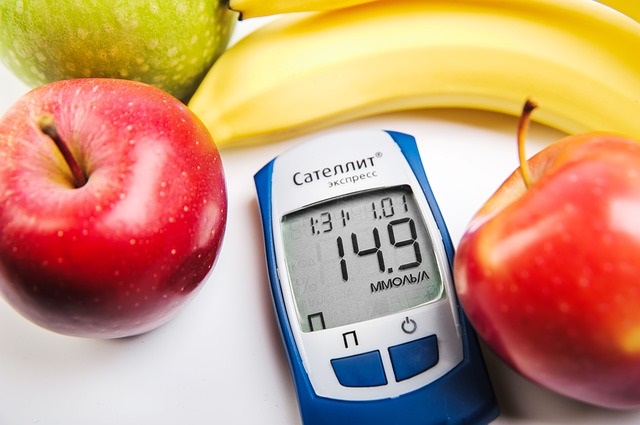
After years of falling in line with the likes of the American Diabetic Association and others who rested their diabetes approaches on “covering” blood sugars with appropriate amounts of insulin, Dr. Lustig proposed something novel: How about decreasing the need for insulin by NOT eating sugar?

He was regarded as if he had sprouted horns.

Why?

Because some studies have not been conclusive as to what raises blood glucose levels. Really? Oh, you mean the studies that were backed by food interests – including Pepsi? Hmmm…

The studies not backed by food/beverage interests did show that sugar causes diabetes (Type 2).

Ta-da!

Food for thought, dear readers. That’s why we call this foodtalk4you.

If this was helpful to you, please share with your friends and family using the options found in the MORE button below. Also, remember to subscribe to foodtalk4you.com by clicking on the subscribe button.

In health-

Deidre

Work That Body – Do The Lunge!

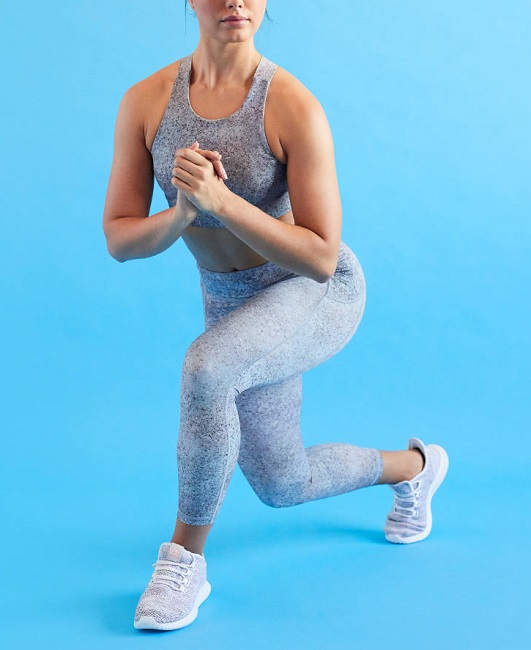
You can lunge in so many directions.

You can step forward.

You can step backward.

You can step to the side.

You can even do a curtsy lunge. Just saying – in case you are going to be bowing down to any kind of royalty, this one’s for you.

As we spring into the new year of 2022, my body just seems to naturally want to move more.

Is it because I am pre-programmed to work off those sitting-around-watching-Hallmark-movies-or-bowl-game habits I so easily acquired in November and December? Or is it from the January TV commercial blitz to lose weight or firm up at the gym?

Whatever the reason, my MIND and BODY are telling me – it’s time to get real. Time to dust off my forgotten planks, daily walks, and those morning movements in the kitchen prior to breakfast.

I know that returning to a daily commitment will often rely upon whether the house has warmed up enough yet or if the sun is cheering me on, but first steps have happened.

A start is a start. Small starts count.

So, what has been my start?

Lunges.

Inspired by my past experiences in a pre-Covid gym class and by a loved one’s recent physical therapy exercise recommendations, I am lunging.

It is possible to lunge-walk your way around the house.

Rather than saying, “I need to get back to the gym,” or “I’ll watch that YouTube exercise video after breakfast,” just lunge your way into the kitchen or any other room RIGHT NOW.

How do lunges help your most important areas?

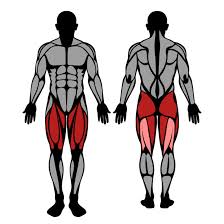
Lunges target the largest muscles in the body – quadriceps, hamstrings, glutes, calves, and core muscles – thus, they can reeve up metabolism and contribute to weight loss.

Lunges strengthen your back, hips, and legs, while improving mobility and stability.
A stronger core helps other movements happen more smoothly and naturally – allowing for increased ease and a more upright stance.

Before starting your lunges do this:

Make sure any exercise routine is safe for you by checking with your doctor or medical professional. The first rule of exercise is do no harm.

Since lunges fire up the big muscles, it is always wise to place lunges toward the middle of your routine – after you have warmed up. At the very least, for a quick bout of exercise, start with gentle stretches like marching in place, and gradually work up to full lunges.

Lunging 101

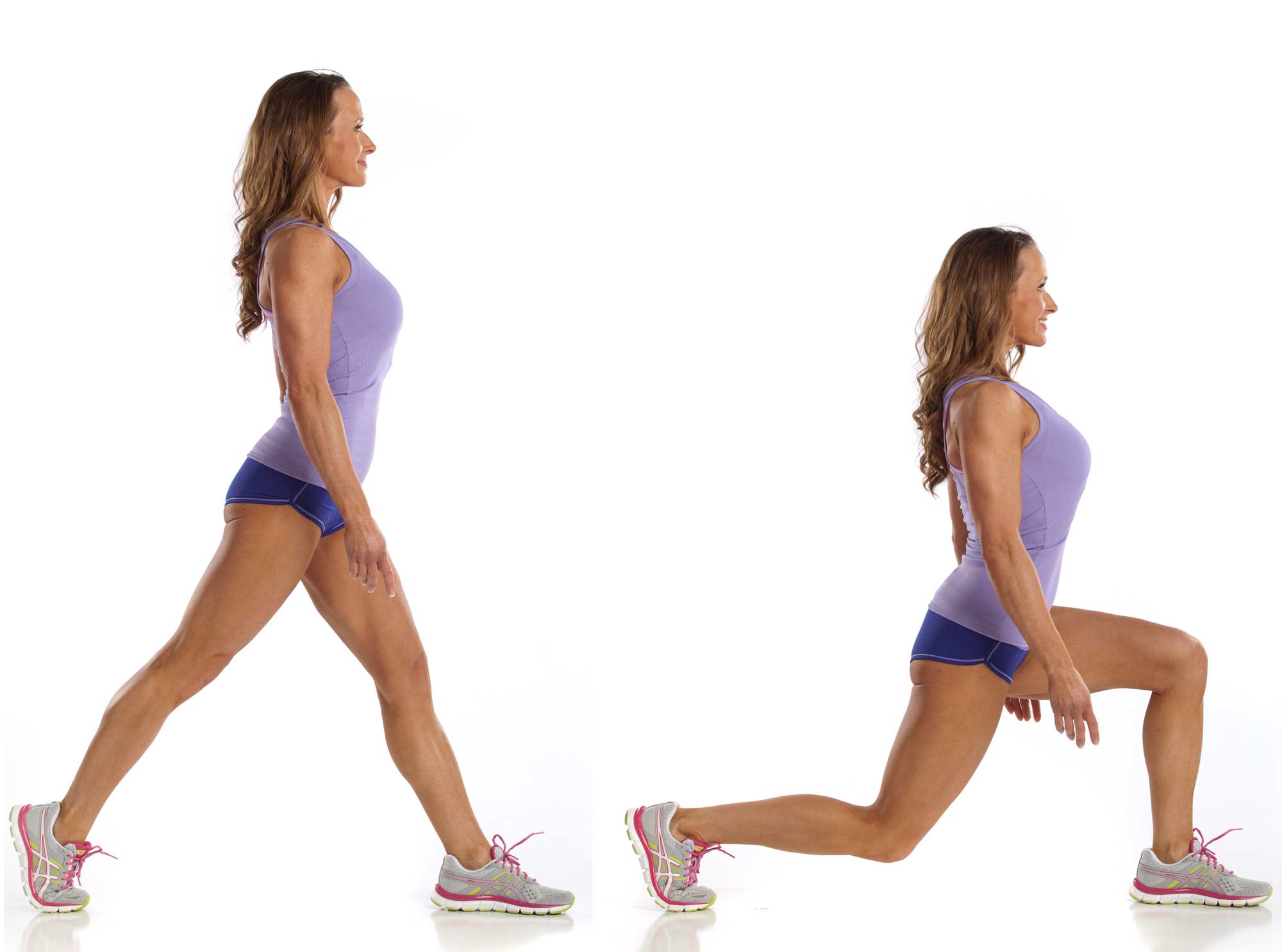
One of my favorite online resources HERE provides us with some good lunge basis, and I quote:

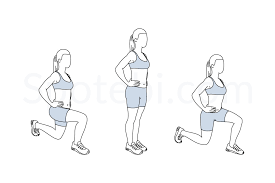
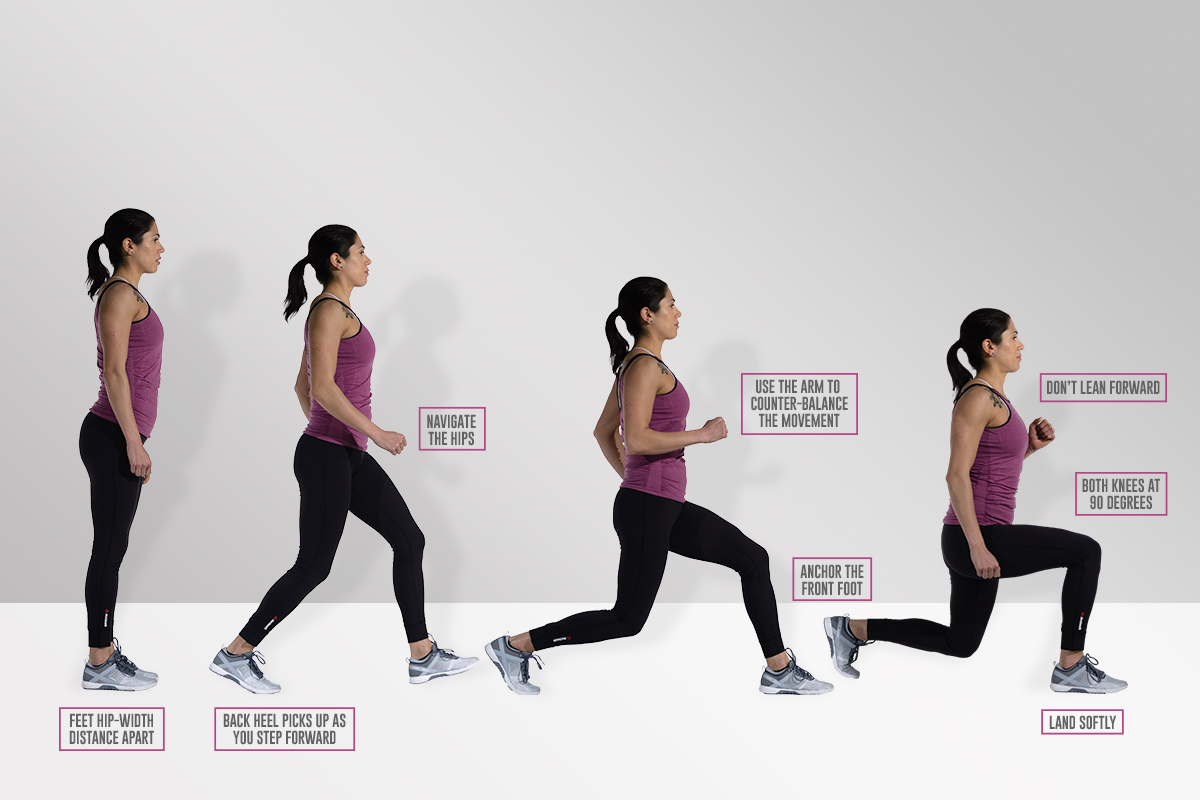
  1. Stand with feet hip-width apart
  2. Take a large step forward with one leg
  3. Keep the majority of your weight on your front foot as you lower your hips, keeping the front foot flat and back heel lifted
  4. Descend until your rear knee almost touches the floor and the front knee is stacked directly above the ankle, creating 90° bend in both knees
  5. Drive through the heel of your front foot and push yourself back up to your starting position

If you are new to lunges or if it’s been a while since you have done them, the wonderful thing is that you can modify the length of your forward step and you can limit how far down you lower your hips. My Silver Sneakers instructor often had us just bounce down at a higher hip level before having us lower our hips for a deeper stretch.

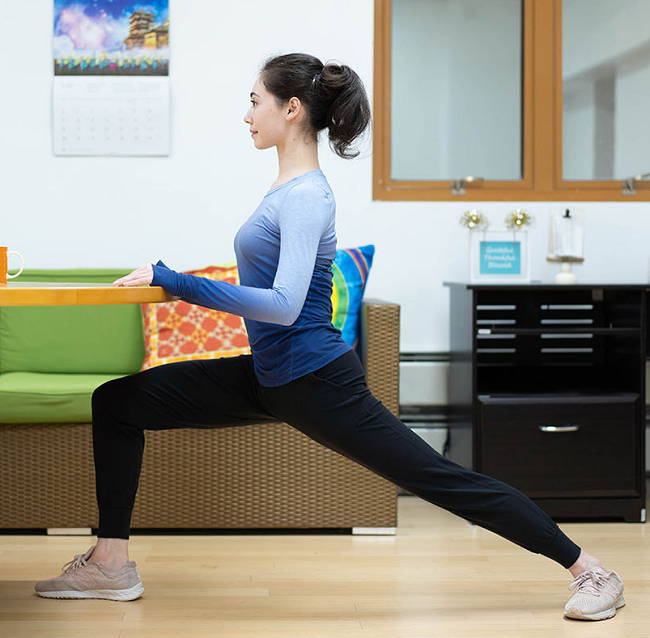
You are not cheating if you are holding onto a counter’s edge or chair back for stability. This is a balance strengthening move – eventually, you may be able to let go of any stabilizing tool. Remember- safety first!

Lunges as therapy

If you are experiencing nerve/muscle pain, tingling, and numbness in your thigh or leg – as I and my sweetheart are – you might find your therapist recommending lunges as a part of your therapy. Consult with your specialist to see what approach would serve you best.

Another good lunge resource is found HERE

Well, that’s a wrap! Sending this on to Sheree and then … I’m lunging!

In health-

Deidre

If this has been helpful to you, please share using the MORE button options below.