Category Archives: Anti-Inflammatory Foods

Game Day Crockpot Soup

As temps in the Northern Hemisphere are hinting at fall, our thoughts are turning to warming, savory soups. Added to that, kids are off to soccer practice, friends and families are tailgating, and many are gathering around the screen for golf or football.

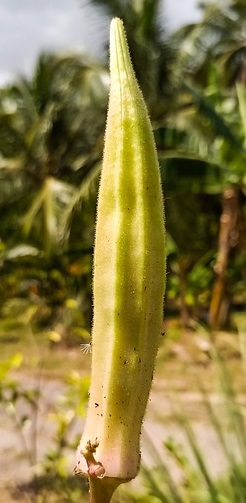
Our readers down under are probably getting hints of spring with thoughts of fresh fruit and vegetables making your mouths water, but in Eastern North Carolina, my garden is down to 2-3 okra pods a day.

We’re on to soup weather! Bring on the crockpot, please.

Plus, the recipe I’m sharing today is an excellent opportunity for using the Mexican Crema recipe that was featured last week.

What’s cooking? An easy, adaptable recipe featuring canned beans, chopped tomatoes, salsa, and frozen or fresh chicken. Easy peasy.

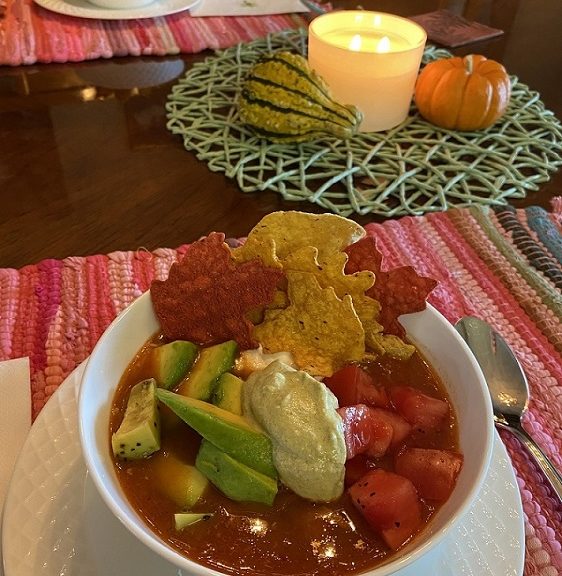
Many thanks to my daughter-in-love for this inspiring recipe and for assisting in our photo-shoot. The delightful soup bowls are frequently filled with her and my son’s creations – chili, soup, gumbo, and more. I’m on the look out for special bowls to add that extra panache to lovely meal presentation.

But even in plain bowls, this soup is a winner.

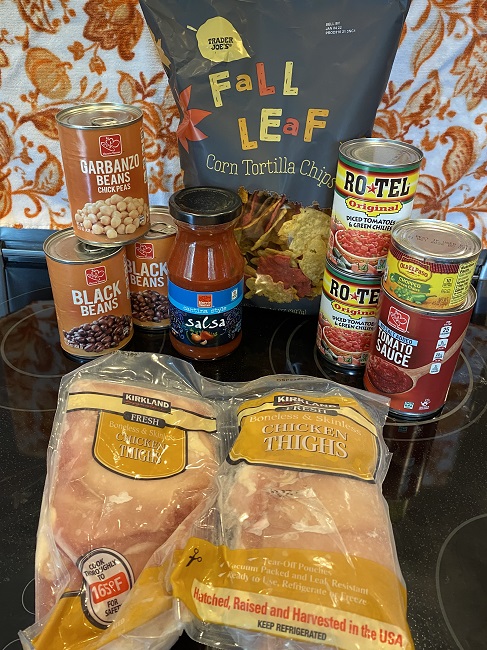
The recipe is best shared as a simple photo of all the ingredients.

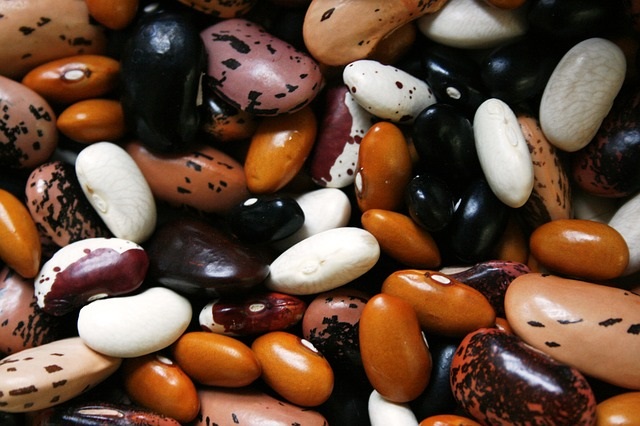
No or not enough black beans? Grab a can of garbanzo beans/chickpeas, pink beans, pinto beans, or cannellini beans instead. Mix and match. No problem. I like mixing them up.

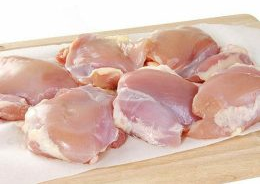
We prefer using chicken thigh meat because of its tenderness and flavor. Yes, the breast meat has less fat, you can use that as well – again, a nod to versatility.

Another nod to crockpot convenience is that frozen chicken works just fine – just keep it cooking a little longer.

Crockpot Chicken and Bean Soup

Ingredients

3 – 15.25-ounce cans (432 g) beans – black, pinto, garbanzo, cannellini, pink

1 – 16-ounce jar (453 g) salsa

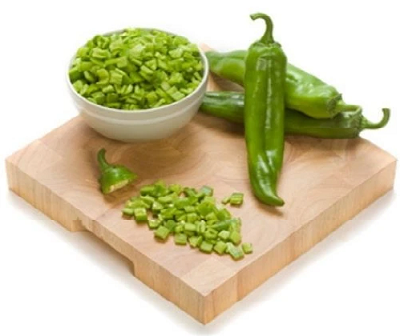
2 – 10-ounce cans (283 g) Ro-Tel Original Diced Tomatoes and Green Chilies

1 – 4.5-ounce can (127 g) chopped green chilies

1 – 15-ounce can (425 g) tomato sauce

8 – Ideally boneless, skinless chicken thighs – can use 4 large chicken breasts – fresh or frozen

Method

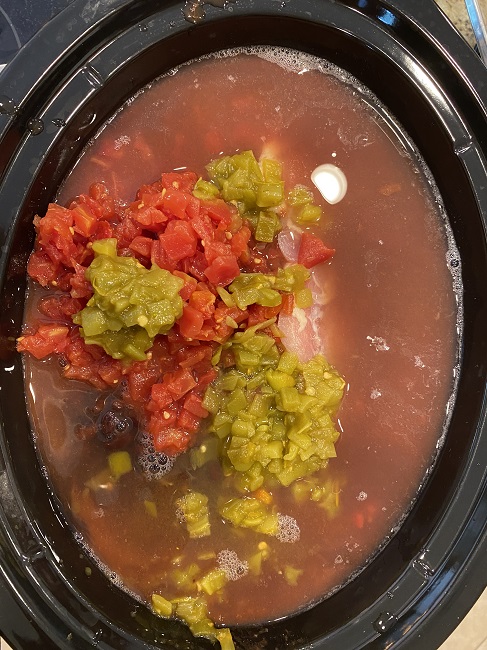
Open the jars and cans. Start filling the crockpot with something wet – tomato sauce or salsa – then add some beans with their juices, chicken, and finish with the remaining wet ingredients and beans.

That’s it. Put the crockpot lid on, plug in, set to low for 6 – 7 hours – longer if frozen meat is used.

When time is up, stir the ingredients and remove the chicken to a cooling bowl.

Using two forks, gently pull chicken apart to shred. Return the shredded chicken to the pot.

Stir all ingredients to combine and keep warm until time to serve.

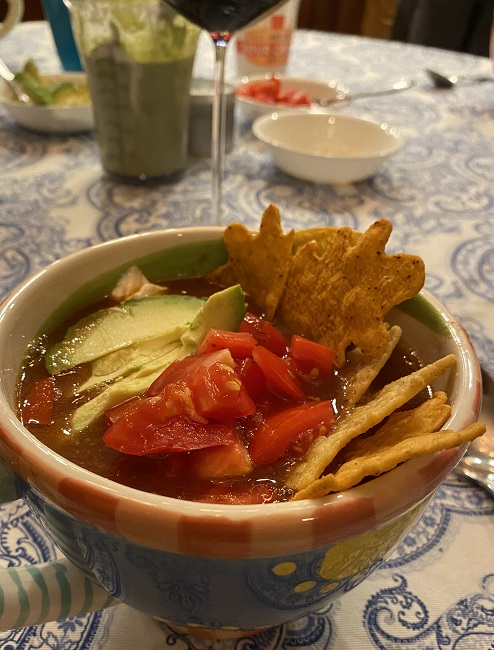
Serve with chopped fresh tomatoes, avocado slices, sour cream, grated cheese, Mexican Crema, and a few tortilla chips. We were fortunate enough to score some fall-themed corn chips from Trader Joe’s.

There’s just enough heat to keep this warm and spicey; but it will not send you to the milk jug to put out a fire.

Seasons of transition – fall and spring – create such flavor and texture excitement to food. I’m waiting for my order of pumpkin spice coffee to arrive soon!

Snuggling in with snuggles –

Deidre

Like this recipe? Please share a link using the MORE button options below.

Cheese Spread-The Beginning of Something Beautiful

No time for something fancy to take to a gathering? Too tired or rushed to put much effort into a sharing snack? My “daughter-in-love” is the master of two-or-three ingredient appetizers that pack a big punch for flavor and appeal.

We needed such a hat trick the other day when nerves from life events were stretched thin, time was short, and there was an end-of-season community pool social time in a couple of hours.

We longed for a relaxing event of outdoor conversation, drinks, and shared snacks, but lacked the bandwidth for something requiring much thought or effort.

Presto! Brooke’s Two-ingredient cheese spread! Wow!

Sharing this extended vacation time post is as easy as this recipe. Expect to be dazzled!

Two-Ingredient Cheese Spread

Ingredients:

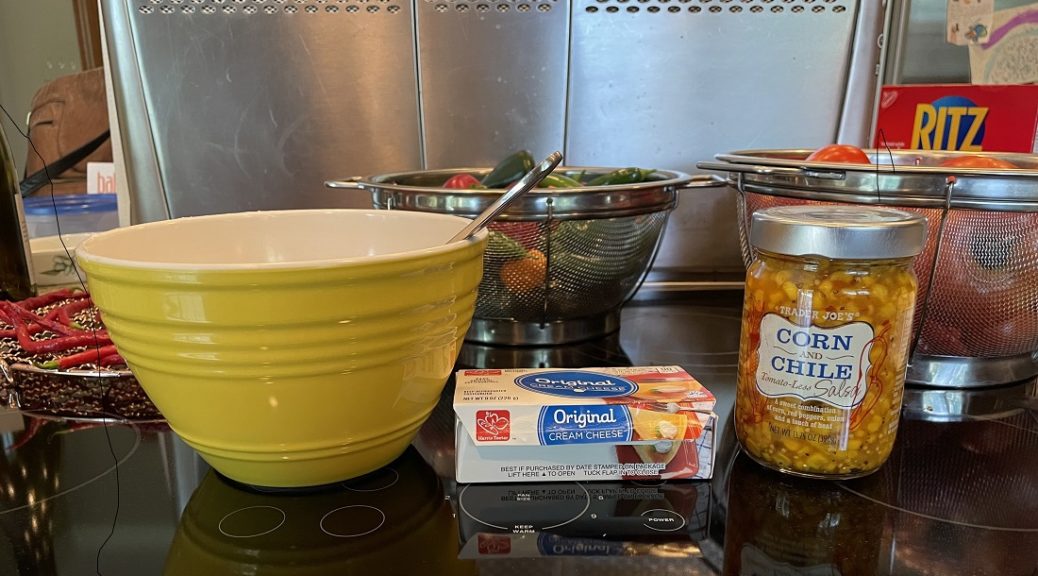
One 8 ounce/226 grams package of full fat cream cheese, softened to room temperature

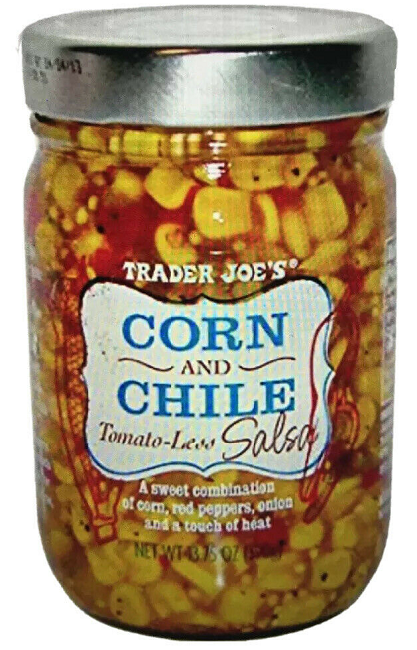
Approximately 9 ounces/258 grams Trader Joe’s Corn and Chile Tomato-less Salsa

Method:

Combine with a fork. Refrigerate to meld the flavors 30 minutes. Stir and serve. Done.

Notes:

This Trader Joe’s product may not be available to everyone, so you can use a local equivalent that features “a sweet combination of corn, red peppers, onion, and a touch of heat.” The gentle heat comes from jalapeño peppers.

This recipe represents using approximately 2/3 – 3/4 of a 13.75 ounce/390 gram jar. I plan on stocking up on several jars of this Trader Joe’s salsa to take back home with me.

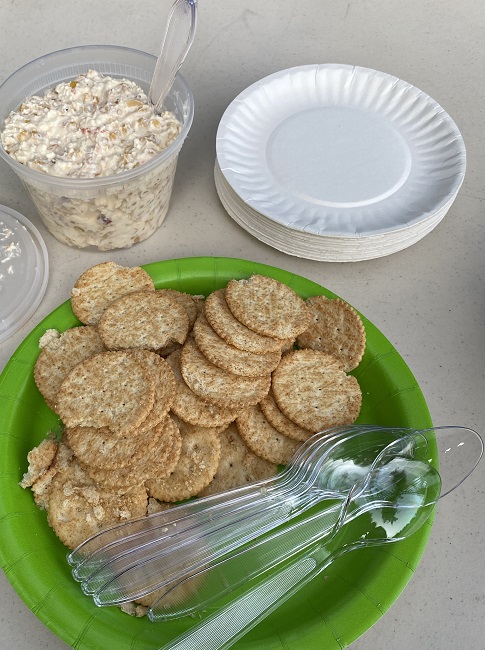
Serve with gluten-free crackers, whole wheat Ritz, or your favorite selection of bell pepper strips, celery, or zucchini slices.

This tastes like you spent considerable time and effort into creating. Don’t tell anyone it was a last-minute miracle!

In health and still on vacation-

Deidre

Hey Look! We’ve Got Snacks!

Tailgate Snacks, that is …

Where did August go? Suddenly, the mornings are starting cooler and the days in North Carolina are warming to something less hot and steamy. I donned a light sweater yesterday and am wondering if I should have packed something warmer for my vacation.

Double-checking the invitation for a neighborhood tailgating event this past Saturday, I was reminded, the college football season is cranking up NOW!

Chicken wings are being safely plated for each attendee to enjoy as we keep safe distances outdoors, but we have the option to bring suitable snacks to share – prepackaged, please.

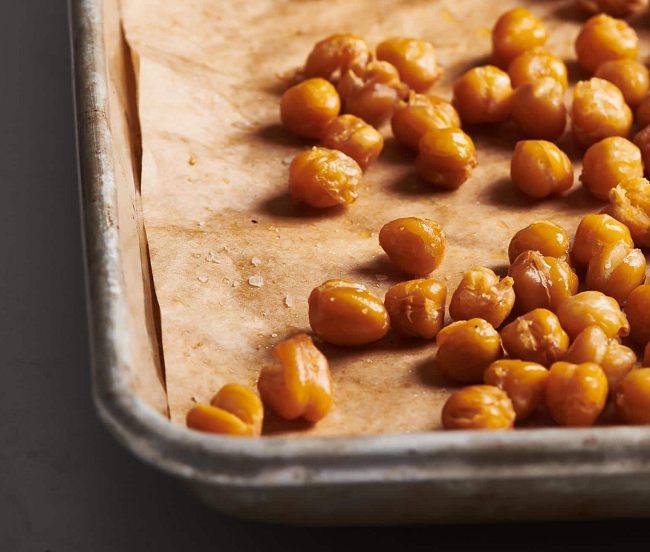
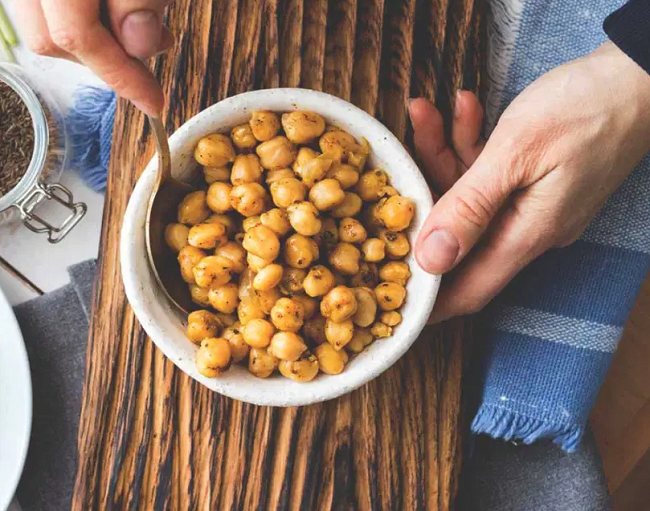
I remember eating roasted garbanzo beans once that I really enjoyed, so revisiting that concept seemed something easy to prepare in a friend’s kitchen and could be portioned out into baggies for sharing.

The basic concept is to rinse, drain, and dry the garbanzo beans/chickpeas, toss them in some olive oil with seasonings, and bake. Pretty simple and not laden with the usual detractors to healthier snacks: lots of fat from cheese, being fried, or being drowned in dipping sauce.

After perusing several methods, bake times, and flavor-enhancing spice combos, I settled on creating a crispy version with a taco flair. True to form, after preparing this easy, healthy snack, I wanted to tweak the recipe a little more. I don’t think you can do this wrong, so tweak away with your own versions to ramp up the flavor toward spicy, savory, or sweet.

Spicy, savory, or sweet?
Oh my … I got this …

Roasted Garbanzo Beans

Ingredients

For each 15.5 ounce/439g can of drained, rinsed, and dried garbanzo beans/chickpeas, use:

1 Tablespoon/15 ml olive oil

1/4 teaspoon/1.75 ml chili powder

1/4 teaspoon/1.75 ml cumin

1/4 teaspoon/1.75 ml garlic powder

1/4 teaspoon/1.75 ml onion powder

Kosher salt to taste

Method

Preheat oven to 375 degrees F/191 degrees C.

Drain and rinse the garbanzo beans/chickpeas in a colander. Pour beans onto sheets of paper towels. Use another paper towel to pat the beans off, gently rolling them around to absorb the moisture. Pick out any loose shells.

Transfer beans to a bowl, add the oil and spices, stirring well to coat each bean evenly.

Pour the prepared beans onto a large, rimmed cookie sheet. Arrange beans into a single layer, creating space around each bean.

Place cookie sheet into preheated oven, bake for 15 minutes. After 15 minutes, remove the cookie sheet from the oven to stir and rearrange the beans. Return beans to the oven and bake for another 15 minutes.  DO NOT OPEN THE OVEN. Turn oven OFF. Let the beans finish baking in warm oven for 40 minutes.

Remove beans from the oven after the final undisturbed bake; let cool two minutes; transfer crispy beans to a serving bowl.

Enjoy!

Other flavoring options might include:

– distilled vinegar/lime zest/Kosher salt

– garlic powder/onion powder/Kosher salt

– red wine vinegar/Dijon mustard/Kosher salt

– cayenne pepper/garlic salt

Because this method bakes the garbanzos to a crispy doneness, they should last a few days. Chances are, though, there will be no leftovers!

Enjoy your college football, fans.

Go AUBURN TIGERS!

Just saying.

In health-

Deidre

If you prepare this recipe, please let me know how it turned out and what flavors you used. As always, click on the MORE button below for easy sharing options.

Potassium Tasty … AND Good For Me?

Why are there baked home fries from white, and sweet, potatoes on my plate tonight? Why are cantaloupe, salmon, bananas, and more spinach on my shopping list? What possibly could be missing?

Precisely!

Something is missing, and this detective was pretty sure of the culprit …,er, the missing one.

Problem? Maybe you are familiar with those troublesome foot spasms that occur in bed – usually in the morning hours for me, just prior to rising – that can only be fixed by standing up to gently return the tortured foot into proper alignment?

This had been going on with even greater frequency lately. Coupled with a few other seemingly random symptoms, I was wondering if, maybe, I was just in a total mind/body/spirit funk.

Have been there and done that before with foot spasms, but the other complaints were new to me. After reading the article HERE, I was able to put things together. Let me summarize signs and symptoms of possibly being low in a vital nutrient: Potassium.

You may have low potassium if you are experiencing:

Weakness and fatigue – Low potassium can interfere with blood sugar levels, depriving muscles of the energy they need.

Muscle spasms and cramps – BINGO! Therefore, athletes are very careful about their potassium intake.

Digestive problems – let’s just say things slow down…a…lot. Also, there’s bloating. Check.

Heart palpitations – not to be confused with serious heart issues that are not fixed by a meal high in potassium. Starting to check this, too.

Muscle aches and stiffness – Again, the pathways to proper muscle function are disrupted.

Numbness and tingling – When nerve pathways are affected, it’s best to contact your doctor.

Breathing difficulties – Potassium pathways for proper muscle function and communication may become disturbed with severe deficiencies.

Mood disorders – while more research is needed on this one; there is a correlation of mood disorder patients being low on potassium. I certainly could check this box off as my usual chipper inner — self seemed to be in a funk.

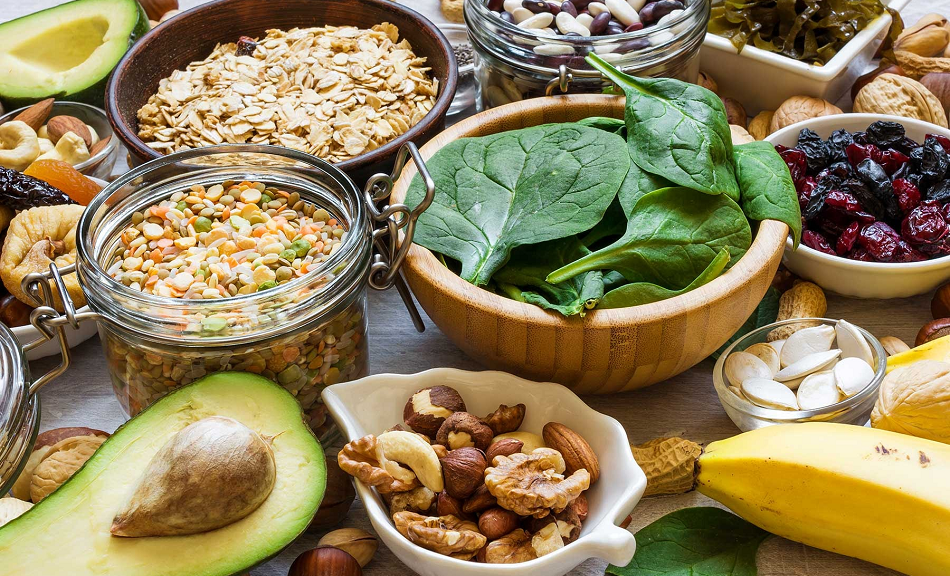
What to do? Most people know to eat bananas for potassium, but there are other choices that are even better. The following table shows the ranges of potassium level to consider when choosing food sources:

What is the recommended daily allowance for potassium, you may ask? There ,actually, isn’t an official RDA, but the umber of 4,700 mg a day is the consensus. Not surprisingly, most people are deficient.

Armed with these target ranges, let me give you a short list of high-potassium foods I gleaned from this source HERE:

Artichoke 345 mg.

Banana 425 mg

Beef, ground 270 mg

Beets 260 mg

Dried peas and beans 300-475 mg

Haddock, perch, salmon 300 mg

Lentils 367 mg

Milk 350-389 mg

Baked potato 925 mg

Prunes 305 mg

Spinach 420 mg

Baked sweet potato 450 mg …

There are more, but check the resource cited above for serving amounts and other options.

The caveat comes for those using the lite versions of salt which are formulated with high levels of potassium. Work with your doctor about balancing potassium and sodium levels.

Additionally, let’s not jump off the cliff with this.

Geez you give some people an inch, (read ground beef and white potatoes), and they’ll start eating hamburgers, French fries, and loaded baked potatoes saying I told them it was good for their potassium levels.

No. No. And no.

Think of dinner consisting of baked fish, one HALF of a potato (I like to cut them into home fries, toss in a bit of olive oil with salt and pepper, and bake), along with a generous green salad with that creamy yogurt-based dressing I shared recently. Evening snack of a small bowl of cantaloupe (also on the list) and ½ banana.

No cramps this morning. Just sayin’.

In health-

Deidre

Please share this article with others by clicking on the MORE button below for sharing options.

Have You Sprung A Leaky Gut?

Finger in the Dike

Remember the story of the little Dutch boy who stops a dam from cracking and flooding the town by plugging the hole with his finger until adults could come to the scene to affect a more permanent solution? Legend has it that he stood there all night before more help could be obtained.

Judging from just the cursory view last week of what is an autoimmune disease and how it might happen, we could conclude that our dam has more than one hole. In fact, we are running out of fingers to plug all the holes.

Where are the holes? Look to the millions of us with autoimmune diseases and see if there is a common experiential thread…

  • In the residual chemicals found in our food from growth practices
  • In the chemicals added to our highly processed Western diet which is also high in sugar, fat, and salt
  • In the consumption of food that is pro-inflammatory
  • In the polluted air we breathe
  • In the chemical exposures we subject ourselves to in cleaning products, toiletries, and cosmetics
  • In the chemicals we use in our yards and gardens
  • In the stress hormones of the feedlot animals we eat
  • In the chemical transfers of packaging, storing, and cooking food in plastic products
  • In stress
  • Eventually – in the air, as we breathe nano dust particles of plastic which do not decompose but just degrade into smaller and smaller pieces

Clearly, there is no one answer, but taken as a whole, it is easy to see that the world we have created is not the world our genes were built to withstand.

As promised, I want to bring up just one facet of how genetically susceptible people might be opening the door to the lurking wolf on the outside. And I believe that there are more of us genetically susceptible than we may realize.

Dr. Alessio Fasano

Let me introduce you to Alessio Fasano who is a world-renown physician and researcher. He holds numerous positions both in Boston and in Italy. To read his biography HERE: Alessio Fasano – Wikipedia is to be awe inspired and grateful for all the lives he and his teams are helping.

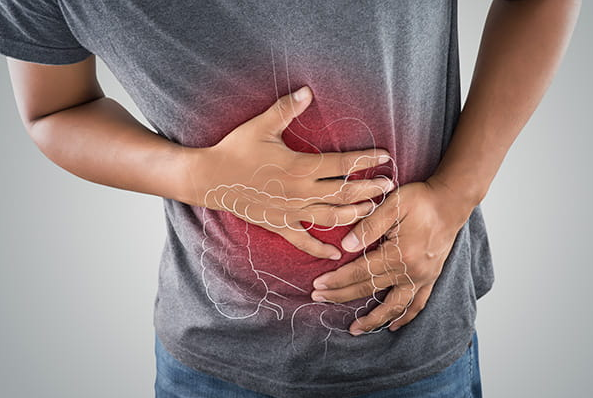
In 2000, Dr. Fasano discovered a protein in the lining of our small intestines called zonulin. The lining of the small intestine is just one cell thick. Touch your tongue to the side of your cheek – that’s the same sheet of cells that extends from our mouth all the way through our digestive system to the very end.

Thin, yes, but strong and resilient to keeping our insides in and the outsides out. Each cell is connected to its neighbor by what’s called a tight junction.

Better be tight. Lots of stuff in the pipeline. Don’t want random particles of food or toxins punching through to the other side without first being properly broken down and absorbed by the blood stream and taken through several filters.

Turns out zonulin is a moderator of sorts for what can get through this layer of cells. An uptick of zonulin will cause these tight junctions to open wide, allowing large, foreign/non-self materials to flow through to the gut tissue and eventually be absorbed unfiltered by the blood stream and land anywhere in the body.

Because these large particles are foreign, our body will wage an attack.  

According to Dr. Fasano, “When the zonulin pathway is deregulated in genetically susceptible individuals, autoimmune disorders can occur.” Check out this list of autoimmune diseases to see if you can find what has been plaguing you and if you might be genetically susceptible: Autoimmune Disease List • AARDA

This brings us full circle. Remember those questions I posed for us to ponder a couple weeks ago?

  • Can you see a DON’T TOUCH – WET PAINT sign and not touch the surface it’s indicating?
  • If you know a certain food will cause an immediate harmful reaction in your body, will you eat it anyway?
  • Is there a habit you have or a food you eat that will most likely cause problems for you down the road, but you justify continuing it by saying, “I’ll stop when it starts to bother me”?

It might be time to check out some anti-inflammatory practices found in my book, Toolkit for Wellness, to see if you could be more proactive in controlling your health destiny.

I am doing this for myself as well, as I continue my experiment of eliminating my beloved grits and oatmeal.

Since following my Noom way of eating starting this February, grits and oatmeal have become a staple in my morning. Simultaneously, my hips and knees have been complaining. This is not the first time I’ve experienced this potential cause and effect.

Knowing that many aches and pains are self-induced, I’m accepting responsibility by eliminating a couple foods I love to see if the picture improves. Who wants to bet that grits and oatmeal are inflammatory to me?

Time and abstinence from delish menu items will tell the story.

In health-

Deidre

Strawberry Fields Forever …

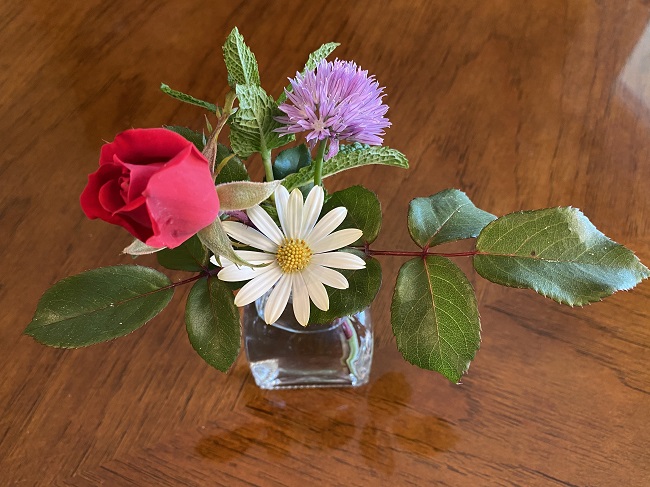
I am bringing rose buds, African daisies, and chive flowers into the house, just to bring that spring vibe indoors.

My Aussi and Kiwi readers, I know, are now nestling into the fall season of harvest: but spring has sprung in the Northern Hemisphere! We are just now setting out new plants in anticipation of colorful blossoms and produce to come.

Ah, the faith of a farmer – gardener!

It seems to touch us all. My regular trips to the local garden center are showing every age, socio-economic level, race, and gender walking the isles of seedlings, young blooms, fertilizer, chips, and bags of “dirt” as we all seek the color and promise of outdoor life in the coming months.

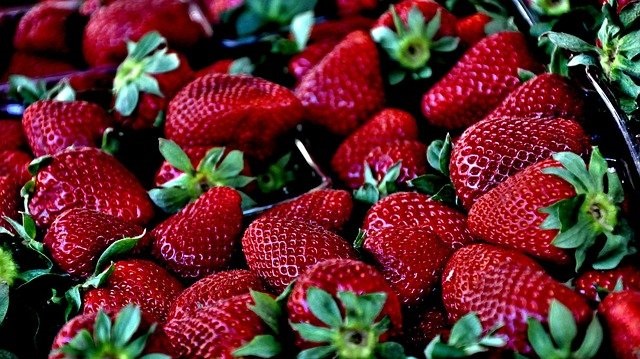
No longer are we indulging in out-of-season fruit grown in South and Central America. Our strawberries are coming from the United States and, man, are they sweet!

Our local strawberry fields are ready for customers. My neighbor sent me a picture this morning of her cardboard flat filled with ripe strawberries after just a short time of easy picking.

Are visions of strawberry cakes, pies, layered truffles, and jam filling your head?

Not mine.

I’m relishing every bite of fresh berries possible.

Sporting an average of 4 calories each, strawberries are a filling, SWEET, food and are satisfying and good for the body. Woohoo!

A quick check on their nutritional benefits HERE will remind you why strawberries are so beneficial. To summarize:

  • Strawberries are 91% water and just 7% carbohydrates – 26% of the carbohydrate is comprised of fiber, so the net carb content is low.
  • The soluble and insoluble fibers found in strawberries help contribute to great gut health by feeding the good bacteria found there.
  • The high fiber of strawberries contributes to their low Glycemic Index which helps prevent blood sugar and insulin spikes.
  • Strawberries are a good source of Vitamin C, manganese, folate, and potassium, as well as several other vitamins and a host of antioxidants that decrease inflammation and oxidative stress.

Why add empty, white flour carbohydrates, cholesterol-raising saturated fat, and even more carbohydrates in sugar to something that screams PERFECTION and HEALTH?

  • Looking for hors d’oeuvre? People will rush to get a fresh strawberry.
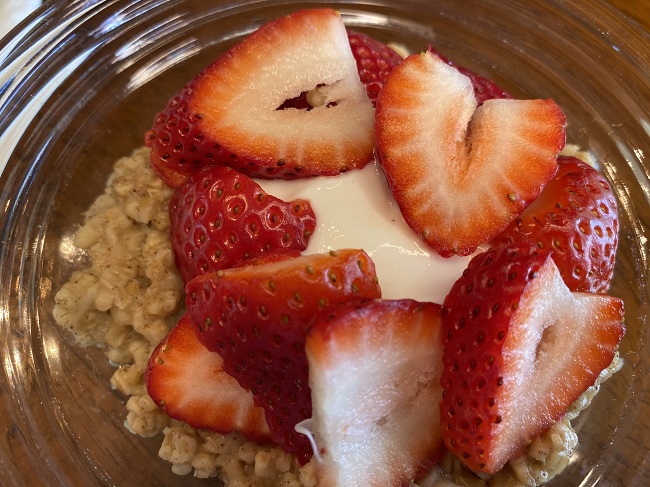
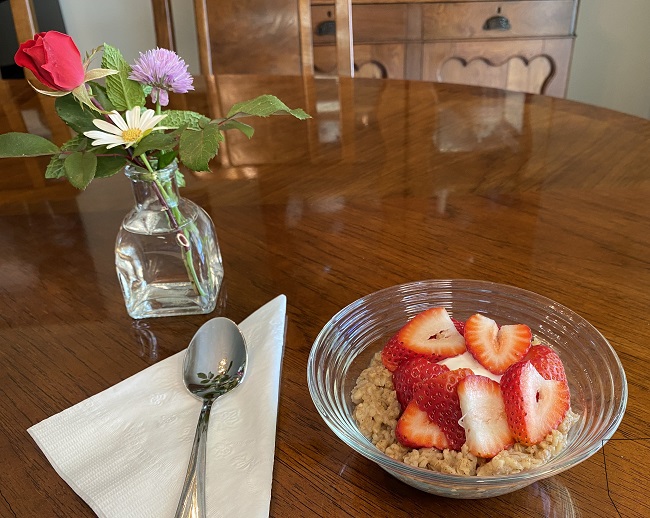
  • Want to ramp up your oatmeal in the morning or as an evening snack? Add a dollop of non-fat Greek yogurt and several sliced strawberries. Simply divine!
  • Looking for an awesome snack? Several fresh strawberries will rock your world, without rocking the calories or the blood sugar.

There are some folks who are allergic to strawberries, especially young children and people with sensitivities to birch pollen or apples, who may have symptoms after consuming strawberries.

Until the blueberries are available sometime in late May or June, fresh strawberries will be gracing my breakfast, snack, salad, and dessert plates for a while.

How about you? Are you going to choose strawberries in the raw without the detractors of flour, sugar, and fat?

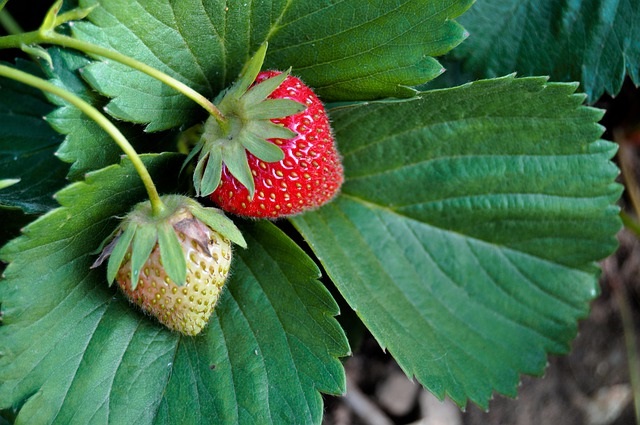
Our editor, Sheree, advises to pick only the fully ripe strawberries because they will not ripen after picking – they only age out.

If you liked this post, please click on the share button to spread the word. If you are not a subscriber to foodtalk4you, please click the subscribe button so you won’t miss the next post – we promise not to share or sell your email address and we will not bother you with endless sales pitches.

In health-

Deidre

Now, craving anything special yet?

One Delicious Imposter

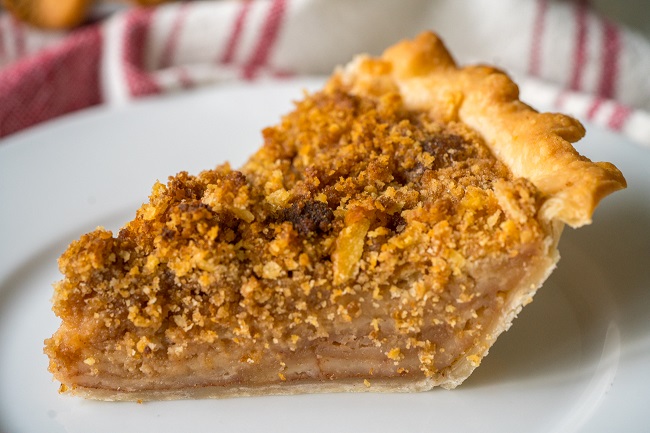
Have you ever eaten a slice of Mock Apple Pie? I had only heard of it, and I vaguely remembered the pseudo-fruit pie used Ritz Crackers with their all their “buttery goodness.”

A quick jump into the internet HERE revealed some interesting facts:

The mock apple pie, made from crackers, was probably invented for use aboard ships, as it was known to the British Royal Navy as early as 1812.[24] The earliest known published recipes for mock apple pie date from the antebellum period of the 1850s.[25][26] In the 1930s, and for many years afterwards, Ritz Crackers promoted a recipe for mock apple pie using its product, along with sugar and various spices.[27]

Apparently, the Limeys lacked all forms of fresh or dried fruit, not just citrus. Bravo to their creative cooks who cobbled together a pie crust filled with saltines and flavored with sugar and spices.

With fresh fruit at my fingertips, no desire to add sugar, saturated fats or white flour, and a desire for a bit of “healthy dessert” – I set out on my quest.

But first, the back story …

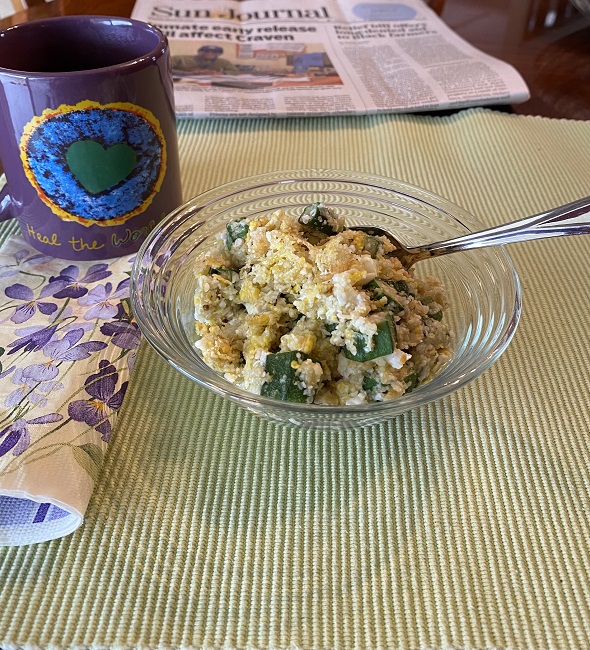
As much as I adore my Grits ‘n Eggs ‘n Okra breakfasts, it’s nice to vary the diet, so I occasionally stir up some oatmeal combo to which I add what I call “sweet spices.”

Check out page 161 of Toolkit for Wellness  to see how using cinnamon, nutmeg, vanilla, and other spices/flavorings can decrease or eliminate the need for sugar.

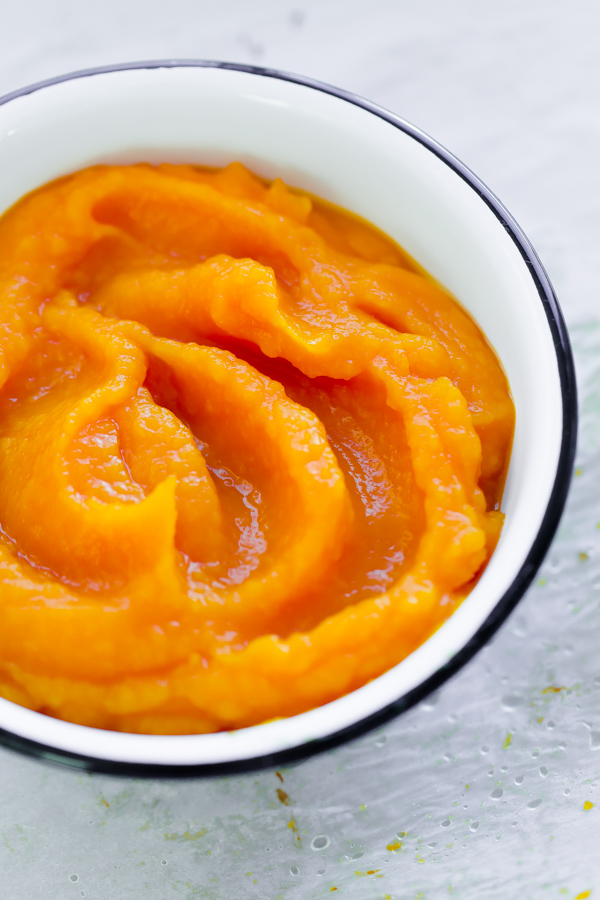
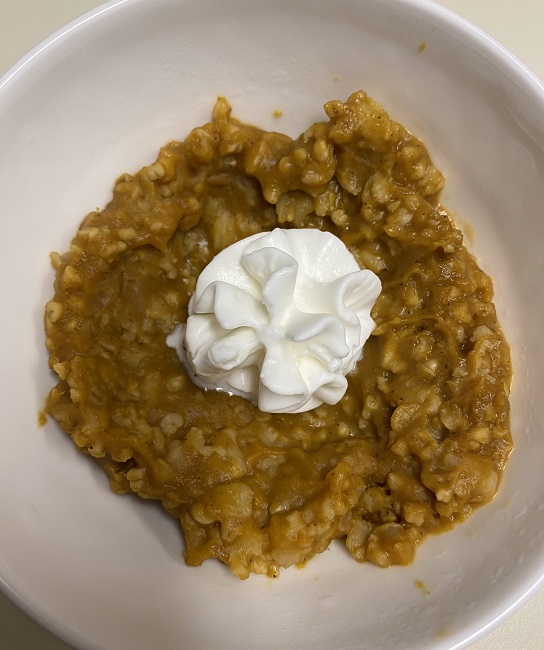
One day, I got the idea to stir a half can of pumpkin puree into my cooking cereal. After adding vanilla and a teaspoon of pumpkin pie spice, I was enjoying all the pie satisfaction without tons of sugar or milk – or fattening crust.

I will fess up that my oatmeal is cooked with just a bit of brown sugar – recipe to follow – but the need for more is simply not there. Since there are always leftovers, I soon discovered that a small serving of my Mock Pumpkin Pie was a satisfying, HEALTHY dessert, filled with an orange veggie and fiber.

After putting a small shot of whipped cream on top, I was feeling quite special.

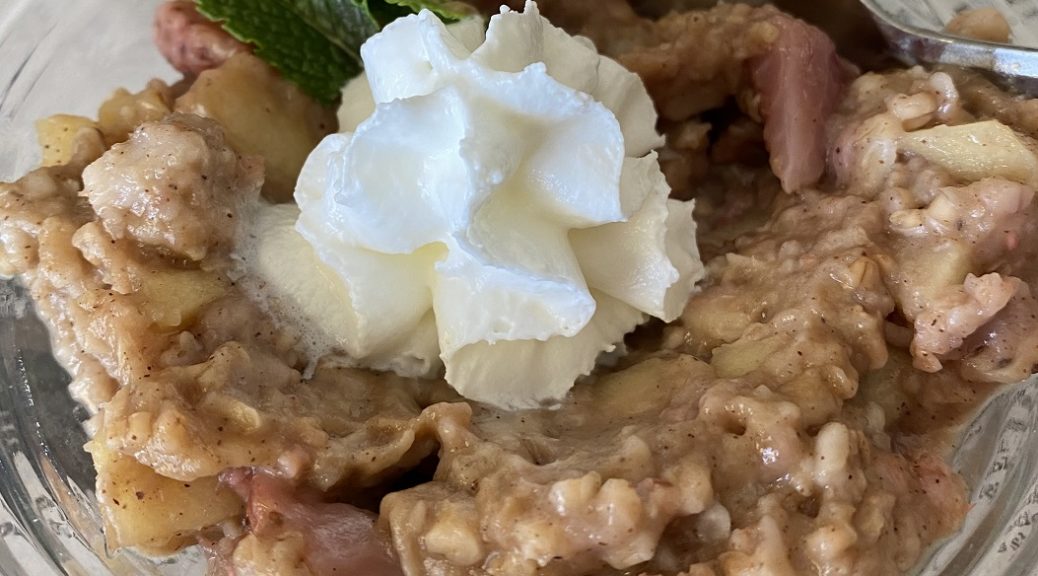
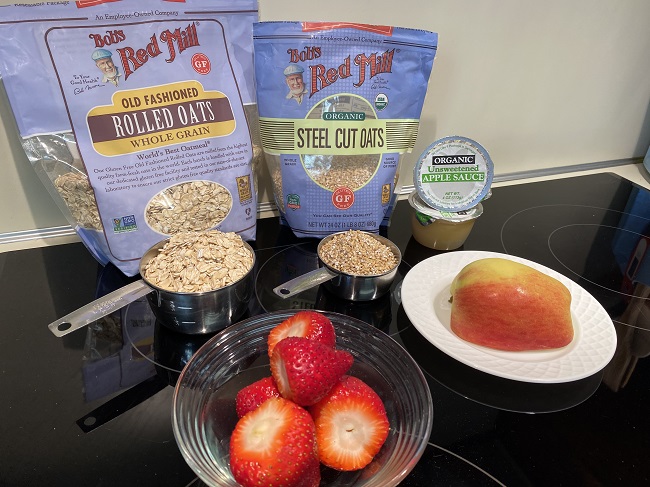
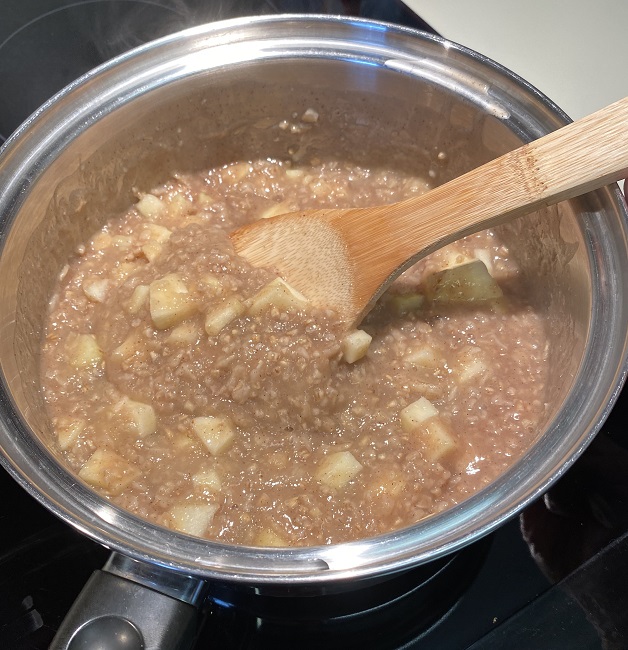
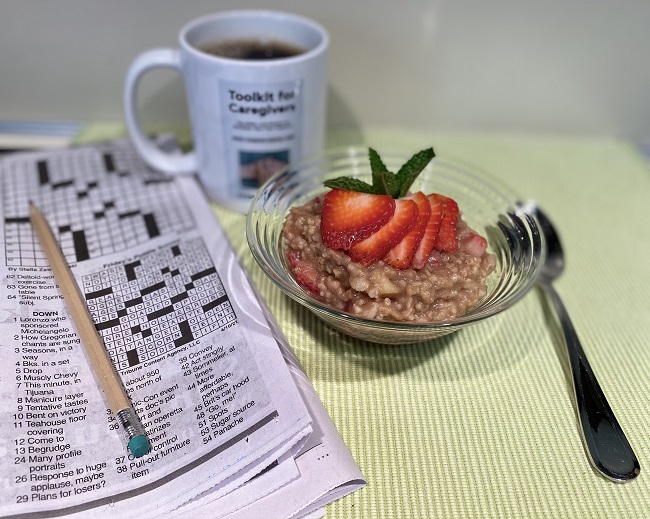
A Mock Apple Pie was soon to follow. Check out these satisfying ingredients and the recipe.

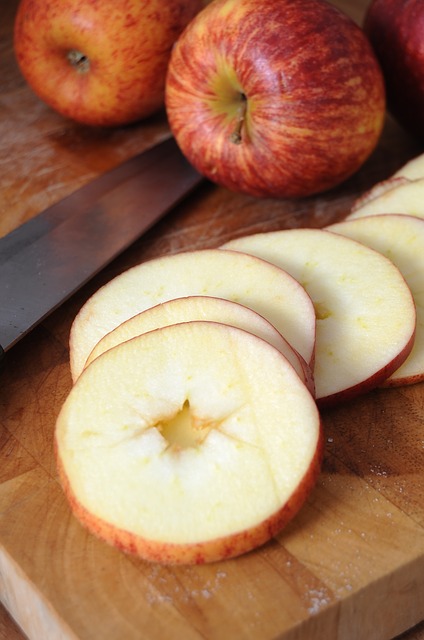
NOTE: Photoshoot day featured fresh apples and strawberries. In hindsight, I’d save the strawberries for the garnish alone – unless you were not planning on having leftovers. Strawberries lose their intense color after cooking. If using immediately, you could stir in the diced strawberries last minute, just prior to serving.

MOCK APPLE PIE a la FOODTALK4YOU

Ingredients

1 cup/250 ml old fashioned rolled oats – I use gluten-free

½ cup/250 ml steel cut oats – I use gluten-free

3 cups/750 ml water

2 tablespoons/30 ml brown sugar

1 cup/250 ml unsweetened applesauce

½ fresh apple, diced – I use Ambrosia apples

1 tsp/5 ml apple pie spice

Splash of vanilla extract – optional

Dash of salt – optional

Method

Add all oats, brown sugar, salt, and water into a saucepan on medium heat, stirring to combine.

Continue stirring occasionally to prevent sticking to the pan. When the spoon begins to leave a “track” at the bottom of the pan, add the applesauce and diced apples. Continue to cook, stirring every so often.

When apples are heated and cooked to your desired doneness, remove from heat, add vanilla – if using – and serve. I prefer to leave some fibrous crunch to my apples to preserve their fresh fruit quality.

A cup and a half/375 ml serving makes a hearty breakfast.

A ¾ cup/187 ml serving is exactly right for dessert or an evening snack.

Certainly, this recipe easily adapts to canned pumpkin, or an array of fresh fruit. I hope you enjoy this hybrid Mock Apple Pie.

In health – even at dessert

Deidre

The share button at the bottom makes this easy to share with family and friends.

Grits ‘N Eggs ‘N Stuff

Before I became a southerner, I was an avocado and artichoke-eating California girl. While working as a teaching assistant in a GED program at Fort Ord, I received an early introduction to a southern staple: “Grits ‘n eggs.” 

Sort of.

You see, this was before I learned to speak southern.

Now, the “y’all,” and, “bless his heart,” spoken by our own 4’ 8” Georgia peach of a school secretary, were clearly understood – even by a westerner.

Since southern dishes were new to me – then, translating, “Grits ‘n eggs,” into a plate of food eluded my understanding. But our newly-wed secretary raved so much about the grits ‘n eggs she whipped up each morning for her hungry soldier husband, I thought I’d try it out.

Grits were an entirely new food group for me. Armed with instructions on what to look for in the store, I set out on how to, “fix me some grits ‘n eggs.” After scoring a bag of bonified grits, I was ready!

Bring water to a boil. Check.

Add grits and stir. Check.

Add salt as desired. Check.

What about the egg? The package said nothing about adding an egg, but I wanted grits ‘n eggs.

What’s a college educated girl going to do?

Add a couple eggs and stir!

Voila! Grits ‘n eggs!!!!

Unknowingly, I had just created my own hybrid version of “grits ‘n eggs” – even before hybrid was a word.

Not wanting to divulge my culinary ignorance, when our secretary asked how I liked these amazing “grits ‘n eggs,” I gave a tentative approval. Took me a while to learn the error of my ways through attentive listening and asking the right questions as to technique.

Like any true southerner – hey, I’ve been in the South for 40 years, so I’ve earned that label – the fine art of chopping up my over medium fried egg into my very separate serving of grits-on-the-same-plate is pure heaven – in a restaurant.

At home, I am basically a lazy cook, so I have learned to love my now named – “Fluffy Grits,” because only one pan is needed.

Lately, I’ve been kicking up nutritional and fiber values even more, and have added another acquired southern taste to the mix: Okra.

Not the breaded, deep-fried version. No, no. Plain slices of about 4-5 okra sautéed in my small pan with a bit of olive oil and seasoned with garlic salt until slightly browned.

Then I add my grits and water, stirring to make sure the grits are not clumping.

Next comes the egg. Stir/scramble the mixture until the egg is cooked.

Done and done. One pan.

“Grits ‘n eggs ‘n okra!”

My favorite breakfast. The fiber in the okra works wonders on the digestive system, and my day has one veggie in it all ready.

If you have an aversion to okra slime – fear not. Sauteed okra will not slime you.

Since stopping breaded and fried foods years ago, I have never looked back. Plain, sauteed okra is a delight – try seasoning them with a bit of Montreal Seasoning as a side dish to dinner …

Hmmm.

If you enjoyed this post, please share on social media, and subscribe to our foodtalk4you tribe so you won’t miss an issue.

In health-

Deidre

Beyond The Sunshine

Our friend, Mr. Groundhog, was reluctantly pulled from his comfy den and was held up high in the air by a top hat festooned, bearded fellow. Others in similar garb declared the winter would hang around for another six weeks.

Sigh. Whatever.

Just give me some sunshine and I’ll be happy!

Wherever you are on the globe, it is probably being recommended that you supplement with Vitamin D in the winter, as the sun will be too low on the horizon to be effective in triggering the processes, starting in your exposed skin, to do any good. Plus, there’s hardly any exposed skin in the winter months.

I am citing the National Institutes of Health, NIH, today in daily normal and higher limits of vitamin D, and where to find this important vitamin in food sources.

Vitamin D – Health Professional Fact Sheet (nih.gov)

Vitamin D – Consumer (nih.gov)

The NIH offers the following recommendations:

The amount of Vitamin D you need each day depends on your age. Average daily recommended amounts are listed below in micrograms (mcg) and International Units (IU):

The daily upper limits for Vitamin D are listed below in micrograms (mcg) and international units (IU):

Please work with your health care provider to determine what your levels of Vitamin D are and how to proceed with supplementation.

In the meantime, we can get some of our Vitamin D from foods:

If you are like me and are a non-milk drinker and non-cereal eater, we’re left with cod liver oil, (in capsules, please!), and either rainbow trout or sockeye salmon with a raw mushroom salad for a substantial hit of Vitamin D.

Anyone with leanings toward vegetarianism/veganism should take note, and work with their doctors about this vital nutrient.

Vitamin D is a fat-soluble vitamin, which means it needs to be consumed along with a healthy fat to be absorbed by the body. Fortunately, salmon has such a fat in it, but use some healthy fats (olive oil) in the cooking or presentation of your food. Fat Free and highly processed dressings only contribute to not absorbing vital nutrients and expose you to highly-manipulated, food-like substances.

So, show extra love to your body in this season of love by dishing up some Vitamin D rich foods. A candlelight dinner featuring sockeye salmon or rainbow trout sounds mighty fine!

Love to all our readers who support the efforts of foodtalk4you by sharing our articles on Facebook, Twitter, and email. Couldn’t do this without you!

May you be a sunbeam to someone today.

In health-

Deidre

Please sign up for the FoodTalk4You newsletter. Just fill out the quick form on the left of this page!

Orange Obsessed OCTOBER!

Taking a poll here. Do you eat orange-colored foods? As in pumpkin, winter squash, and sweet potatoes? Okay. Now, are you male or female? I could find no supporting studies to confirm my theory, but I know several men who prefer to never eat orange food at all.

Not. Ever. Again.

Carrots … but only if they’re raw.

Maybe they are afraid of what the fellow in this banner experienced. Alas, poor York, I knew him well.

I joined with the excitement sweeping across the country as temperatures began to drop and Dunkin’ Donuts brought back all things pumpkin.

A pumpkin latte is not a waist-slimming or healthy meal replacement beverage, but there have been two in my life since the start of September. I’m still waiting for that perfect day to eat my ONCE yearly glutenous, pumpkin donut. It will be a fine moment!

I do adore pumpkin treats. Rather than grabbing an expensive gluten-free crust for my pumpkin pie, I will often just omit the crust all together and bake my pumpkin filling in a greased baking dish.

Pumpkin pudding, anyone?

A recipe came to my inbox the other day from the blog paleomg.com for Pumpkin Chocolate Chip Oat Bars. She apologized for them not being paleo because of the oats, and she – like I have – returned to eating gluten-free oats with no ill effects.

But I just can’t leave a recipe alone. I’m always tweaking ingredients to make recipes more nutritious.

This recipe checks so many brain food boxes: all the benefits of colorful food, dark chocolate, whole grain, Omega3 fatty acids, fiber, more Omega3s, protein, eggs (remember last week’s Adam’s apple?), walnuts (did they pop out of my navel?), more protein – check, check, check.

So, here’s my first dive into pumpkin-inspired recipes, and I’m so pleased with the results. I hope you will try these.

Pumpkin Chocolate Chip Oat Bars 2.0

Ingredients

3/4 cup/175 ml canned pumpkin puree (The original recipe uses ½ cup/125 ml, but I added dry ingredients that would need the added moisture)

1 cup/250 ml runny nut butter (almond or cashew)

Note: I made my own nut butter using a food processor and soaked, unroasted cashews. Make sure you soak the cashews for one hour. The goal is to not have a dry nut butter as the bars will be too dry and crumble. I added some avocado oil and a small spoonful of coconut oil until the consistency was to my liking.

2 extra-large eggs

¼ cup/50 ml maple syrup

¼ cup/50 ml brown sugar – or less

Note: This is me adding sugar to a recipe! I’m usually eliminating it, but when I tested the batter, it was just off, so I added just a small shake of brown sugar from the bag. It wasn’t much, but it did the job. These are not overly sweet tasting at all. As I have mentioned in the past – sugar makes you want more sugar – so I don’t use a lot of the stuff.

1 teaspoon/5 ml vanilla extract

1 ½ cups/375 ml gluten-free old-fashioned oats

2 teaspoons/10 ml pumpkin pie spice

½ teaspoon/2.5 ml baking soda

Pinch of salt – I used a little more because my nut butter lacked salt

½ cup/125 ml mini-dark chocolate chips. The original recipe calls for 1 cup/250 ml of regular-sized chips, but mini-chips seem to go further and I did not want the chocolate to overpower the pumpkin.

My additions that make this good for you:

¼ cup/50 ml collagen hydrolysate

2 tablespoons/ 30 ml of hemp seed hearts

Cute squirrel eating a walnut

2 tablespoons/30 ml ground flax seeds

¼ cup/60 ml chopped walnuts

You may need a few spoonfuls of coconut flour at the end if the batter seems too wet. Add a bit at a time, stirring well after each addition.

Instructions

Preheat oven to 350 degrees F.

Grease an 8 x 8-inch baking dish.

In a medium sized bowl, stir together all the dry ingredients.

In a large bowl, whisk/mix the wet ingredients.

Add the dry ingredients to the wet ingredients, incorporating well. If the batter/mix seems too wet, add a bit of coconut flour, a spoonful at a time, stirring well after each addition.

Pour/spoon batter into prepared pan. I sprinkled about 1 tablespoonful of turbinado sugar(*) on top just to dress things up.

Bake 45-50 minutes. Start checking for doneness at 45 minutes – mine was starting to get a little too brown on top but the toothpick test revealed a still wet interior, so I put some foil over the top and continued to bake it until it was obviously done on the inside.

When fully baked, remove from oven to cool. After 5 minutes, slice using a serrated knife. I easily cut mine into sixteen squares. Just enough to go with a cup of coffee for special fall morning breakfast outdoors.

I bet you know someone who would enjoy foodtalk4you each week. Please share with a friend or family member and click the subscribe button so you won’t miss the latest.

In health – Deidre

(*) Turbinado Sugar is darker and less fine. It is also known as raw sugar.