
Category Archives: Habit Building

Have You Sprung A Leaky Gut?

Finger in the Dike

Remember the story of the little Dutch boy who stops a dam from cracking and flooding the town by plugging the hole with his finger until adults could come to the scene to affect a more permanent solution? Legend has it that he stood there all night before more help could be obtained.

Judging from just the cursory view last week of what is an autoimmune disease and how it might happen, we could conclude that our dam has more than one hole. In fact, we are running out of fingers to plug all the holes.

Where are the holes? Look to the millions of us with autoimmune diseases and see if there is a common experiential thread…

  • In the residual chemicals found in our food from growth practices
  • In the chemicals added to our highly processed Western diet which is also high in sugar, fat, and salt
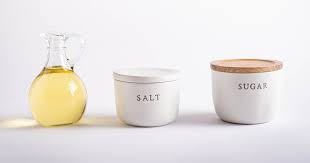
  • In the consumption of food that is pro-inflammatory
  • In the polluted air we breathe
  • In the chemical exposures we subject ourselves to in cleaning products, toiletries, and cosmetics

  • In the chemicals we use in our yards and gardens
  • In the stress hormones of the feedlot animals we eat
  • In the chemical transfers of packaging, storing, and cooking food in plastic products

  • In stress
  • Eventually – in the air, as we breathe nano dust particles of plastic which do not decompose but just degrade into smaller and smaller pieces

Clearly, there is no one answer, but taken as a whole, it is easy to see that the world we have created is not the world our genes were built to withstand.

As promised, I want to bring up just one facet of how genetically susceptible people might be opening the door to the lurking wolf on the outside. And I believe that there are more of us genetically susceptible than we may realize.

Dr. Alessio Fasano

Let me introduce you to Alessio Fasano who is a world-renown physician and researcher. He holds numerous positions both in Boston and in Italy. To read his biography HERE: Alessio Fasano – Wikipedia is to be awe inspired and grateful for all the lives he and his teams are helping.

In 2000, Dr. Fasano discovered a protein in the lining of our small intestines called zonulin. The lining of the small intestine is just one cell thick. Touch your tongue to the side of your cheek – that’s the same sheet of cells that extends from our mouth all the way through our digestive system to the very end.
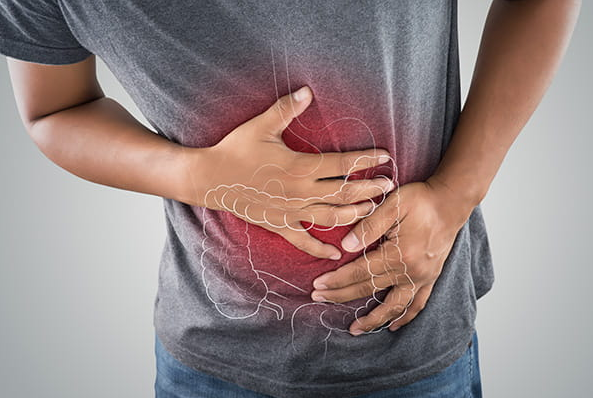
Thin, yes, but strong and resilient to keeping our insides in and the outsides out. Each cell is connected to its neighbor by what’s called a tight junction.

Better be tight. Lots of stuff in the pipeline. Don’t want random particles of food or toxins punching through to the other side without first being properly broken down and absorbed by the blood stream and taken through several filters.
Turns out zonulin is a moderator of sorts for what can get through this layer of cells. An uptick of zonulin will cause these tight junctions to open wide, allowing large, foreign/non-self materials to flow through to the gut tissue and eventually be absorbed unfiltered by the blood stream and land anywhere in the body.

Because these large particles are foreign, our body will wage an attack.  

According to Dr. Fasano, “When the zonulin pathway is deregulated in genetically susceptible individuals, autoimmune disorders can occur.” Check out this list of autoimmune diseases to see if you can find what has been plaguing you and if you might be genetically susceptible: Autoimmune Disease List • AARDA

This brings us full circle. Remember those questions I posed for us to ponder a couple weeks ago?
  • Can you see a DON’T TOUCH – WET PAINT sign and not touch the surface it’s indicating?
  • If you know a certain food will cause an immediate harmful reaction in your body, will you eat it anyway?
  • Is there a habit you have or a food you eat that will most likely cause problems for you down the road, but you justify continuing it by saying, “I’ll stop when it starts to bother me”?

It might be time to check out some anti-inflammatory practices found in my book, Toolkit for Wellness, to see if you could be more proactive in controlling your health destiny.

I am doing this for myself as well, as I continue my experiment of eliminating my beloved grits and oatmeal.
Since following my Noom way of eating starting this February, grits and oatmeal have become a staple in my morning. Simultaneously, my hips and knees have been complaining. This is not the first time I’ve experienced this potential cause and effect.

Knowing that many aches and pains are self-induced, I’m accepting responsibility by eliminating a couple foods I love to see if the picture improves. Who wants to bet that grits and oatmeal are inflammatory to me?

Time and abstinence from delish menu items will tell the story.

In health-

Deidre

Autoimmune What?

You had me at, “What is an autoimmune disease explained in 5 minutes.” If you have 5 minutes, it’s worth absorbing Gabriel Arruda’s easy to understand explanation – because an understanding of how our natural immunity works is needed before plunging into the deep waters of autoimmunity.

Yes, I thoroughly covered how inflammatory foods and lifestyles can lead to autoimmunity in my first book, Toolkit for Wellness, but I wanted a fresh take.

A little animation helped, and I agreed with his basic approach, but not necessarily with his entire online program. Mr. Arruda presents one of the many ways autoimmunity can occur – I’ll share another one.

He took me back to my teaching days, using Pac Man as a symbol for white blood cells munching up the bad hombres floating around our bodies.

Otherwise, you can lean into Wikipedia’s explanation HERE: Autoimmunity – Wikipedia

Or another explanation HERE: Autoimmune Diseases: Types, Symptoms, Causes & More (healthline.com) 

Autoimmunity is when your body’s natural defenses somehow get scrambled and are no longer able to correctly identify foreign threats; instead the attack on invaders is misdirected onto self. Thus auto/self-immunity.

As mentioned last week, I an offering this discussion because we are in the middle of an explosion of people suffering with autoimmune diseases.

One might ask, “What’s happening to cause this? Spontaneous worldwide meltdown of our internal defenses?”

Well, you be the judge.

Clearly, an appropriate immune response is an intricate cascade of events that enlists organs and organ systems throughout the body. What we’re throwing at our bodies in terms of stress and chemicals has changed considerably in the last 40-50 years. What hasn’t changed is our genetic make up to handle these new factors.

I’ve read more than I want about the autoimmune crisis and there are at least 10 tabs open on the computer right now. That said, this article revealed so much new information that I’d like to summarize some key points for you:

-Favorite direct quote: “As such, autoimmune diseases could be the product of our own success as an industrialized species. This vexes researchers, because autoimmunity is not only one of the most prevalent disease categories but also fiendishly complex, a tangle of factors that scientists have yet to fully understand.”

-Doctors cannot agree on what constitutes an autoimmune disease. Right now, there are about 100.

-Unlike diseases such as cancer, there is no national data base for autoimmune diseases and, thus, no shared research, no coordinated data – it’s pretty much each disease subset is on its own.

-The rate of autoimmune disease uptick is far outpacing our DNA/gene’s ability to change and be the cause for such a shift.

-The diversity of our gut’s microbiome is a key element to our overall health and appropriate immune response. It’s been discovered that under-developed countries have an exceptionally low incidence of autoimmune disease along with a well-diversified gut microbiome. Whereas developed countries have less diversified microbiomes and have a high incidence of autoimmune disease.

-Studies of adults in 2003 and in fetal cord blood in 2005 revealed the presence of man-made chemicals including industrial compounds, pollutants, insecticides, dioxins, and mercury. The fetal cord blood study showed 287 different chemicals that were transmitted to those babies prior to birth.

-Americans report ever greater levels of personal stress. Who hasn’t taken a stress hit this past year? One last quote for the day: “The stressed-out individuals were more likely to be diagnosed with an autoimmune disease, more likely to develop multiple autoimmune diseases, and tended to develop autoimmune diseases earlier in life.”

Whew! That’s just the sprinkles on top of the cake, dear readers.

What started out as a simple assignment – “get the bad guys” – has been muddled by so many factors that have made identifying, what is foreign and what is self, almost impossible.

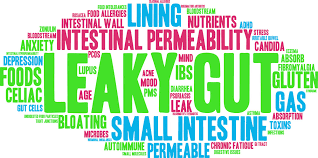
Next week, we’ll look at another common factor that can stimulate another cause of autoimmunity: leaky gut.

Don’t know about you, but I’m headed outdoors to harvest some organic veggies, sit under an umbrella, and soak up the sounds of nature.

If this post was useful to you, please share with others by clicking on the share button below and don’t forget to subscribe through the box on the left so you never miss an issue of FoodTalk4You!

In health,

Deidre

Some Things To Ponder

Before I start my mini-series on autoimmune diseases, I want us each to consider our individual level of commitment to mindfully guiding our health outcomes.

Let me pose some questions.

  • Can you see a “DON’T TOUCH – WET PAINT” sign and not touch the surface it’s indicating?
  • If you know a certain food will cause an immediate harmful reaction in your body, will you eat it anyway?
  • Is there a habit you have that will most likely cause problems for you down the road, but you justify continuing it by saying, “I’ll stop when it starts to bother me?”

Why am I offering this discussion in the first place? Because we are in the middle of an explosion of people suffering with autoimmune diseases … in a way not seen before.

Judging from the descriptions of my friends on Facebook, their autoimmune-challenged lives are constant torture – filled with inexplicable bouts of painful, life-disturbing days when even just lying around can be a challenge.

Is our human race crashing and burning?

Rather than crumbling strands of DNA inside of us, it may be a case of having to be ever more knowledgeable, vigilant, and proactive about our internal and external environments

As readers know, I believe we are designed for health, not disease. Foodtalk4you investigates what we are using to fuel our engines, offers ideas on making changes based on knowledge and experience, and then explores what we can do to restore much of our lost health and vigor.

The world of autoimmune disease seems to be growing exponentially. The coming posts will not solve all your problems, but may open your eyes to possibilities.

In the world prior to this autoimmune explosion, life was simpler, food choices were fewer, and air was cleaner. We also had fewer cures, limited access to medicine, and little knowledge of how deadly many things were – smoking is one of them.

Let’s not go back. We are in the present, dealing with today’s world.

First, just consider what your commitment to your improved health might look like. Are you willing to wait until something hurts, or are you willing to be proactive now, so it won’t hurt later?

Think about it.

Deidre

Don’t miss a post. Sign in to receive our weekly newsletter – look to the box on the left!

Scan Me, Dah-ling!

Let’s do a body scan …

No, not the kind the TSA folks do. This is the hands-free kind we can do for ourselves – fully clothed before and after yoga, exercise, or a morning stretch routine.

We often assume the time spent in movement is working for us because … well … we did it. Maybe there are feelings of relaxation or invigoration, but who knows if your efforts were a benefit or not? There is a way to do a self-assessment that is easy to perform and will reveal just how your body is responding.

It’s called a body check, body survey, or body scan and involves a mindful, relaxed, and non-judgmental overview of how things are feeling to you.

You can google body scan meditation to find a variety of approaches that will take 15-25 minutes. These scans/surveys/checks can be useful to decrease anxiety, explore pain response, or enter a deeper meditative state.

What I have done recently is bracket a 20-minute movement routine, with a brief two-minute scan, designed to que me into my balance, posture, general positioning, and set me up for a mindful practice and a thoughtful release from the session.

Try this simple body scan before your next time of movement.

BODY SCAN 101

Move to a standing position. Place your feet a shoulder width apart; hands hanging freely at your side.

Just relax and stand comfortably with your eyes closed. There is no right or wrong way to do this.

Notice your feet. Do you have more pressure on one foot than the other? Are you feeling more pressure on the front part of your feet, or are you noticing more weight on the heels? Is there increased pressure on the outside or inside of your feet?

Notice your lower legs. Are the muscles relaxed or do they feel more tense?

Move your awareness to your knees. Are your knees slightly bent? Maybe they are pushed back? As you stand, is your weight evenly distributed on both knees?

Notice your hips and pelvis. Is your pelvis tilted forward creating a forward bow to your lower back? Maybe your pelvis is tucked toward your back, causing your tail bone to lower?

Notice your belly. Is it more toward your spine, or is it relaxed in a neutral position, or is it pushed out?

Consider your arms and shoulders. Are your shoulders more back and in alignment with your ears? Or perhaps your shoulders are more forward, and your upper back is more rounded? Are your shoulders at the same height, or maybe one is higher than the other? Are your arms hanging at your sides the same way, or is one different?

Notice your neck and head. Is your head centered and balanced, or is it tilted forward, back, or to the side? Are your head and neck in alignment with your shoulders or are they leaning more forward?

This constitutes a pre-check. Open your eyes and move into your yoga, Pilates, aerobics, nature walk, or other exercise.

Conclude your movement routine with another body scan. It may surprise you how differently your body is oriented and balanced.

This time, when you open your eyes, gently and naturally walk around your immediate area. How does it feel to move through the space? Is it different from prior to exercise?

I have found this simple practice to be so centering. A mindful bracketing of movements using this body scan will set you up for a more balanced approach to the rest of your day and will clue you into to how your body is responding to movement.

If this post was useful to you, please share with others by clicking on the share button below and don’t forget to subscribe through the box on the left so you never miss an issue of FoodTalk4You!

In health-

Deidre

Breathing … To ….. Sleep *Yawn*

Can’t get enough ZZZ’s?

Is counting sheep not effective?

Millions of people – somewhere in the 50 – 70 million range in America alone – have sleep problems. Geez. That’s a lot of tossing and turning. A billion-dollar industry if pillow, mattress, medications, lotions and potions, and doctor visits are added up.

Aside from those of us who can’t turn off late night TV, Netflix, or those who choose to lean over their cell phones all night, there are those who just can’t get to sleep.

Body in bed.

Eyes closed.

Brain spinning, or brain worried about not going to sleep.

Now that’s really going to help.

Not.

The book, Breath – The New Science of a Lost Art, by James Nestor, continues to amaze me. After writing about it recently, I continued to peel back the layers of Nestor’s discoveries and personal experiences.

My copy is the most highlighted, underlined, dogeared book I’ve ever read. Even the appendix is riveting. Every breathing human should have a copy – just saying.

Today, I want to revisit the box breathing technique I shared with you HERE and the 4-7-8 Breathing technique. Both breathing patterns can relax you to sleep.

BOX BREATHING

Decathletes and Navy SEALs use breathing techniques such as this to calm down, slow pulses, and increase focus. You can do it in any situation, and it’s easy:

  • Inhale to a count of 4; hold 4; exhale 4; hold 4. Repeat.

To increase the body’s relaxation response, lengthen the exhalation to this pattern:

  • Inhale to a count of 4; hold 4; exhale 6; hold 2. Repeat.

The longer exhalation assists the body to relax deeply enough for sleep.

4-7-8 BREATHING

Dr. Andrew Weil, one of my favorite wellness gurus, made this technique famous as it encourages the body into a state of deep relaxation, allowing for sleep.

Here’s how:

While box breathing and its variant are easy to master, you may want to breathe along with Dr. Andrew Weil for the 4-7-8 breathing. You can go to Asleep in 60 seconds: 4-7-8 breathing technique claims to help you nod off in just a minute – YouTube to get Dr. Weil’s full explanation on how to use this technique effectively-  not only for sleep, but for anxiety and to lower pulse and blood pressure.

There will be more posts on breathing as I introduce to you the perfect breath and much more.

Get some ZZZs tonight.

In health-

Deidre

Please sign up for the FoodTalk4You newsletter. Just fill out the quick form on the left of this page!

One Delicious Imposter

Have you ever eaten a slice of Mock Apple Pie? I had only heard of it, and I vaguely remembered the pseudo-fruit pie used Ritz Crackers with their all their “buttery goodness.”

A quick jump into the internet HERE revealed some interesting facts:

The mock apple pie, made from crackers, was probably invented for use aboard ships, as it was known to the British Royal Navy as early as 1812.[24] The earliest known published recipes for mock apple pie date from the antebellum period of the 1850s.[25][26] In the 1930s, and for many years afterwards, Ritz Crackers promoted a recipe for mock apple pie using its product, along with sugar and various spices.[27]

Apparently, the Limeys lacked all forms of fresh or dried fruit, not just citrus. Bravo to their creative cooks who cobbled together a pie crust filled with saltines and flavored with sugar and spices.

With fresh fruit at my fingertips, no desire to add sugar, saturated fats or white flour, and a desire for a bit of “healthy dessert” – I set out on my quest.

But first, the back story …

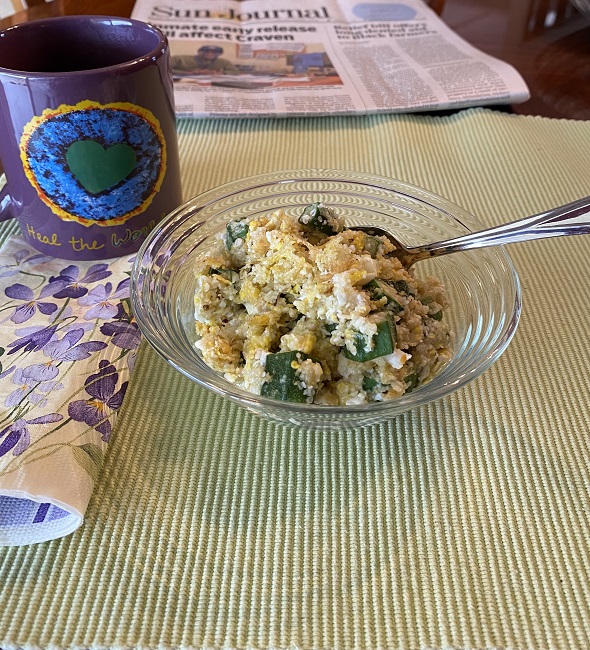
As much as I adore my Grits ‘n Eggs ‘n Okra breakfasts, it’s nice to vary the diet, so I occasionally stir up some oatmeal combo to which I add what I call “sweet spices.”

Check out page 161 of Toolkit for Wellness  to see how using cinnamon, nutmeg, vanilla, and other spices/flavorings can decrease or eliminate the need for sugar.

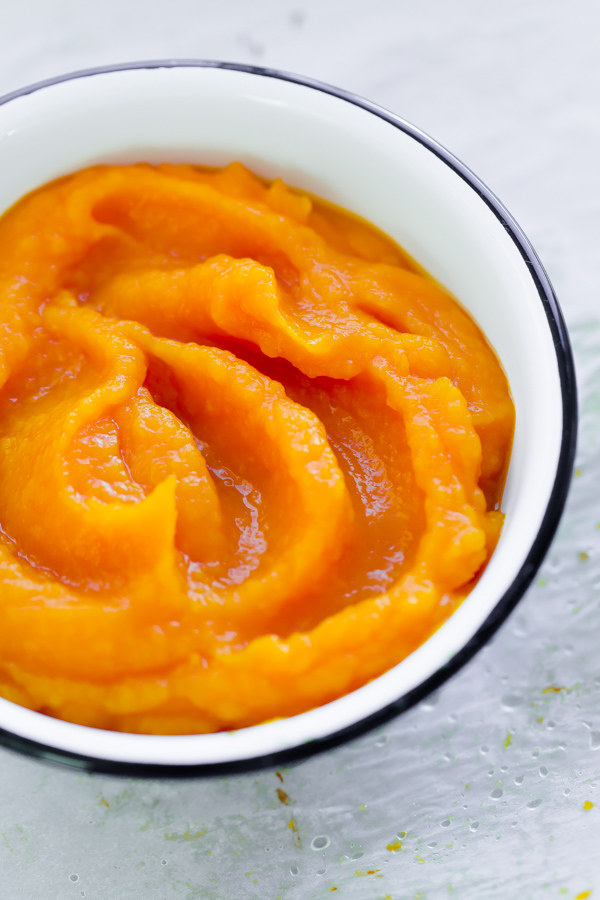
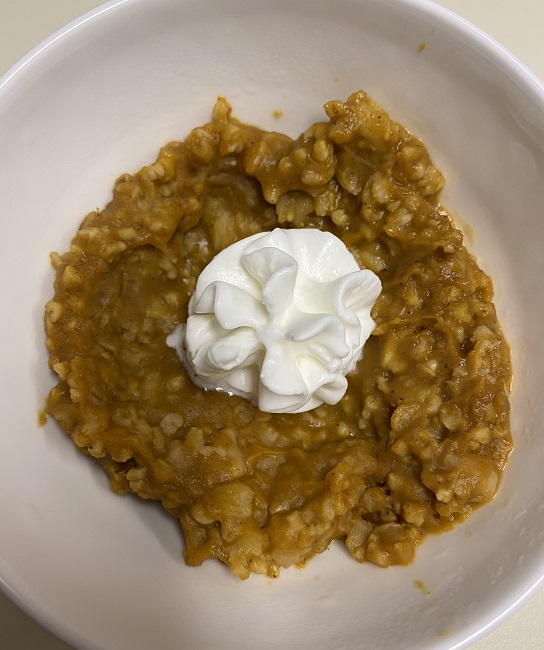
One day, I got the idea to stir a half can of pumpkin puree into my cooking cereal. After adding vanilla and a teaspoon of pumpkin pie spice, I was enjoying all the pie satisfaction without tons of sugar or milk – or fattening crust.

I will fess up that my oatmeal is cooked with just a bit of brown sugar – recipe to follow – but the need for more is simply not there. Since there are always leftovers, I soon discovered that a small serving of my Mock Pumpkin Pie was a satisfying, HEALTHY dessert, filled with an orange veggie and fiber.

After putting a small shot of whipped cream on top, I was feeling quite special.

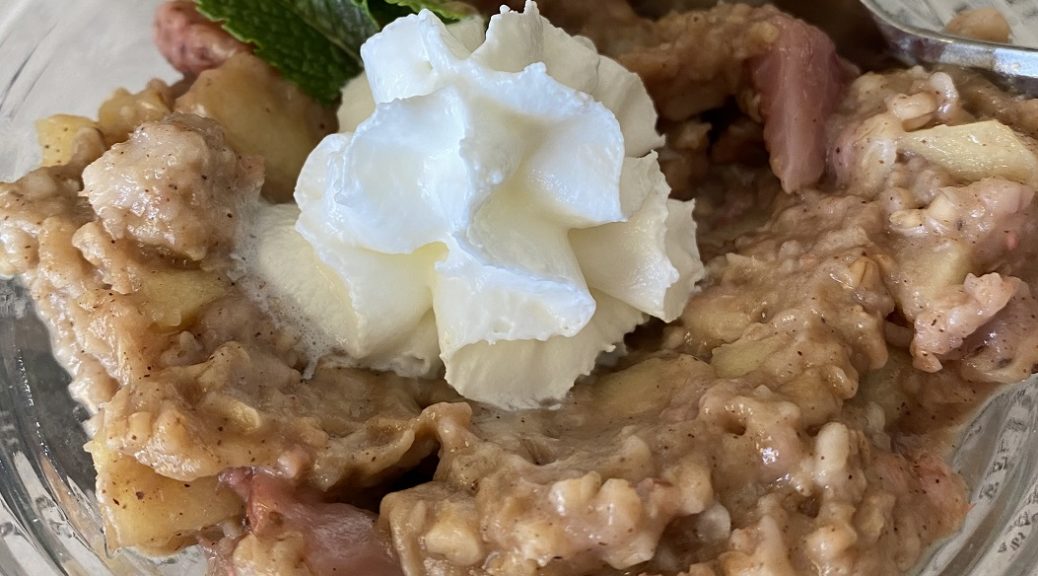
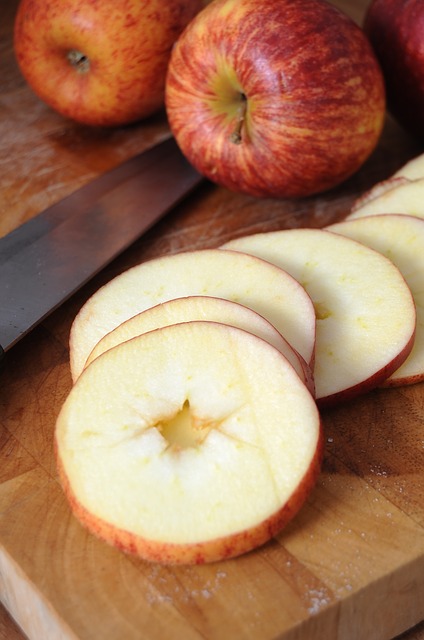
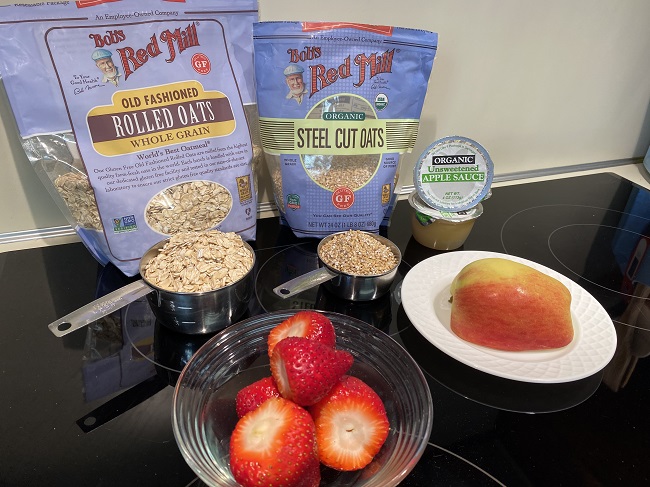
A Mock Apple Pie was soon to follow. Check out these satisfying ingredients and the recipe.

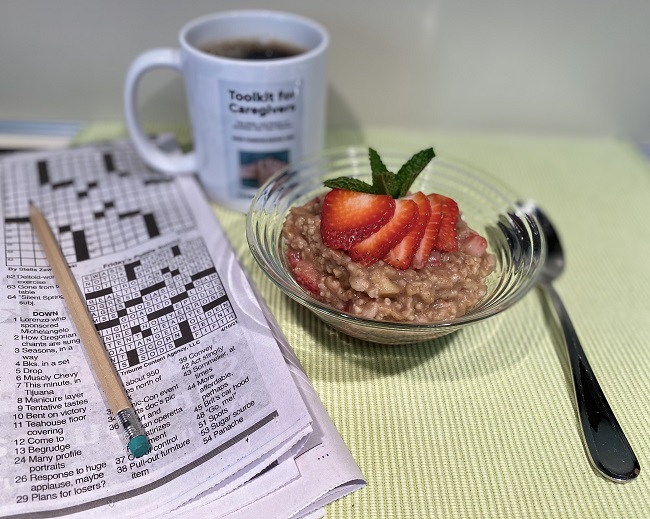
NOTE: Photoshoot day featured fresh apples and strawberries. In hindsight, I’d save the strawberries for the garnish alone – unless you were not planning on having leftovers. Strawberries lose their intense color after cooking. If using immediately, you could stir in the diced strawberries last minute, just prior to serving.

MOCK APPLE PIE a la FOODTALK4YOU

Ingredients

1 cup/250 ml old fashioned rolled oats – I use gluten-free

½ cup/250 ml steel cut oats – I use gluten-free

3 cups/750 ml water

2 tablespoons/30 ml brown sugar

1 cup/250 ml unsweetened applesauce

½ fresh apple, diced – I use Ambrosia apples

1 tsp/5 ml apple pie spice

Splash of vanilla extract – optional

Dash of salt – optional

Method

Add all oats, brown sugar, salt, and water into a saucepan on medium heat, stirring to combine.

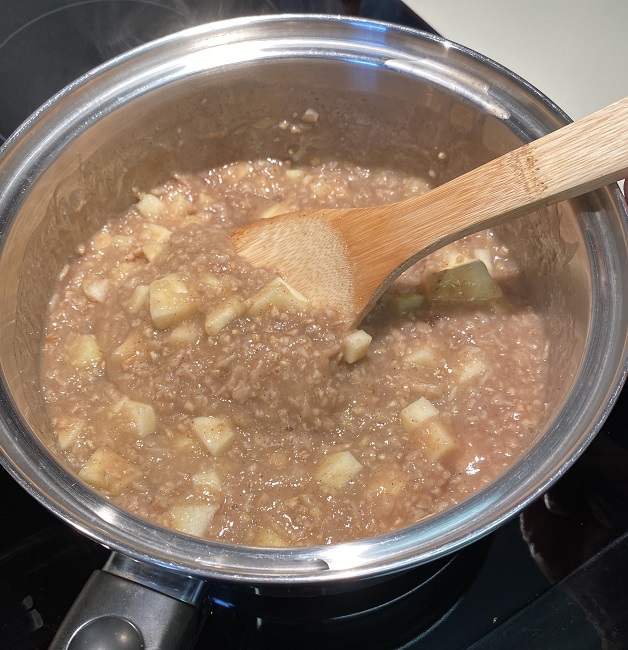
Continue stirring occasionally to prevent sticking to the pan. When the spoon begins to leave a “track” at the bottom of the pan, add the applesauce and diced apples. Continue to cook, stirring every so often.

When apples are heated and cooked to your desired doneness, remove from heat, add vanilla – if using – and serve. I prefer to leave some fibrous crunch to my apples to preserve their fresh fruit quality.

A cup and a half/375 ml serving makes a hearty breakfast.

A ¾ cup/187 ml serving is exactly right for dessert or an evening snack.

Certainly, this recipe easily adapts to canned pumpkin, or an array of fresh fruit. I hope you enjoy this hybrid Mock Apple Pie.

In health – even at dessert

Deidre

The share button at the bottom makes this easy to share with family and friends.

Well, Shut My Mouth!

Meh. Air in. Air out. What’s the big deal?

Any path in or out doesn’t matter. My nose is congested most of the time anyway, so mouth breathing will do the job, right?

Wrong.

My mind is being blown away by ANCIENT information containing the sure knowledge that breathing exclusively through the nose leads to a long healthy life; and mouth breathing leads to disease, facial deformity, and premature death.

As promised, after sharing some breathing pattern exercises that assist in de-stressing our inner selves, HERE, I am now sharing a little of what I am learning about how to breathe.

Got that??

Yes. James Nestor’s book, Breath – The New Science of a Lost Art, is changing my perspective – not only about how to breathe – but altering my thinking about health, itself, and where it comes from.

And, I am only halfway into chapter 4.

  • Snoring?
  • Sleep apnea?
  • High blood pressure?
  • ADHD?
  • Bedwetting?
  • Erectile Dysfunction?
  • Psoriasis?
  • Depression?
  • Headaches?
  • Crooked teeth?

Oh, the list just goes on and on. Chances are excellent that sufferers of the conditions on the list above are … wait for it … mouth breathers.

You’ve never heard of such? I hadn’t either. I was vaguely aware that mouth breathing lead to an enlarged heart, but all the rest was news to me.

Yet, this is not new information. There is a vast, tough currently not widely shared, body of knowledge on this topic. So far, I have learned about:

  • Texts as old as 1500 BC explaining that the nose is designed to bring air into the body, not the mouth
  • 8th Century Chinese texts citing that breathing is meant to happen through the nose; otherwise, mouth breathing would bring disease.
  • George Catlin, in 1830, who trekked through North America visiting 50 Native American tribes, where he found people to be quite tall – often up to 7 feet – were robust in health, had perfect teeth, and showed no deformities or diseases. Throughout his travels, he discovered a common denominator.
George Catlin

Each tribe embraced what they viewed as an ancient truth regarding health: Breathe exclusively through the nose. Breathing through the mouth brought stress and disease. This single idea was initiated in practice from birth. Mothers would watch over their babies, closing their mouths should they fall open. Even the way babies were carried made mouth opening difficult. So committed to this principle, Native Americans would even smile with closed lips.

  • Catlin continued his exploration of Native Peoples in the Andes, Argentina, and Brazil to see if this technique was universally held. It was.

In 1862, Catlin published his findings, Breath of Life. My copy arrives next week, but James Nestor quotes his last paragraph saying:

“And if I were to endeavor to bequeath to posterity the most important Motto which human language can convey, it should be in three words – SHUT YOUR MOUTH. Where I would paint and engrave it, in every Nursery, and on every Bed-post in the Universe, its meaning could not be mistaken. And if obeyed, its importance would soon be realized.”

See, Catlin became a true believer after closing the chapter of decades-long respiratory disease to opening four decades of robust health, living to about double the life expectancy of that time – all through the diligent practice of breathing exclusively through his nose.

One point of physiology that Nestor is teaching in these early chapters is that mouth breathing begets the need to mouth breathe, while nose breathing increases the ability to nose breathe.

Mouth breathing leads very quickly to snoring. Snoring leads to sleep apnea, whereby the ever-softening tissues at the back of the throat sag down and block the airway, eventually waking the snorer with a snort, which is an intentional gasp to reboot breathing – but just briefly.

So, do you breathe through your nose at night, or through your mouth?

I wasn’t sure. Seemed there was a lot of thick phlegm at the back of my throat that needed to be hacked out every morning. I went to bed with my mouth shut. I woke up with my mouth shut. But I was never ready to get up and out of bed come morning. Hmmm.

Following Nestor’s advice, I purchased some 3M Nexcare Durapore Durable Cloth tape, which in the medical realm is silk tape that is used for bandages.

A one-inch piece of this odorless tape will do. Gently placed over the center of my lips, I am guaranteed to not mouth breathe. Tape removal the next morning is easy, painless, and with no tape residue.

Results? Magically, there is no phlegm to hack out. Also, was that really me – ready to get out of bed? Maybe I wasn’t a lazy person.

Okay, once could have been a fluke. So, I’m continuing my quest to be the best nose breather ever, and the results are the same every day. I feel rested and ready to start each new day.

Who knows what wonders of robust health await? How about you? Ready to SHUT YOUR MOUTH?

Breathing through my nose-

Deidre

ADDENDUM:

Let’s breathe – not gag or suffocate – please! As a reminder to all foodtalk4you readers, I want to remind you not to go to extremes if you want to try your own little tape-over-the-lips experiment.

Clearly, a generous use of Duct Tape, masking tape, painter’s tape, or Gorilla glue should be avoided AT ALL COSTS.

The one-inch portion of silk tape you see me using has now been pared down to one-half inch. You want to be able to cough, sneeze, or even throw up without blocking a natural exit.

This has been safe for me and others while employing common sense.

Please sign up for the FoodTalk4You newsletter. Just fill out the quick form on the left of this page!

Snack Attack Hack!

Is it too early to start eating the next meal? But you’re feeling a little hungry, and a bite of something would, “keep the big ones from eating the little ones,” as my mom used to say.

Just who the big and little ones were, I never figured out – but they were starting to wage a small battle in my tummy for sure.

How about a baby Snickers? Or just a bite of one? Ha! Bet you can’t do that!

Used to drive my students nuts taking one bite of Snickers a day until it was gone by Friday! LOL! That was back in the day when I ate Snickers.

I digress.

Point being: Wouldn’t an equal number of calories of any number of things, be equal to the body? Bite of Snickers vs. 15 red seedless grapes vs. 8 baby carrots?

If you are a long-time loyal reader of foodtalk4you, I’ve touched on this before. A calorie-for-calorie approach is not going to bring balanced health. Here’s why:

Just look at the labels. Snickers ingredients and nutrition:

Now look at the ingredient and nutrition labels on the grapes and carrots:

Oops! That’s right. There are no ingredient labels! If the snack choice isn’t obvious yet, let’s look at the nutritional breakdown of first grapes and then baby carrots:

With our COVID isolation hopefully winding down soon – I get vaccine #2 on March 10th! – I don’t want to literally roll out my front door carrying the weight of pandemic stress-eating around my waist.

Remember, any extra tonnage we might be lugging along with us was not put there overnight, and it won’t come off overnight either. Let’s do this one baby carrot, or grape, step at a time.

These two snack hacks will start your journey – and will tide you over between meals.

I’ve been doing this for a few weeks now, and can attest that I am feeling great, weigh less, and feel so much better about my food choices.

While that single bite of Snickers is gone in a flash and we are left wanting more, a snack of 10-15 grapes or 8 baby carrots takes much longer to eat, fills up that tummy, adds to our hydration, and provides positive nutrition.

Normally, a bowl of 10 grapes is all I care to eat at a time — they really are filling when nibbled on one at a time. Ten grapes have about 20 calories. There’s plenty of sugar to power up your activity, lots of water, and vital nutrients. These are great as an evening snack to munch on during a movie.

Carrots? Wow! My little bowl of 8 carrots can carry me a long time, and take a while to eat, as well. That’s the keen thing about these two choices, they are not going to be gone in a flash. Did you see the quantity of Vitamin A in 8 baby carrots? Good for the eyes!

Did you get your steps in today? While talking to two friends on my cell phone, I walked my yard like a Rumba! Got my step goal done and a little extra. Can’t beat being in the sunshine, while spreading friendship the only way we can right now!

Join me in using these snack hacks; what is learned while snacking can be applied to meals as well, but that’s another post.

In health-

Deidre

If you found this information of value, please share on social media, and make sure to subscribe so you won’t miss a single post. Thank you.

Just Breathe …

One meal… One breath… One movement at a time…

Does that sound familiar? Yes! Good job! It’s the focus of foodtalk4you!

Today, I am going to share some breathing techniques that can instantly become a part of your toolkit for stress reduction. Hmmm. Sounds like another book title. More on new books later.

Right now, we’re going to focus on three specific techniques I shared this past weekend during a Zoom meeting. Listeners seemed to be taking notes, and one participant emailed me that the techniques had helped her through a stressful situation later that day.

But first … a short intro. We are born breathing using our diaphragm, and somewhere along the way, often become chest breathers. The difference being. we switched from using the large, strong diaphragm muscle to move the air in and out of our lungs, to using the smaller, secondary muscles of the upper chest.

As a test, notice if your shoulders are rising significantly as you take a nice big breath. Yes? You’re a chest breather. No? Is your belly moving out more than your shoulders move up? Well, you’re a belly breather – and probably a singer with some training on how to breathe.

Chest breathing is associated with our response to stressful situations – a part of that fight-or-flight response. Chronic chest breathing can increase tension in the head, neck, and shoulders. Belly, abdominal, or diaphragmatic breathing is more effective in moving air and leads to calming effects and responses.

When someone tries to help you calm down by saying, “breathe,” your best response is to mindfully take some slower breaths that allow your belly to move out with each new breath.

You can practice this technique by placing one hand on your chest and one hand on your belly. As you slowly breathe in and out through your nose, concentrate on shifting your breath to make your belly move more than your chest. The calming effect is almost immediate.

Armed with knowing how to breathe from your belly, let’s look at three easy techniques that can help you calm down in a jiff.

  1. Falling Out Breath – is excellent for physical tension, and we naturally do this when we groan. Try this: Inhale deeply into your belly, and at the top of the inhale, grab a bit more air. Then, exhale completely, making a sound. A sigh, groan – whatever. Do this a few times, and you’ll note a considerable sense of relaxation in your body.
  • Box Breath – is useful for clearing your mind. Not only will you be moving air more efficiently by breathing using your diaphragm, but your concentration on breathing will scatter whatever emotions or thoughts that are swirling in your head. Do this: Inhale to a count of 4. Hold for a count of 4. Exhale to a count of 4. Hold for a count of 4. Repeat several times. Magic, right? A minute or two of this each should help going to sleep.
  • Emptying breath – our last breath tool for today will deactivate that stress response and reactivate calming mechanisms. Try this for a minute or two: Inhale to a count of 3, and exhale to a count of 6, trying to get rid of as much air as possible.

Please don’t pass out from hyperventilation!

It may take some practice to do these techniques without getting woozy. Take things slow and easy, breathing using that diaphragm. Yes, your belly is going to need to move out – which may detract from your svelte profile – but you can suck it in after your nerves have calmed down.

To learn more about the benefits of deep breathing go here: Decrease stress by using your breath – Mayo Clinic

To learn more about the benefits of box breathing, check this out: Box Breathing: Techniques, Benefits, GIF, and More (healthline.com)

Many thanks to my daughter, Serena, who shared this book with me, Breath: The New Science of a Lost Art, by James Nestor.

What I have read of it online has convinced me to get a hard copy to study. You can expect some more posts in the future about this most important subject!

Breathe, dear readers.

In health-

Deidre

PS: Please feel free to pass along this informative post on all of your social media, such as: Facebook, Twitter, Instagram, LinkedIn, etc., or email. Sign up for our FoodTalk4You newsletter. Just fill out the quick form on the left sidebar of this page!

And I Repeat – Happy Groundhog Day!

I feel a bit like Punxsutawney Phil today. He’s being hauled out of his snug spot to test the sunshine factor for prognostications about the duration of winter.

That’s me. Being drug out of my totally relaxed state of snugness to start the day. My gratitude each time for its opportunities, is invariably followed by the overwhelming urge to hit the snooze alarm.

I’ve told Alexa to nudge me awake with meditation music, which beats the effects of an alarm clock. Starting the day with a startle, a jolt, and an elevated heart rate seems counterproductive to greeting the day with a smile.

With nowhere to safely go, or any deadlines to meet, getting up can be problematic for me. There are still cool things to be accomplished at home, so I rely on my biggest motivator: Sunshine.

Sun streaming in my windows is my happy place. Curtains back, shades up – here comes the sun! If I dally in bed too long, the angle of the sun misses my home office, and inspiration is harder to find.

This is all said as a Segway to the fact – we need sunshine.

Remember learning about the “Sunshine Vitamin”? That vitamin we get through the sunshine that’s good for our bones? Well, it is vital for a lot more than that. Take a look:

As you can see from the chart above, this is an important part of staying healthy. Rays of sunlight trigger our skin and body to produce Vitamin D through a cascade of processes.

If strong bones and sound mind aren’t foremost on your mind, then something that is on everyone’s radar right now is the COVID-19 pandemic. I have read that 80% of those with COVID are/were deficient in Vitamin D.

Check it out HERE: New Study Found 80% of COVID-19 Patients Were Vitamin D Deficient (healthline.com) AND HERE: Low Vitamin D Levels Tied to Odds for Severe COVID (webmd.com).

The Mayo Clinic talks about this same correlation, but suggests the need for further testing –  Can vitamin D protect against the coronavirus disease 2019 (COVID-19)? – Mayo Clinic.

The more I read about Vitamin D, the more I think we need to know our blood levels of this vital nutrient better than our astrological sign. Request that Vitamin D levels be checked at your next doctor’s appointment. Normal values are 30-74 ng/ml. An increasing portion of the population is very deficient. Why?

We are creating the perfect storm to become deficient: Young and old, people are not getting outdoors enough. Much exercise, if done at all, is accomplished in an indoor gym. We need some skin exposure to effective sun to start the chemical processes that create this vitamin in our bodies.

But how much sun? This depends on your latitude, your skin color (darker skin needs MORE exposure), time of day, and season.

Check here for details: How Much Time in the Sun Do You Need for Vitamin D? | US News.

Overall, 5-20 minutes twice a week, when your shadow is no longer than you are tall (between 10:00 am -3:00 pm). The early morning jog does not count toward making Vitamin D. Sorry. Roll up your sleeves and take a noon-day stroll.

Of course, skin cancer is on our minds as well. Experts agree that relying on facial exposure to the sun’s beams should be avoided. Wear a hat and/or use sunscreen on your face and ears.

Use of sunscreen is another part of the perfect storm. Give your arms and legs a few minutes in the sun before slathering up.

Finally, the trifecta involving obesity, Type II Diabetes Mellites, and Vitamin D deficiency creates the capstone to this storm.

A summary of research HERE: Vitamin D Deficiency, Obesity and Diabetes – PubMed (nih.gov) says:

Vitamin D deficiency reduces insulin secretion capacity of the islet beta cells in pancreas. Moreover, epidemiological studies have demonstrated that vitamin D deficiency is closely related to obesity and increased risk of T2DM. 

Just this one humble vitamin demonstrates the inner-connectedness of our wonderful bodies. Disrupting the delicate balance of proper body weight, alone, put so many other aspects dangerously out of kilter.

There are dietary risk factors I’ll touch on next week, along with where we can access Vitamin D through diet so, stay tuned.

Deidre Edwards

In the meantime, protecting face and ears, show a little skin to Mr. Sun for a few minutes each week as temperatures allow. My bundled up walk here in the Northern Hemisphere didn’t do much for my Vitamin D levels, but did wonders for my spirit and served as excellent exercise on a cold winter’s day.

In health,

Deidre

If you benefitted from this post, please share: email, Twitter, Facebook, and click on the subscribe button so you won’t miss any posts.