Tag Archives: Ayurveda

Pause For A Rest

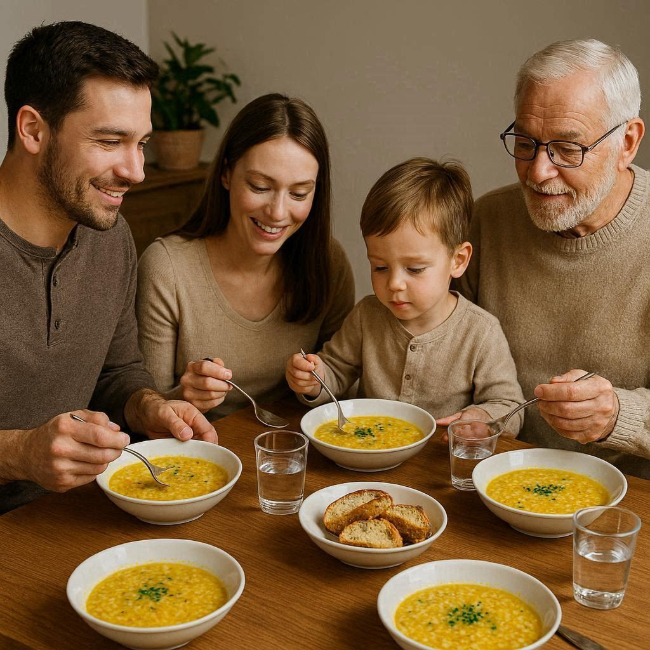
Bottom line, we’re on a rare family time together on the East coast; and I couldn’t experiment with the recipe for this calming soup to give you an accurate evaluation of ingredient balances.

I can say that my first creation of Kitchari was, indeed – gentle, filling, and calming.

Considered a ‘reset’ meal, Kitchari, a blend of basmati rice and yellow mung beans, – often used in Ayurveda for gentle, complete cleansing – and is often used at change of seasons or in times of stress.

It proved to be a wonderful first meal to offer my daughter and family after a red-eye flight across six time zones! With the addition of grilled marinated chicken, it gave a gastronomic hug to weary bellies and bodies.

Next week, I will prepare Kitchari again, possibly nudging the balance of rice and mung beans – based on my daughter’s experiences – and report back to you.

I will take pictures to share – which I forgot to do last week when I was in a rush!

Embracing cherished family times is feeding my soul right now; and you know, being kind to myself by not trying to meet a deadline for a full post is taking our message of balance to heart, right?

In health –

Deidre
One Small Step …

… leads to a gentle transformation.

Vata, Pitta, and Kapha – discovering my dosha seemed like the most sensible first step. Have you Googled, “what dosha am I,” yet?

Haha! I’m still noodling around with that one! Banyanbotanicals.com is proving to be a useful, user-friendly, free resource which also offers an assortment of free next steps, including yoga variations, to help each dosha.

Those questionnaires are a bit tricky because it’s important to understand the point of reference for each item and to be mindful of how you used to be – versus how you are now, including when you were at your most-balanced state – versus – when you were stressed.

Taking assessments from various free sources would be beneficial to more accurately zero-in on your dosha. Banyan recommends retaking the quizzes to get a feel of how you are changing over time.

So, doshas aside, the text I am using to launch my journey of self-discovery is Kate O’Donnell’s The Everyday Ayurveda Cookbook.

Just starting with her introduction, I was already finding myself skipping around her excellent book to learn more about each of the concepts I was discovering. There are bookmarks and Post-it notes everywhere!

Which brings us back to the grounding philosophy I have always used: make any changes to your life in teeny, tiny bites that are sustainable.

As you get comfortable with that one thing, add another teensy adjustment – that is hardly even a blip on your radar – and incorporate that into the fabric of your life.

I chose to start with a simple cooked breakfast cereal.

Longtime readers of foodtalk4you know my fascination with variations on the theme of ‘gruel’ – often adding everything I could think of (chia, ground flax seed, pumpkin seeds, etc.), and using what I called ‘sweet spices’ plus vanilla, to trick the palate into not needing much or any added sugar.

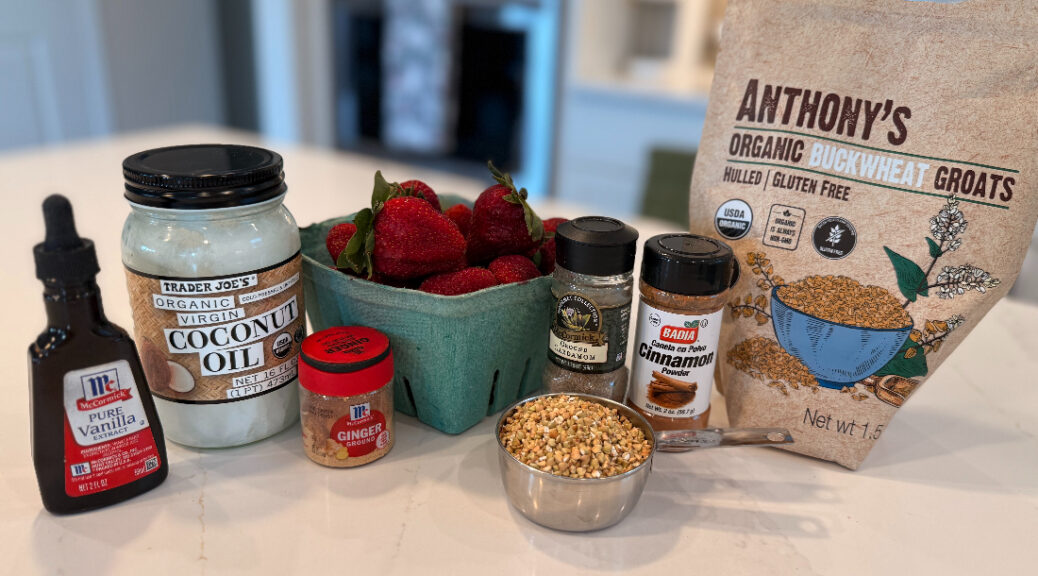
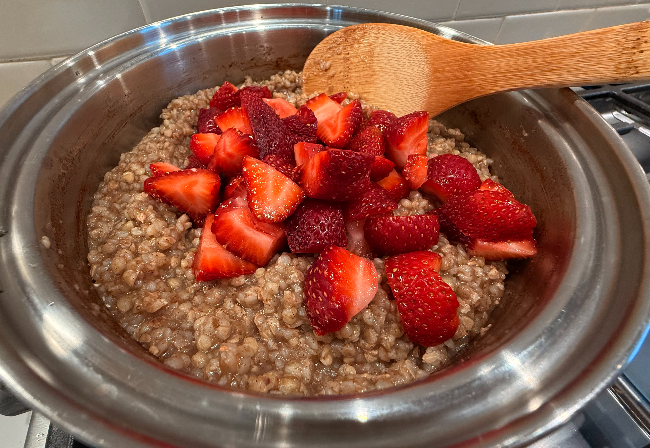
The recipe in O’Donnell’s book features just buckwheat – not a grain, but a seed – and is gluten-free. She flavors this with her trio of sweet spices: cinnamon, ginger, and cardamom, plus vanilla extract.

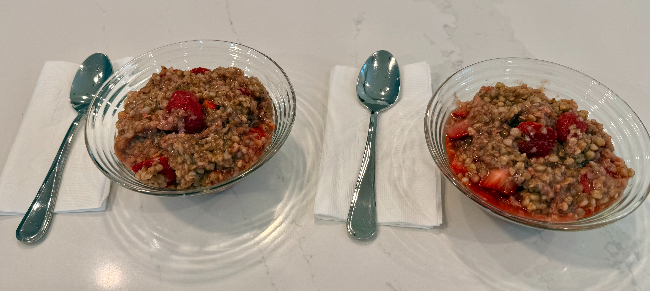
After the 1/2 cup of buckwheat, sweet spice mix, and 2 cups of water have cooked, 1 cup of fresh strawberries and 2 teaspoons of coconut oil are stirred in and allowed to rest for 5 minutes before serving – along with 1/4 cup toasted, unsweetened-shredded coconut sprinkled on top of the two bowls.

The next time we made this, we found adding a pinch of salt to be beneficial.

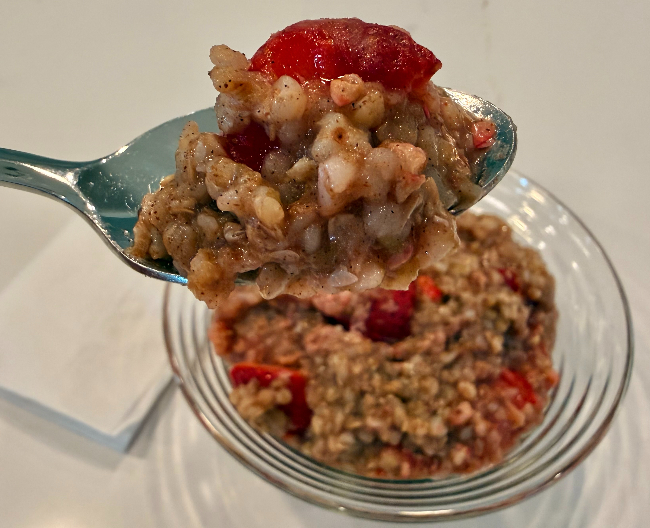
Holding power? Our bowl of her ‘berry buck-up cereal’ not only felt easy on the tummy, but sustained us all morning.

The rational behind this?

Seeking more ways to calm inflammation, which is the first domino to fall leading to ‘dis-ease.’

Whether you believe yourself to be sensitive to the effects of gluten or not, gluten is pro-inflammatory.

Take a tiny first step to start your day with less inflammation on board. You don’t have to jump into the deep end – just a few times a week. Start there.

Our next post will dive into a balancing staple food of Ayurveda, which is good anytime, anywhere, for anyone – and is perfectly neutral, adaptable, and an excellent resource for the change of seasons we are all experiencing right now.

In health –

Deidre

Let’s Go On An Ayurveda Quest!

As a member of the foodtalk4you community, you are likely on a personal quest for whole life balance, right?

We’ve been working together on “doing my body good” for twelve years! Did you know that last week on April 12th, foodtalk4you turned 12? Hmmm. Is there a conversion rate for blog years to human years?

In any case, we have explored a better understanding of how we respond to food, exercise, and ways of thinking to make our life journey smoother. We have traversed many steppingstones along the way: “Paleo,” “gluten-free,” “low-carb.”

These approaches can be helpful, but they don’t always capture the full picture of what our bodies, minds, and lives truly need.

Lately, I have felt the need to gather all the scattered pieces and return to something more cohesive, more intuitive, and more deeply rooted. Something that would reflect the innerconnectedness by which our bodies function.

That search has led me to Ayurveda – thanks in great part to my daughter’s fellowship in integrative medicine and her studies in Ayurvedic medicine.

Don’t know how to pronounce it? A·yur·ve·da /ˌīərˈvādə/ and A·yur·ve·dic /ˌäyərˈvādik/

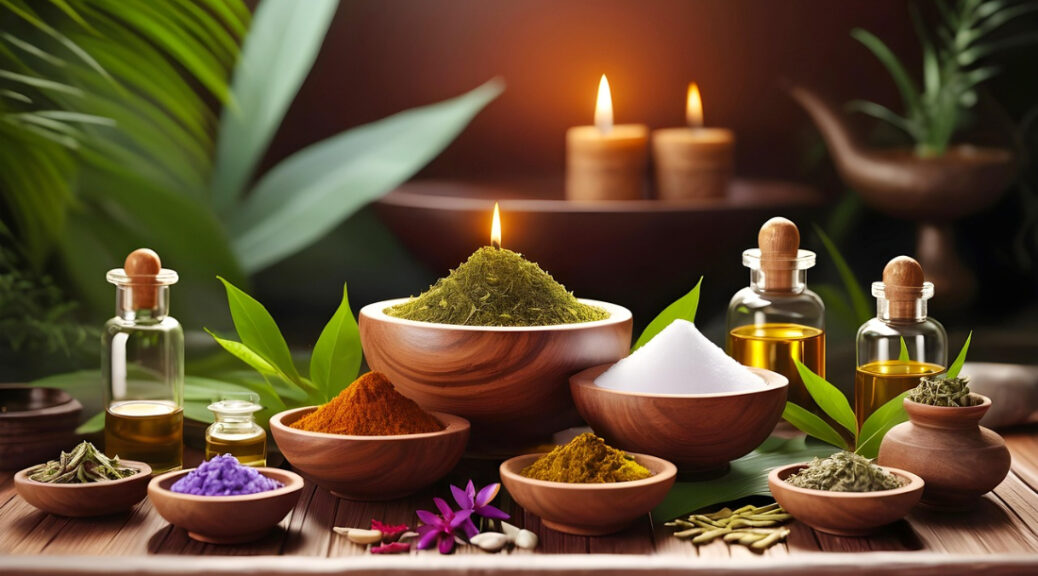
Ayurveda, often translated as “the science of life,” is a centuries-old system of health and healing, originating in India. But more than a system, it’s a way of understanding ourselves in relationship to the world around us. Instead of focusing only on symptoms or rigid dietary rules, Ayurveda invites us to consider the whole person—body, mind, spirit, and the senses—as interconnected parts of health.

Again – not unlike much of what we have been exploring here for twelve years – but with a greater understanding on putting all the elements of life together in a way that is personalized to each of our unique needs.

Ayurveda organizes this individuality through the concept of doshas—Vata, Pitta, and Kapha—energetic patterns that reflect different physical and emotional tendencies. The goal isn’t to fix ourselves, but to recognize imbalances and gently bring the body back into harmony.

It’s about tuning in. Paying attention to how we feel after we eat. Noticing how the seasons affect our energy, digestion, and mood. Recognizing that stress, rest, movement, and connection all play a role in our overall well-being.

For me, this shift also feels like a natural evolution of what I’ve been exploring here on FoodTalk4You. The focus is expanding from “what to eat,” into “how to live well.”

Food is still central—but now it’s part of a larger, more meaningful conversation. One that includes daily rhythms, self-awareness, and a deeper respect for the signals our bodies are constantly sending us.

In future posts, I’ll be sharing what I’m learning about Ayurveda in a practical, approachable way—how it can shape our meals, our routines, and even how we care for ourselves during challenging seasons of life.

This isn’t about perfection or adopting an entirely new identity overnight. It’s about integrating timeless wisdom into modern life, one small, thoughtful step at a time.

If you’ve ever felt like your health journey needed more coherence, more flexibility, or simply more meaning, you’re not alone. Consider this an open invitation to explore Ayurveda with me—not as a rigid system, but as a guide back to balance, awareness, and wholeness.

Because, as I have always believed, we are, “designed for health.”

In health –
Deidre