
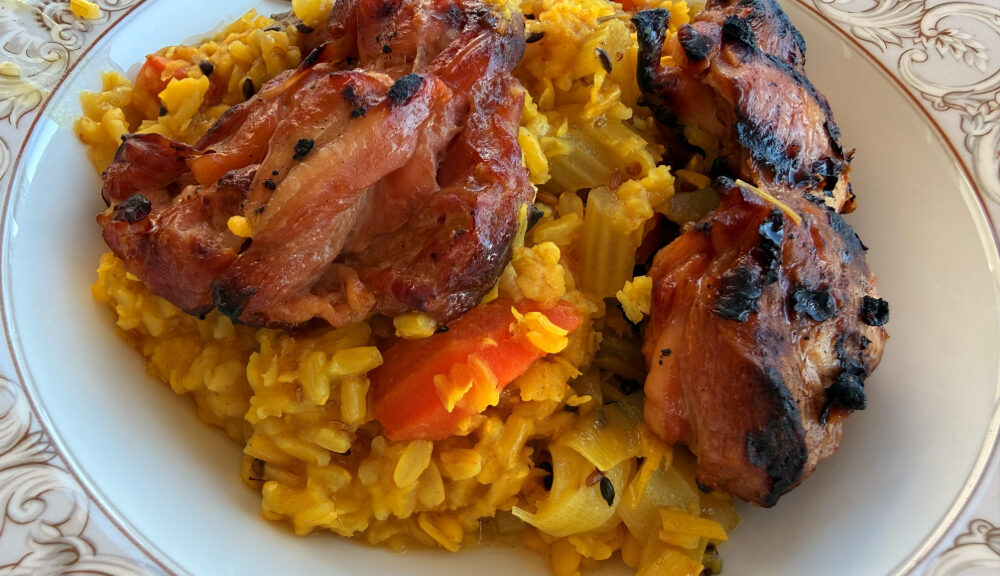
The spellings of Kitchari and the recipes are varied, but the purpose remains the same.
Kitchari is a traditional Ayurvedic dish made with a mixture of yellow moong dal (split mung beans), Basmati rice, and spices – all created for the purpose of a gentle reset and cleansing of imbalances within the body.

People reminisce about their mothers making this dish for them – especially when they were not feeling well or were still recovering from being sick. Kitchari became comfort food for them – not unlike the beloved bowl of chicken soup.
This one-pot meal is gentle on the tummy and can assist in any kind of needed reset – after long travels, in times of mental or physical stress, at the change of seasons, or during or after illness.
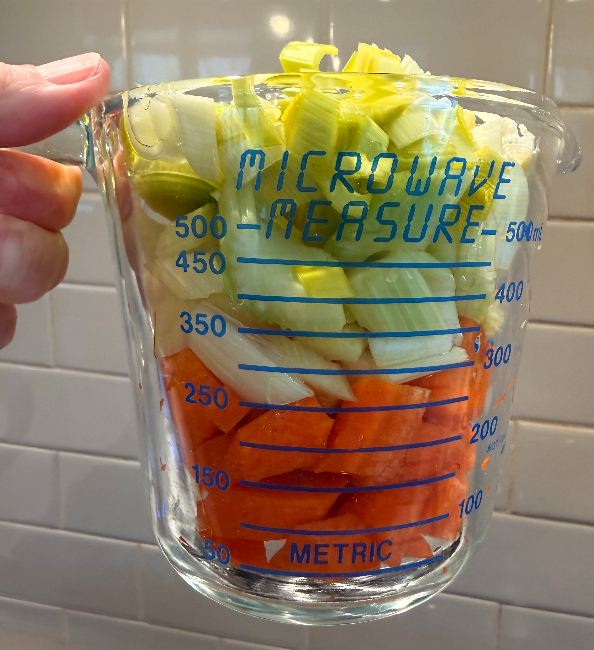
There is always the option of adding 2 cups of vegetables, and I often serve this with a side of easy-to-digest protein such as grilled chicken.
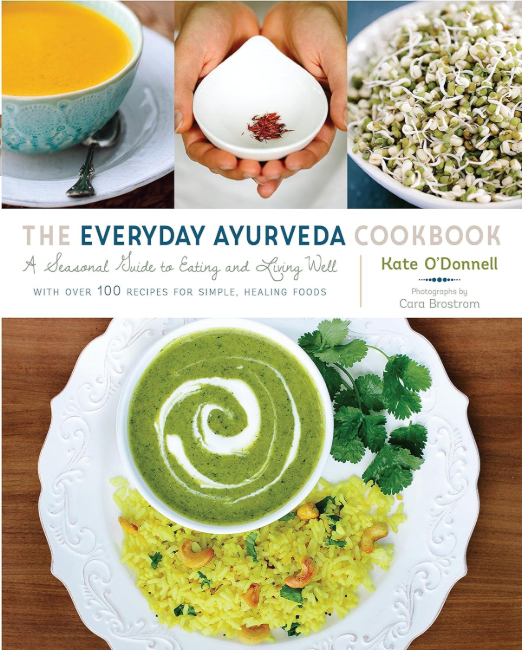
Combining elements from The Everyday Ayurveda Cookbook by Kate O’Donnell, Banyon Botanicals, Real and Vibrant, and urbanfarmie.com, I settled on my own version. The complete downloadable recipe will follow.
Kitchari is pretty straight forward and hassle-free, but before starting the Kitchari, it is important to get the spices prepared for both the cooking phase and the tempering phase.
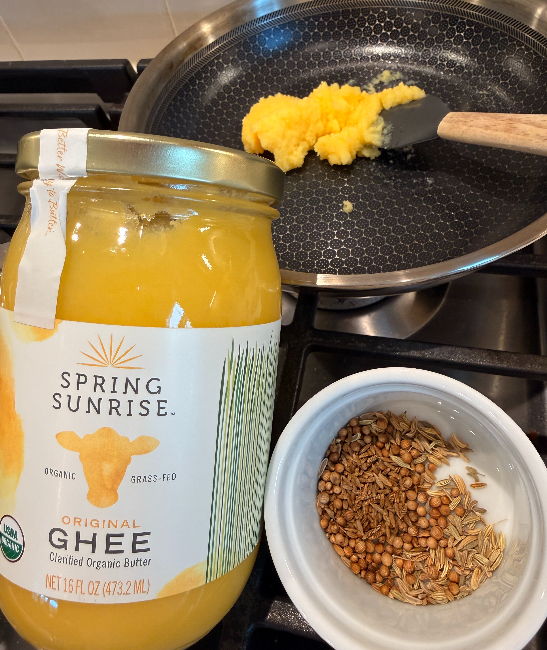
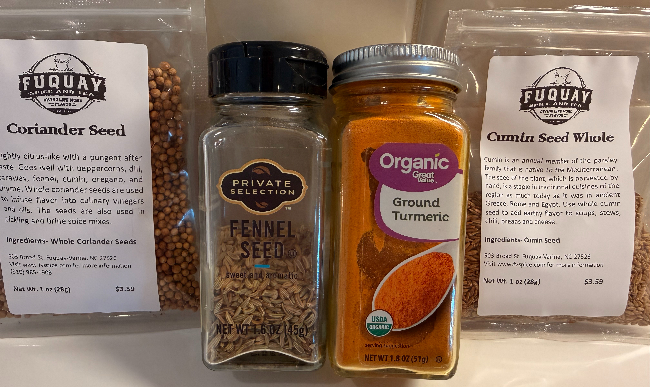
Ayurvedic recipes are often prepared using whole seeds of cumin, coriander, and fennel that are either dry roasted, cooled, and ground fresh or lightly cooked in ghee until they become fragrant and start to pop. Powdered turmeric is also an essential.
These spices are a traditional blend that enhances and balances digestion.
The rice and split mung beans will cook in water with the spice blend, and near the end of the cooking time, a tempering of spices will be added. Prepare the spice blend in advance and have the tempering spices set up and ready to be warmed in the ghee for the finish.
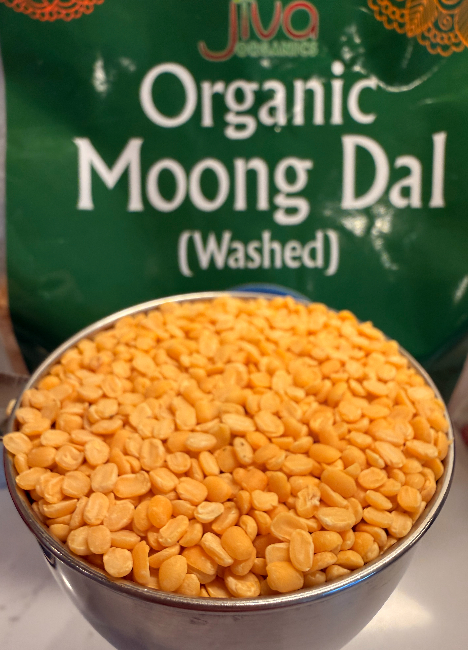
Mung beans and the split moong dal beans were new to me, but they have now earned a permanent place in my pantry. They are rich in protein, essential amino acids, antioxidants, fiber, and important nutrients that may help support healthy blood pressure, lower LDL cholesterol, and reduce heart disease risk.
Because mung beans are high in resistant starch, fiber, and protein, they also help slow the release of sugar into the bloodstream, making them an excellent choice for supporting stable blood sugar levels.
Find out more about the benefits of mung beans here.
There are choices to consider before preparing Kitchari:
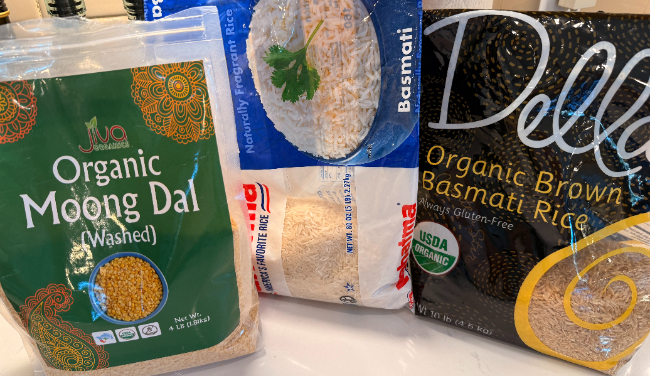
First the rice. For tender tummies, white basmati would be the choice, but I chose brown basmati today because we wanted the added fiber and slightly nutty taste.
Your second choice is the proportion between the rice and the (split yellow) moong dal. 1:1, 1/2 cup rice to 1 cup mung beans, or 1 cup rice to 1/2 cup mung means. My first version relied upon more rice; today’s version was equal parts of each – which we liked because it felt less starchy.
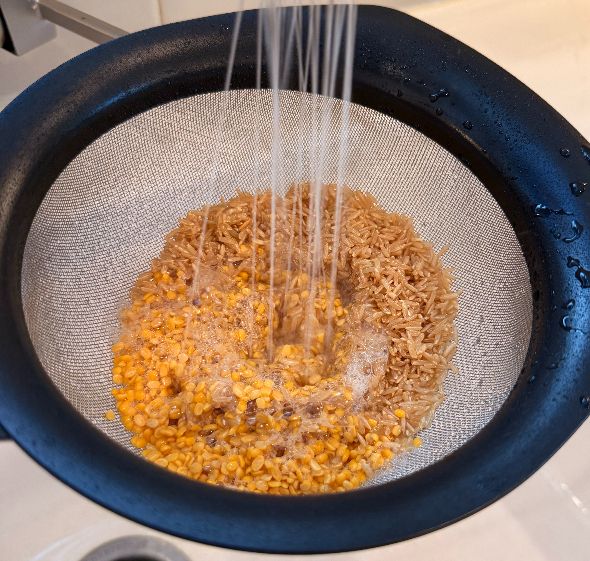
Some recipes advise rinsing the rice/mung bean mixture well before cooking, while others also advise soaking for 30 minutes after rinsing to shorten cooking time and increase tenderness. Today, I rinsed the dry grains using a fine mesh strainer and then let them soak by putting the strainer over a bowl of fresh water while I prepped the vegetables.
To learn more about the pros and cons of rinsing rice, check out this.
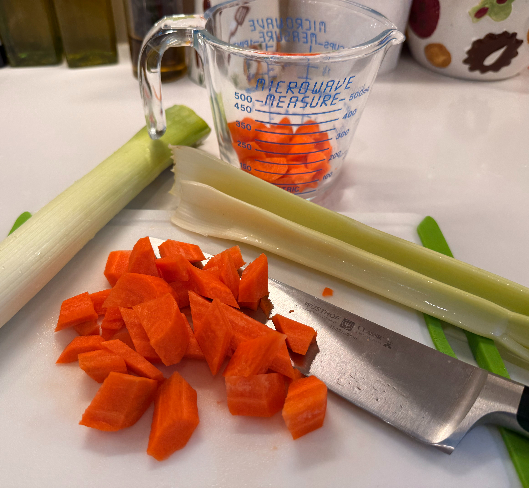
I wanted to add the optional 2 cups of veggies using what I had on hand: leek, carrot, and celery. Nothing dramatic. I put all of these in the pot at the beginning. If you have leafy or more tender additions, those can be put in after the initial 20 minutes of cooking.
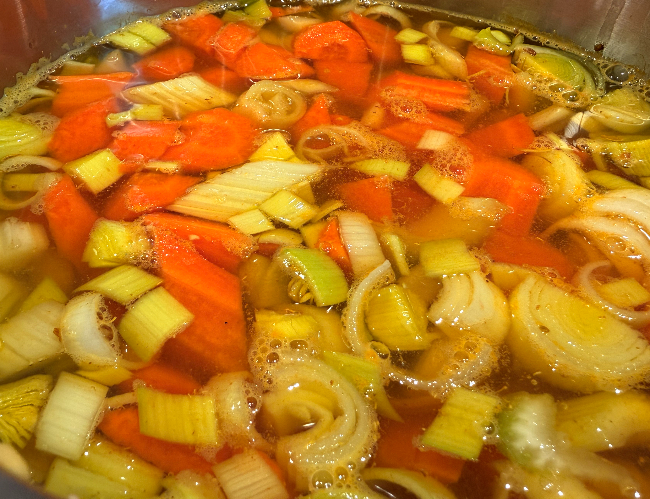
Many eat Kitchari on a regular basis, and others will eat this for lunch and dinner for several days as a part of a digestive reset.
As you get familiar with the basic recipe, changing ratios, rebalancing spice blends, and offering a variety of colorful vegetables with different textures will make this a fun go-to flavorful, yet gentle, comfort food that will balance out your system.
In health –
Deidre
Download the delicious Kitchari recipe below!
Dear readers: I am exploring the Substack platform as a means of sharing this foodtalk4you content and to offer additional regular posts helpful to family caregivers. Many people are following multiple authors on Substack already, and I wanted to make information more accessible to those folks who prefer reading on that platform. Check me out on Substack here.