Category Archives: This -n- That

Dutch Dementia Care

It takes a village

Have you noticed the growing trend of planned urban developments in cities? These are neighborhoods intentionally designed so that housing, dining, entertainment, shopping, and even workspaces are all within walking distance.

This approach is becoming increasingly popular because it not only offers convenience for residents, but also helps reduce overcrowding in other parts of the city, by creating new amenities to support these communities.

With the silver tsunami of Baby Boomers hitting retirement age – coupled with the alarming rates of dementia and Alzheimer’s Disease on the rise – the Dutch have created an attractive alternative to standard assisted living facilities using the model of a planned community.

Here in the United States, I am familiar with a special form of assisted living called residential assisted living, which uses regular looking houses you would see in any kind of neighborhood.

My mom was fortunate enough to live in one for several years. Driving by that house, you would never know that six seniors lived there – each one surrounded by their own possessions in their own room – and being cared for by staff 24/7.

The Dutch have taken the residential care concept – and that of planned urban developments – to a whole new level

In this plan, all homes have six residents who need assisted living for dementia care. With fewer people and activity, a calmer home-like atmosphere is created.

As a former RN working in long term care facilities, I can remember how difficult it was for our confused patients to negotiate long, sterile corridors, and to take their showers in large, cold, tiled shower rooms, where sounds echoed off the walls – only adding to their agitation, confusion, and fear.

The creators of this dementia village in the Netherlands value their residents as people with goals and aspirations, not just people with a diagnosis of dementia.

Want to go for a walk? The pathways are safe; there is no way to get lost, and the perimeters are secure.

Want to go to a restaurant, a store, or the movies? The staff in each are trained in dementia care and know what to do.

They have created their own care village!

This is such a commonsense approach to a growing concern around the world. Part of the hesitancy of families to use long-term care involves the institutional feel of facilities. A village of homes with safe access to amenities just a walk away, honors the residents and can give comfort to the families.

Maybe some of our FoodTalk4You readers know of people in urban planning and long-term care planning who could study this approach.

In health –

Deidre

That’s our cue to share this post using the options under the MORE button below.

Sharing With A Purpose

There must be a lot of discontent at the workplace.

The self-publishing group I am using to get Toolkit for Caregiver Emotions launched on Amazon has an author Facebook page we use to celebrate milestones, build launch teams, and ask questions.

Just after I finished reading an advanced copy of a book about escaping the dissatisfaction of a typical job through personal discovery and finding a passion-driven career, I was invited to join the launch team for another book with a similar message, but a different approach.

Feelings of lack of fulfillment at work can become all consuming, creating a sense of drudgery and feeding poor attitudes. I have walked that path; have you?

How does anyone discover their passion and purpose?

Sages have long advised us to, “know thyself,” and, “to thine own self be true,” but many people are so focused on simply staying afloat, they rarely stop to consider whether the work that brings in their paycheck has any real connection to their true calling.

After taking a personality assessment or two …
Myers-Briggs Type Indicator, MBTI — Categorizes people into 16 personality types based on preferences like introversion/extroversion, thinking/feeling, etc.

DISC Assessment — Focuses on behavior styles, divided into Dominance, Influence, Steadiness, and Conscientiousness.

StrengthsFinder, now CliftonStrengths, — Identifies a person’s top talents and strengths.

Values in Action, VIA, Character Strengths Survey — Focuses on positive psychology and identifying a person’s key virtues and strengths.

People who want to hone in on their natural strengths to find a purpose, still need to spend time mindfully evaluating what brings them happiness and why.

‘What’ followed by ‘why’…’why’…’why’

There’s a one-two punch that can help people gain clarity in discovering their unique purpose based on their answers to a ‘what’ question followed by – multiple – ‘why’ questions.

For example:

  • What part of your workday was the most fulfilling?
  • If someone shadowed you for a day, what would they say you’re great at?
  • What do people often come to you for advice about?

It’s fun to do this exercise, because after answering the what question, each subsequent why question seems to peel off another layer until the core value is revealed.

Funny, the inspirational seeds that grew into my first book, Toolkit for Wellness, were born from my answers to the last question above – and to all the ‘whys’ that followed.

If you are searching for clarity – really, about anything – then ask a what question about it and then start teasing away all the fluff through why questions to get at the core thought.

For additional what questions, GO HERE and for more information about starting with what, instead of why, check this out.

What do you do to share this post? Use the options under the MORE button below. Why do it? Because sharing is caring! Why? Because I’m always learning cool stuff on foodtalk4you and my friends need help, too!

In health –

Deidre

Wandering Through Quotes

Have you noticed the trend to start book chapters with a quote?

Maybe authors have often done that; but somehow, I am noticing it more and more – and I like it.

It’s a thoughtful way to introduce the theme of a new chapter. Like a soft opening.

As my next book’s edited manuscript nears readiness for the production team’s formatting, I realized that one of my initial goals — adding a fitting quote to introduce each chapter — hasn’t been fulfilled. Alas, I never got around to it!

Dare I delay sending the manuscript to production while I search?

Where is everyone finding these quotes?

Bingo! Ask AI! Duh.

I had always admired the effort authors would take to find such quotes, thinking they would still be stuck in stacks of quotation books.

But this is the 21st century, and if you want to find quotes about anything, your search is a click away! From Socrates to Twain to Angelou, your quest will find great quotes spanning the millennia on the same topic.

We frequently use the phrase, “dropped down a rabbit hole,” when researching, as one discovery often leads to another.

But after reading this article recently, I realized what I experienced in my quote quest was more like wandering. 

Wandering: meandering through a space with no plan, destination, or urgency – just enjoying the journey.

So, in addition to simply Googling and asking ChatGPT for quotes about various emotions and resilience, I meandered through this site and discovered all kinds of wisdom and reflection-inducing thoughts.

My noodling around was almost like a spring walk – without the sneezing.

If you need relief from today’s craziness, wander for a spell in the world of quotes to discover those golden nuggets from across the ages – without having to read individual tomes to extract them.

Then, get outside to wander a spell just to see what you can discover. The headlines will be right there when you come back, but you will feel refreshed.

One word of advice though is, if you use the likes of ChatGPT to pull quotes from the databases of the world, double check to see if the cited author really said that. Sometimes AI will summarize an author’s collective quotes to reflect your query, and that quote you are given cannot be verified.

During my own research, I came across some incredible authors I hadn’t encountered before, and whose works are definitely worth exploring further.

Happy wandering!

In health –

Deidre

If this post was valuable to you, please share it using the options under the MORE button below. Thanks!

It’s A Celebration – Flamingo Style!

Flamingos!

Are there still businesses that offer placement of dozens of plastic flamingoes in people’s yards? Maybe as a public celebration of a new baby, birthday, or just to ‘flamingo’ someone?

I haven’t seen that done in recent years.

In my neighborhood of mostly retired people, flamingos are usually a singular, random yard ornament.

This is all a lame segway to introduce an interesting article.

I found last week that led me to a study. Because of this, I am frequently standing on one leg, looking like a flamingo. 

Why? Have I flipped out?

No, I seem to still have all my marbles; but I am trying to maintain my ability to balance.

Apparently, humans experience significant declines in physical aging both after 44 and 60 years of age:

And one of the best ways to test the effects of aging on our bodies is to stand on one leg!

To quote the study’s conclusions:

“This study underscores the significance of the unipedal balance test in monitoring elderly subjects in the community, regardless of sex. The duration an individual, whether male or female, can maintain balance on one leg emerges as the most reliable determinant of aging, surpassing strength, gait, and other balance parameters.”

So, forget your grip strength and the length of your step, if you can stand on one leg for 10 seconds or longer without wobbling all over the place, you are still doing great.

If you are fully mobile and have full feeling in your feet, you may want to test your balancing abilities at home.  Begin by positioning yourself in front of a counter or the back of a sofa, allowing you to reach out and steady yourself if you lose your balance.

First try standing with feet and shoulders a width apart with eyes open, looking straight ahead. Maybe someone can be looking at a watch to time you or you can count out loud, (one, one thousand; two, one thousand, etc.). Are you standing steadily?

If so, close your eyes to see if you are still steady on both feet. If you can do that, then you can move on to try standing on one foot.

If not, it would be best for you to have someone there with you before proceeding.

Stand first on your dominant foot, keeping your hands relaxed at your side. A Lotus position used in yoga is not necessary – just lift your foot off the floor.

How’s it going? Did you get to ten seconds without major wobbling?

Now, try the other foot. Doing good?

Was one foot steadier than the other or were they the same?

If you can’t keep your balance for more than just a few seconds, then you’re done. It might be dangerous to proceed to the next part, especially if you are by yourself.

Bravo, if you are doing good so far! If so, here comes the acid test!

Repeat standing on your dominant foot with your eyes open, looking forward. Then, close your eyes. Yikes!

Now, try the other foot, first with eyes open to steady yourself, then close your eyes.

Whew!

I can rock eyes open – over thirty seconds and counting!

But eyes closed … five seconds was my max, with probably an average of three seconds after several tries! Good grief!
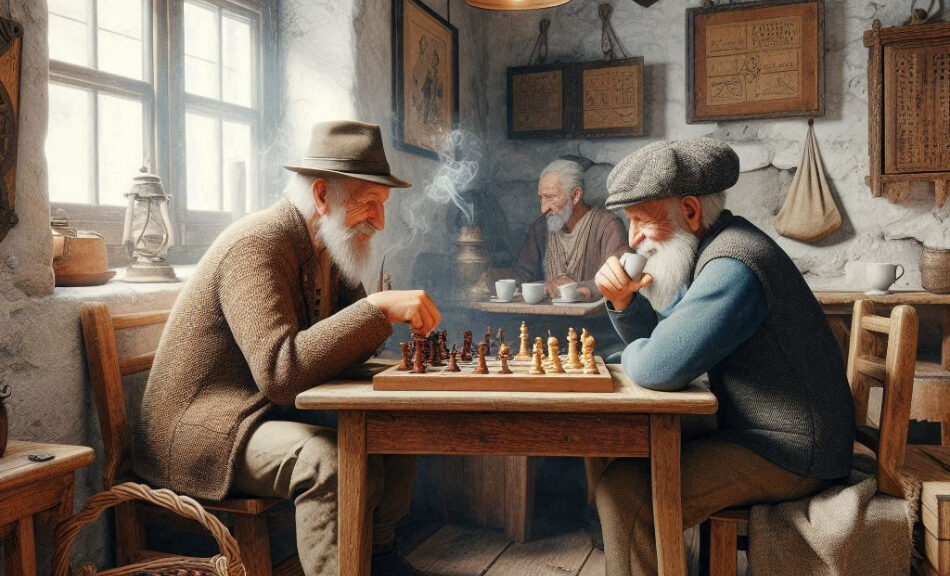
Eyes closed calls for heightened proprioception – that is knowing where our body is in space. Those skills diminish with age.

Sheesh.

I’m going to see if I can gain back some balance skills with eyes closed. Knowing that maintaining balance is vitally important, I will try to expand my skills and, hopefully, improve the results.

How did you do? Let me know in the comments. We can do a balance check-in in a month to see if we have gained skills!

Tomorrow is our birthday!

Yes, foodtalk4you will have eleven candles on its cake on April 9th! Eleven years of exploring things we can do to tap into the health we are designed to have – one meal, one breath, one movement at a time! Thank you to each of our loyal readers and subscribers! Your support makes this an enjoyable endeavor for both Sheree and me!

In health and balance –

Deidre

If this post was valuable to you, please share it using the options under the MORE button below. Thanks!

No Foolin’

In America, it’s April Fool’s Day.

Long associated with jokes, pranks, and Tomfoolery to make someone else look the fool, I want to assure you that this is no joke.

Chris Kresser’s weekly newsletter is inspiring today’s post about seafood consumption by children.

Seafood provides a host of nutrition including iodine, selenium, choline, and vitamin D, along with omega-3s, which are critical for brain development and function.

A well-studied important dietary component during pregnancy, seafood has not been the target of many comprehensive studies for children.

However, Kresser cited a study in the European Journal of Nutrition revealing that children consuming no seafood have a 35% higher chance of suboptimal social behavior compared to children consuming two portions every week. Children who regularly consume recommended amounts each week often demonstrate better emotional controls and focus.

Cost factors, availability, and awareness of mercury concentration in seafood may be influencing the inclusion of this food source into children’s diets, but we may be avoiding it at our peril. If you scroll way down this NIH resource, you will find this table showing how little seafood children in the U.S. are eating:

ABLE 3-12Weighted Seafood Meal Frequency, U.S. children, 2–19 Years

 n, Weighted0 Meals per Month, Percent (n)Less than 2 Meals per Week, Percent (n)2 or more Meals per Week, Percent (n)
Overall74,270,80843 (5,372)51 (6,631)6.4 (926)
Males (years)
2–57,908,05946 (698)49 (735)5.9 (103)
6–1112,925,78343 (945)50 (1,185)6.9 (164)
12–1917,022,52542 (1,131)51 (1,364)7.0 (199)
Females (years)
2–58,029,34839 (602)55 (828)5.9 (124)
6–1111,739,99843 (909)52 (1,183)5.7 (163)
12–1916,645,09644 (1,087)50 (1,336)6.2 (173)
Race/Ethnicity
Hispanic17,869,76644 (1,734)50 (1,936)5.4 (186)
Non-Hispanic Asian3,428,65431 (343)50 (574)19 (234)
Non-Hispanic White10,429,46336 (1,186)56 (1,896)8.1 (274)
Non-Hispanic Black38,447,67845 (1,708)50 (1,762)5.0 (159)
Other4,095,24743 (401)48 (463)9.1 (73)
Income (IPR)
Less than 1.325,389,48146 (2,488)49 (2,788)5.7 (325)
1.3–4.9937,715,36743 (2,448)51 (3,172)5.8 (455)
5+11,165,96036 (436)54 (671)9.8 (146)

NOTES: IPR = income-to-poverty ratio. Values in parentheses are unweighted sample sizes. Seafood frequency measured using a 30-day food frequency questionnaire based on the total number of meals per month for all seafood species. Respondents not reporting food frequency are not presented in this table; n = sample size. See NHANES Data Analysis Methodology in Appendix E.

SOURCE: NHANES cycle years 2011–2012 through 2017–March 2020.

The next table below shows serving size based upon age, the best and the good choices for seafood, and which kinds to avoid based upon concentration of pollutants (mercury).

Ask any teacher, kids are not learning as well, and their behavior is declining. Why?

Is consuming seafood the answer to this question?

Absolutely not.

But it may be one factor parents and grandparents can look at to improve the chances the children will have every opportunity for success in learning and socializing.

I often get on jags of preparing one kind of protein – usually the versatile and affordable cuts of chicken – and forget to mix things up a bit.

Omega-3s are great for all of us, so I am trying to be more mindful of including wild fresh caught Alaskan salmon on a more regular basis. It’s a matter of watching the sales; salmon this week, shrimp or white fish the next.

Maybe Taco Tuesday can become Fish Taco Tuesday!

In health –

Deidre

If this post was valuable to you, please share it using the options under the MORE button below. Thanks!

Time For Some Egg Stretching!

Eggs have long been my main source of breakfast protein. With the price of eggs going crazy right now, I have had to rethink how many we are consuming.

Hmmm. How do you stretch an egg?

I’ve shared a couple recipes recently that have featured cottage cheese – an often-overlooked source of protein.

Thankfully, I do consume dairy without serious adverse effects. A little more flatulence, perhaps, but with the price of eggs, it’s worth it – and its creamy deliciousness is delightful.

Recently, I tried out a frittata recipe featuring sauteed minced potatoes, assorted veggies, optional meat, and – EIGHT … count them – EIGHT EGGS!

Egads!

I cracked one into the mixing bowl. Two. Three. Four. Gulp … Five …

Okay! No more! Nuh-huh!

Clearly, I needed more protein – more stuff – to complete the liquid required to pour over everything.

Enter three dollops of cottage cheese.

The result was yummy in every respect.

“Wait!” you say.  Your family turns its nose up whenever you offer cottage cheese? No worries!

Simply blitz your egg/cottage cheese mixture using an immersion blender or food processor and voila! You have turned the combination into creamy wonderfulness! No one will be the wiser.

Shhh! Our little secret.

Below is how I tweaked the JenSmiley@substack.com recipe. Again, this is a concept recipe that is perfect for modifications based on what’s in the refrigerator.

How are you dealing with the rising egg prices in the United States?

In health –

Deidre

Don’t miss the next post! Subscribing is easy and hassle-free. Just one email every Tuesday morning with the link to the latest post. Scroll down to the bottom on your device to fill out the subscribe form. Thank you!

I Know A Place … A Very Special Place

My spot.

It beckons to me like sirens calling from the deep seas.

I always gladly yield to its call.

Come. Come outdoors. Come to ponder, to read, and to write. Do some soul work.

Ahhh!

I had just created that perfect spot in my former home. It became a mystic place in the freedom of the outdoors, which allowed equal freedom of my mind and heart.

Do you have such a spot? A place where you long to go that allows your mind to wander where it will, or to focus on deep truths that uplift and inspire you?

For me, such a place requires a table where books and papers can be spread out. Where my drink and food can be close-by.

Moving to my new home necessitated leaving that outdoor table behind, and while we have created lovely outdoor seating and conversation areas, I just hadn’t recreated my own special spot.

Until recently.

Yet unadorned with no potted flowers or decorations nearby, this humble space is beginning to become my spot. For there in the screened porch warmed by the sun, I can once again read, take notes, ponder, and create.

At least until the pollen season gets in full swing, painting everything yellow. Achoo!

Then we all head indoors until we can spray and wash everything before resuming our outdoor life.

Where is your spot? Do you go there often?

In health –

Deidre

Caregiver Confessions

Note: Make sure to read until the end to catch an important tweak to last week’s Cottage Cheese Blueberry Bake.

This week’s post is a confession – or, more accurately – a sharing of a recent revelation.

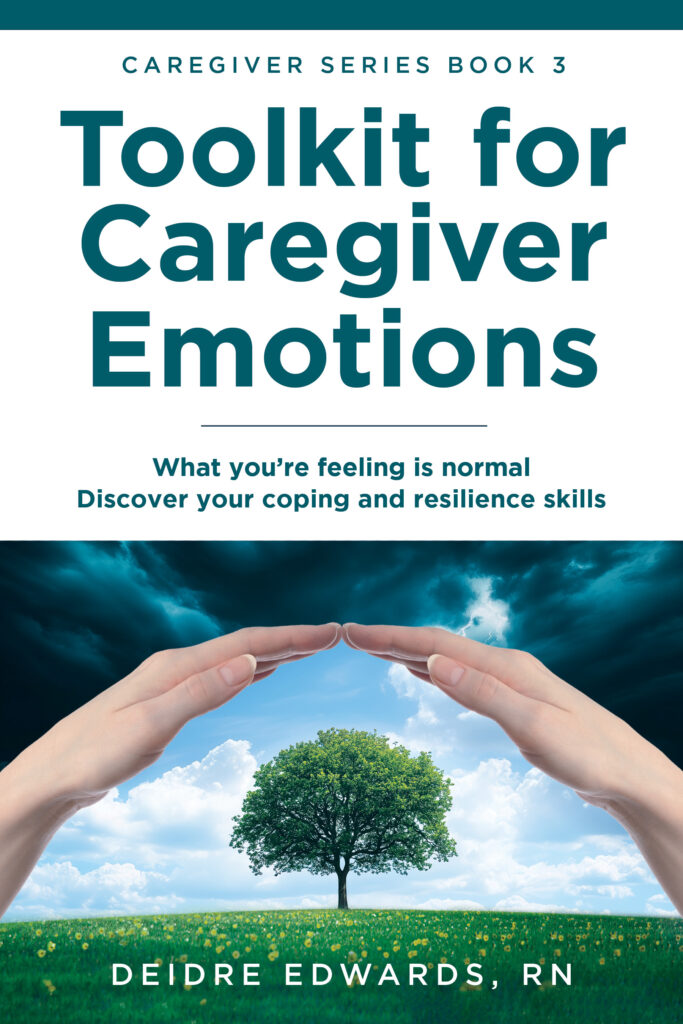
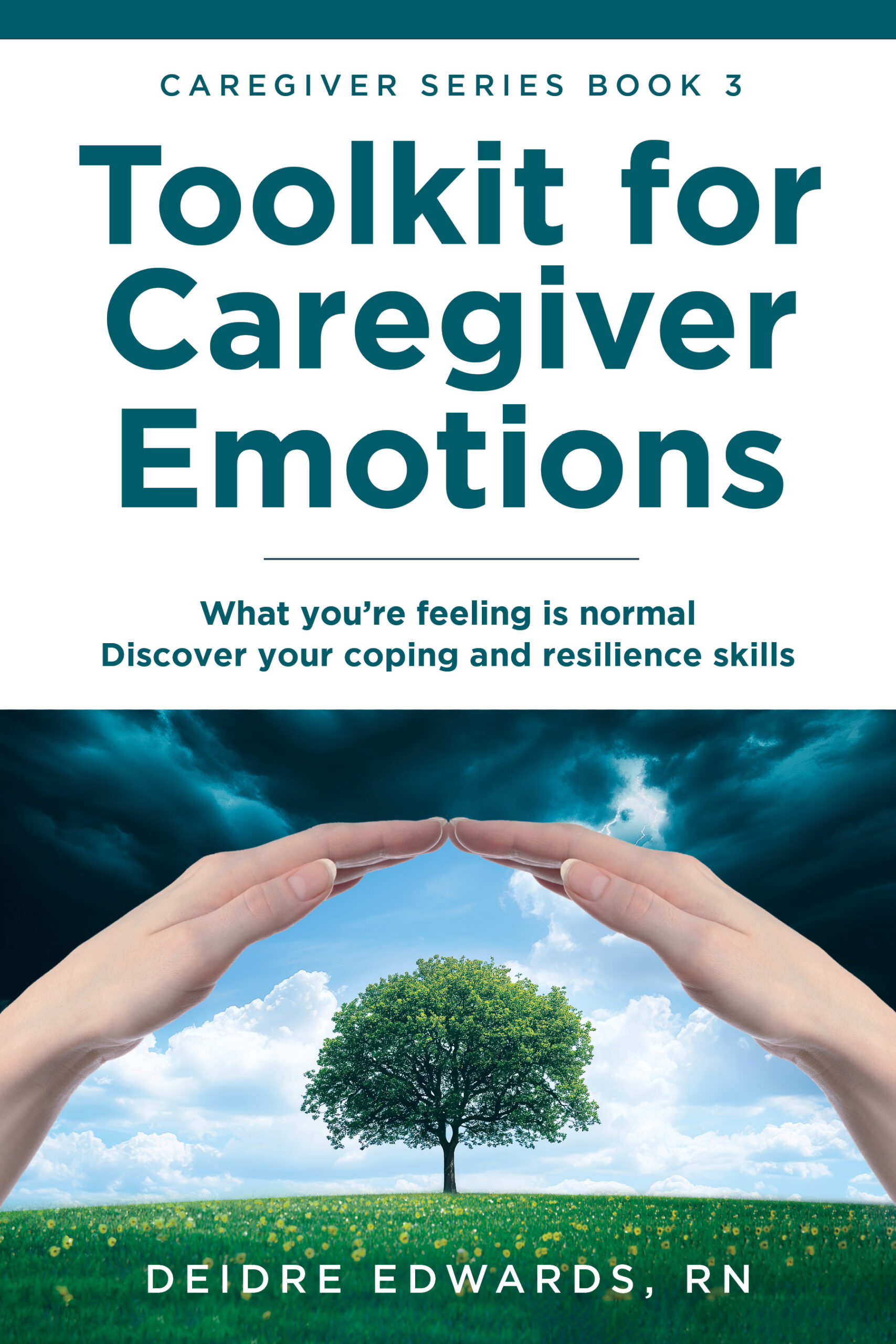
In the final editing process for the content in my next book, Toolkit for Caregiver Emotions, I am making sure to mention, those who are short-term caregivers might experience the same mindsets and emotions experienced by those who are long-term caregivers.

Hah! Little did I know I was going to be a short-term caregiver, who would experience some of those same things.

My sweetheart just had hip replacement surgery. We’re looking at a six-to-eight-week standard recovery for general mobility issues.

Meh. No big deal, right?

Caring for someone with post-op pain concerns, decreased mobility, and who uses a walker along with other adaptive equipment is not the biggest hurdle ever for me.

I found, however, that my role as the primary caregiver, helping with activities of daily living, (such as bathing, dressing, and bathroom needs) – along with managing a variety of new temporary medications – quickly put me at risk of falling into a mindset of self-neglect.

Granted, there are no raging, random caregiver emotions here. The first two to three days post-op were hard on both of us – it’s a shared experience – but as I observed myself, it was easy to see self-neglect wiggle its tenacles into my day.

As we both experienced for the first time all the hip replacement concerns – the ice pack apparatus, careful spacing of pain meds, frequent transfer concerns with bed/chair, home exercises, movement restrictions, and dealing with the side effects of medications – we were both frequently exhausted.

Then it happened.

“My sweetheart is all set now; I’m just going to rest – I can skip my shower and my daily vitamins.”

In those first two days, I think such a mindset is normal. The importance of caregiving being a priority is evident as our kitchen island has been taken over by medical paperwork, and a row of short-term medications serves as a reminder to administer them on time.

But, dear caregivers, going beyond that initial adjustment period with self-neglect is not healthy.

Remember, there are two patients in any caregiving situation – the person giving the care and the person receiving the care. Ignore the needs of the first one and the needs of the second one might not get met because the first one may have collapsed!

If your adjustment period is not getting better – as ours did, thankfully – then it’s time to call in for help. Use those offers of assistance to free up time for your daily selfcare.

Next week, I’ll be sharing another breakfast casserole recipe that was easy to prepare in advance and gave us a fresh-from-the-oven treat this morning – no big clean up – and a promise of another easy meal the next day.

Speaking of recipes – as I prepared that Cottage Cheese Blueberry Bake again this week, I paused after stirring the ingredients a final time. Hmmm. Wasn’t there oatmeal in the version I baked the first time? Friends, caregiver brain is a real thing. Yes – please add one cup of uncooked oatmeal to that recipe. Apologies for any inconvenience or recipe “flops.” Sheree is reposting the downloadable corrected recipe below.

In health and healing –

Deidre

We love receiving your comments when foodtalk4you resonates with you. Thanks for alerting us if there is a malfunction in any links that are shared. We are here to help and to shine a light on topics that can boost the health we are all designed to enjoy. Thank you for subscribing!

Sit, Boo Boo, Sit!

We’re not talking about giving your furry canine a command. Rather, we’re talking about what many of us do too much: sit.

Chris Kresser’s weekly Friday email opened my eyes to a couple of things. We sit for too many hours of the day, and we are probably sitting the wrong way. 

Neither was news to me, but the ramifications and the corrective methods were.

Chris cited a major study released last November which followed almost 90,000 participants over eight years who wore devices measuring their activity. Researchers found that sitting more than 10.6 hours a day resulted in increased mortality due to heart failure and cardiovascular (CV) death.

Interesting fact – those who were sedentary (at least 10.6 hours of sitting a day) and who exercised the recommended 150 minutes a week still had higher rates of death, but at lower levels than the purely sedentary group.

The sedentary group had a 40% higher risk for heart failure and a 54% higher risk for CV mortality – whereas the sedentary/active group had a 15% higher risk for heart failure and a 33% higher risk for CV mortality.

Bottom line: yes, exercise is important, but breaking up periods of sedentary time should be the focus of those who are stuck sitting all day. Consider using a standing desk to break up long periods in the chair. Walk around when taking calls. Break up each hour with some water/restroom/walking time.

Which leads to the second part of his message: how to sit properly. Check the video below which beautifully demonstrates the ergonomics of sitting at a desk. Under six minutes long, I highly recommend you look at this.

While I am keenly aware of my posture (“pull that string!”) there can be a struggle while sitting for long periods. A portable standing desk option, below, has been helpful, but the video recommendation of how to sit using a standard office chair looks like it will be my main improvement – along with elevating my laptop and adding a wireless keyboard.

Decades ago, I tried a kneeling chair that promised improved posture, but my knees complained. Then there was the sitting ball, which is quite effective, but has its own issues. The chair featured on the YouTube video is intriguing – I finally found one on Etsy.

But I’ll have to wait until I win the lottery to get it – it’s expensive!

This new information, that exercise for people who sit too much only partially helps heart health, is motivating me to make a few changes.

In addition to a new desk set up, I am taking movement breaks much more seriously. A phone call with a friend provided me with time to take a long walk in the warm, fresh pre-spring air while chatting. The hourly reminder to stand now includes a trip downstairs for a glass of water.

What are you going to do?

I’d love to hear from you in the comments.

Sharing is caring – use the options under the MORE button below to share this post with friends and family.

In health –

Deidre

Brain or Body? Which One Controls You?

Who’s in charge?

I have long been a firm believer in the controlling power of the supercomputer sitting inside of my cranium.

Our thought processes are key elements in living to our fullest potential; but is that the only source of guidance and power within our bodies?

For an average 150-pound person with a brain weighing about 3 pounds, is the 147-pound balance just there to carry around that computer?

While finishing the content editing for my next book, Toolkit for Caregiver Emotions, I am balancing my message about the methods we can use to manage our thoughts and emotions – with an equally important message of helping our bodies send uplifting and power-generating messages to our brains.

In last year’s post on September 10th, I shared about the daily habit of ‘pulling the string,’ followed by assuming a power pose for two minutes. These two simple actions set our bodies up to fill with personal power, strength, and optimism.

In reading the latest release by Janice Kaplan, What Your Body Knows About Happiness, I am being reminded of the wealth of information our bodies send our brains, and that our bodies are doing a lot more thinking than we once thought.

Case in point. Kaplan shares neuroscientist David Eagleman’s example of a baseball being thrown and hit. “When a pitcher throws a ball at 100 miles per hour, it takes about four-tenths of a second to get to the batter. Conscious awareness takes about half a second – which means that the ball crosses the plate before the batter quite literally – knows – it. If the body weren’t functioning without conscious input, nobody would ever hit a baseball.”

Eagleman says, “Your consciousness is like a tiny stowaway on a transatlantic steamship, taking credit for the journey without acknowledging the massive engineering underfoot.”

Kaplan builds her case for purposefully directing our bodies to avail ourselves of increased happiness and positive outcomes. She cites clinical studies which demonstrate how small cues from our bodies can direct our mental activities and perceptions.

One study by cognitive scientist, John Bargh, just blew me away. As study participants were individually entering the lab, they were greeted by the research assistant outside who was holding a drink and fumbling with her briefcase, trying to get to some papers. The participants were asked to hold her drink so she could free her hands.  Once inside the lab, they were given some forms with a description of someone, and they were asked how much they liked them.

What the volunteers did not know was that some of them were given a cup of hot coffee to hold briefly for the lab assistant, while others were given a cup of iced coffee to hold.

Here’s the amazing thing: those who held the warm cup gave positive ratings for the person being described on the form, saying they were warmer and kinder. Those who had held a cold drink found the person colder and less likeable.

This experiment has been repeated in different forms around the world, all confirming that the warm sensations from the cup of hot coffee primed volunteers to be more generous and more trusting.

I highly recommend her book, and you will be hearing more about what I am discovering in future posts.

In the meantime, if you a feeling cold and edgy toward others, wrap your hands around a warm drink to change your mental outlook.

In health –

Deidre  

You can share this post with others using the options under the MORE button below. Thanks.