Category Archives: Stress Reduction

Stuffed French Toast – A Different Kind of Yum!

Before you entertain visions of thick sliced bakery bread cleverly slit open and stuffed with a fluffy, cheesy, sweet cloud of decadence … hold it right there. We are going in an entirely different direction.

Think yummy, eggy French toast topped with savory goodness.

Think making it the night before, if you wish, so there’s only the baking to be done the next morning.

Think enjoying the leftovers the next day with no effort!!!

Yes!

Best of all, it’s a ‘concept recipe’ that’s easily adaptable to ingredients on hand.

We’ve developed a saying at home to describe using the last dab of anything. We call it ‘community service.’

We are performing an act of community service when we eat that last piece of cheese, drink that last half-glass of kombucha from the bottle, or heat up that half-bowl of soup languishing in the refrigerator.

When preparing this week’s version of Stuffed French Toast, I used the last four okra, looking for a home. The week before, there were a few seasoned oven-roasted potato wedges that were put to good use.

As you look over this concept recipe, imagine how you might adapt the ingredients to what you have on hand.

Stuffed French Toast

Grease a baking dish sized to fit a single layer of the bread component.

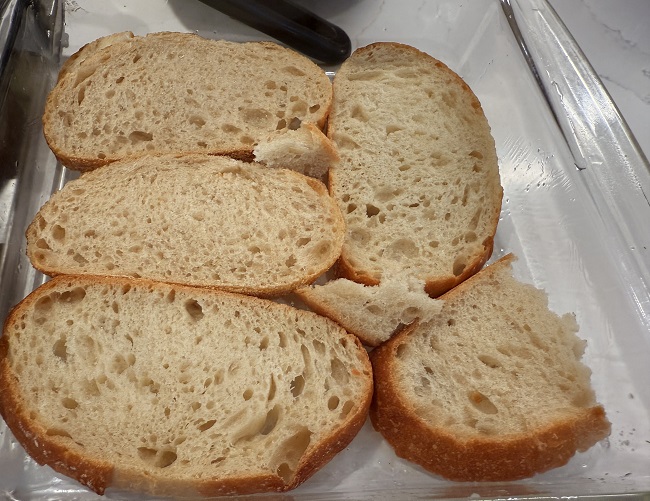
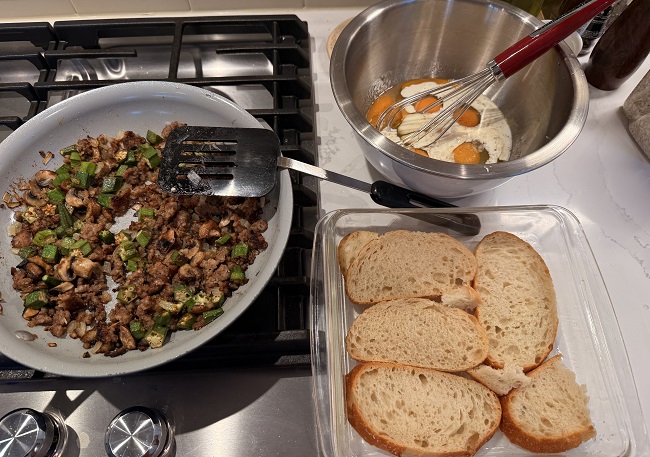
Place slices of bread at the bottom of the dish to cover the entire area. Sourdough is our bread of choice.

In a sauté pan, crumble and cook ground breakfast sausage. For a square 8–9-inch glass pan, I used 1/2-pound ground sausage.

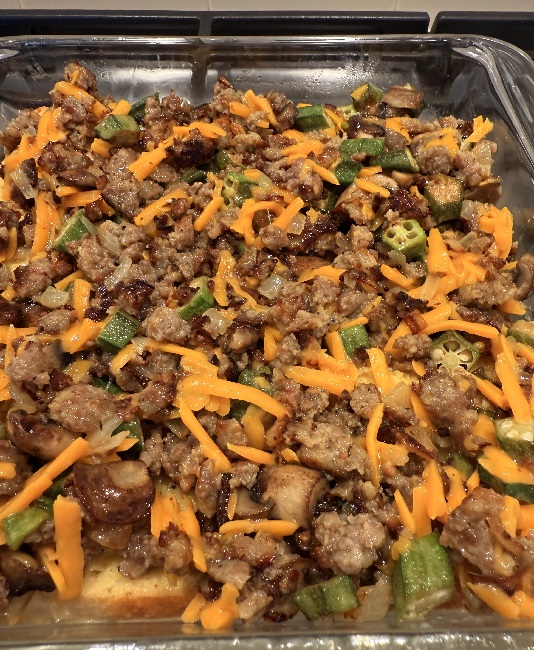
When the sausage is almost cooked, add some diced onion, maybe bell pepper, mushrooms, fresh okra (oh, yes!), cut up leftover roasted or baked potatoes, or anything else that suits you and might assist in community service.

Continue to cook and brown the mixture until the sausage is cooked, the onion becomes translucent, and the veggies begin to brown.

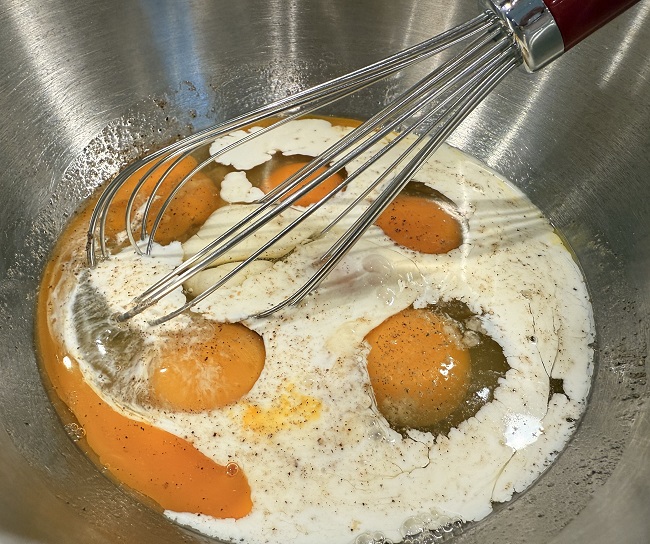
Meanwhile, in a medium bowl, whisk eggs, a dollop of heavy cream (half and half will do, but the heavy cream is the yummiest – having said that, you can ‘thin’ the heavy cream with water if more fluid is needed). Season with salt and pepper. For the square baking dish, I used six eggs.

Spread the sausage and vegetable mixture over the bread layer. If desired, sprinkle grated cheese on top.

Pour the egg mixture evenly over the top.

At this point, you can cover and refrigerate this overnight or put it into a preheated 350-degree oven and bake for 30-35 minutes or until a knife comes out clean.

Download the recipe here:

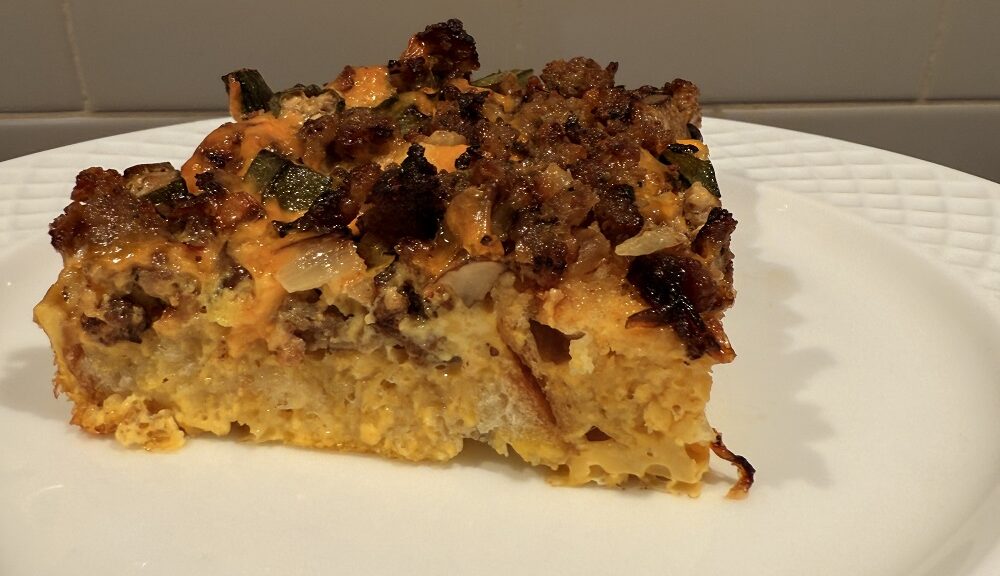
The square pan made four servings – two for now and two for later! I left it in the oven a few minutes too long and things got a bit browner than I had wanted, but we both agreed that it was a yummy breakfast!

Now, that’s community service in the kitchen at its finest!

In health –

Deidre

Next week, I will post the results of my following my own advice: how I found energy and a mindset that changed the path of my day. Make sure to subscribe to foodtalk4you so you will not miss a single post delivered directly to your in-box Tuesday mornings!

Caregiver Confessions

Note: Make sure to read until the end to catch an important tweak to last week’s Cottage Cheese Blueberry Bake.

This week’s post is a confession – or, more accurately – a sharing of a recent revelation.

In the final editing process for the content in my next book, Toolkit for Caregiver Emotions, I am making sure to mention, those who are short-term caregivers might experience the same mindsets and emotions experienced by those who are long-term caregivers.

Hah! Little did I know I was going to be a short-term caregiver, who would experience some of those same things.

My sweetheart just had hip replacement surgery. We’re looking at a six-to-eight-week standard recovery for general mobility issues.

Meh. No big deal, right?

Caring for someone with post-op pain concerns, decreased mobility, and who uses a walker along with other adaptive equipment is not the biggest hurdle ever for me.

I found, however, that my role as the primary caregiver, helping with activities of daily living, (such as bathing, dressing, and bathroom needs) – along with managing a variety of new temporary medications – quickly put me at risk of falling into a mindset of self-neglect.

Granted, there are no raging, random caregiver emotions here. The first two to three days post-op were hard on both of us – it’s a shared experience – but as I observed myself, it was easy to see self-neglect wiggle its tenacles into my day.

As we both experienced for the first time all the hip replacement concerns – the ice pack apparatus, careful spacing of pain meds, frequent transfer concerns with bed/chair, home exercises, movement restrictions, and dealing with the side effects of medications – we were both frequently exhausted.

Then it happened.

“My sweetheart is all set now; I’m just going to rest – I can skip my shower and my daily vitamins.”

In those first two days, I think such a mindset is normal. The importance of caregiving being a priority is evident as our kitchen island has been taken over by medical paperwork, and a row of short-term medications serves as a reminder to administer them on time.

But, dear caregivers, going beyond that initial adjustment period with self-neglect is not healthy.

Remember, there are two patients in any caregiving situation – the person giving the care and the person receiving the care. Ignore the needs of the first one and the needs of the second one might not get met because the first one may have collapsed!

If your adjustment period is not getting better – as ours did, thankfully – then it’s time to call in for help. Use those offers of assistance to free up time for your daily selfcare.

Next week, I’ll be sharing another breakfast casserole recipe that was easy to prepare in advance and gave us a fresh-from-the-oven treat this morning – no big clean up – and a promise of another easy meal the next day.

Speaking of recipes – as I prepared that Cottage Cheese Blueberry Bake again this week, I paused after stirring the ingredients a final time. Hmmm. Wasn’t there oatmeal in the version I baked the first time? Friends, caregiver brain is a real thing. Yes – please add one cup of uncooked oatmeal to that recipe. Apologies for any inconvenience or recipe “flops.” Sheree is reposting the downloadable corrected recipe below.

In health and healing –

Deidre

We love receiving your comments when foodtalk4you resonates with you. Thanks for alerting us if there is a malfunction in any links that are shared. We are here to help and to shine a light on topics that can boost the health we are all designed to enjoy. Thank you for subscribing!

New Year With A Better You

Here we are. Decorations are still up, and anticipation is in our hearts for the New Year.

I hope there is a special sparkle in the air for you.

Many of us well-seasoned adults can even grab hold of that pure childlike awe and wonder from time to time throughout the holiday season – that is, if we are not in the throes of grief, strife, or trauma.

Speaking with a friend recently, I was reminded how the second year of grief can be even worse than the first.

The first year after a grief, we find ourselves stumping along, mostly numb, just going through the motions as we mark ‘the firsts’ – first birthday, first anniversary, first Thanksgiving, first holidays – first everything without whomever or whatever we lost.

If that was not hard enough, we sort of wake up in the second year to the new reality of our situation, and the hurt changes to something much more real, painful, and permanent.

We often hear about “getting over” something – which creates an image of sucking up, chest out, marching boldly forth, oblivious to our past pain – but should that be our goal?
Trauma of any kind affects our total mind, body, and spirit long after the event.

What we are discovering is that resilience and personal growth come when we stop fighting to get over something, and start discovering what lessons those experiences are imparting, that will carry us forward into the future.

Which returns us to the concepts from the December 3rd post: Before releasing something, we need to embrace it first.

Embrace to acknowledge, authenticate, and validate what was experienced. Then we release the pain, taking with us the lessons learned, and then filling our spirits with freshness to recharge.

Even missed opportunities can be processed this way – they are not failures and do not need to negatively color our self-esteem. They can show us where our boundaries are and where we need to grow.

When the cloud of trauma lifts, we feel light and liberated. It can feel like magic when that happens, but it is a process and a lifelong journey.

Use New Year’s Eve as a starting point for exploring lessons learned and how those lessons will help you take your next steps into the new year.

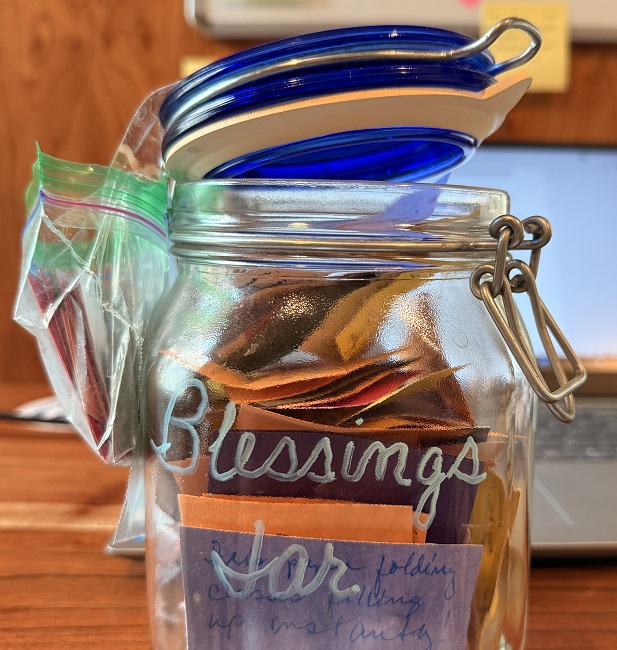
Are you filling up your blessings jar? I am, and I am looking forward to the certain magic that comes when I dump my 2024 blessings out on the table to relive each one in the early New Year!

Now, that’s magic!

In health –

Deidre  

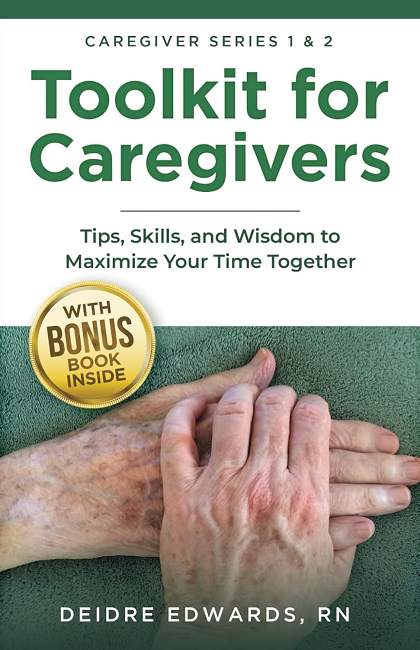
PS- While printing costs are now higher for the latest full color edition of Toolkit for Caregivers, I have reduced the price to make it easier for family caregivers to buy. Spread the love by sharing this link, or better yet, buy it for someone else who could benefit from the helpful information. Thanks.

Five Golden Rings

Hallmark reverie!

This is a month of tidbits for me.

Taking an inspiration from one resource, Karl Moore’s, The 18 Rules of Happiness, and symbolically throwing it up in the air to see what it latches onto, is my Modis operandi right now.

After amplifying his rule #5 of, “Learning to let go,” in last week’s post, I wanted to touch upon Rule #6, “Do Random Acts of Kindness,” for this week.

Since it’s December, it’s easy to think of Secret Santa names being drawn out of a hat at the office or perhaps in your large family. But that’s assigned giving.

We’re talking about random acts of kindness.

Then, I remembered a recent Hallmark movie in which the main character repurposes five holiday greeting cards. Originally purchased to give to her now ex-boyfriend, she used those cards to send thanks and appreciation to five individuals from her past.

Not totally random, but to the recipients opening the card from someone they hadn’t seen for years seemed random – or unexpected, at least.

Close enough.

So, I’m throwing out a challenge.

Before this month is out, let’s all find five opportunities to do a random act of kindness.

Whether you pay it forward in line at the drive through or send a sincere note of thanks in snail mail to someone you haven’t seen in a long while. Find an opportunity to brighten five people’s lives in an unexpected, or random, way.

We’ll be sending out those five goldens rings referenced in that familiar song, The Twelve Days of Christmas.

Just image those five golden rings – each creating ripples of joy, gratitude, and hope.

What could be better?

In health –

Deidre

PS – you could take this idea to another level by involving your children or grandchildren and getting together to compare notes about giving successes. Could be a great teaching tool. Some of the deepest satisfaction from giving, though, is keeping it one-on-one and not seeking fame for your kindness.

Release – Fill – Give

One of our most popular recent posts was Strings from September 10, 2024. I’m glad it struck a chord for so many readers.

After the discussion about pulling our invisible string to lift our chests, straighten our backs, and hold our heads erect, came the video about Amy Cuddy’s TED talk.

I summarized her thoughts by concluding that, “If you want to give energy, you must be an open vessel to receive it.”

In this season of giving, we recognize that many of us face the challenge of offering our time and energy to others throughout the year, not just during the holidays. Whether we’re teaching, working in healthcare, or caring for loved ones, we know that taking time to recharge is essential to sustaining our ability to continue giving.

Stepping away for some self-care is a non-negotiable for our survival – “can’t pour from an empty vessel” – and all of that.

But what if our vessel is full of stuff?

Meaning, emotions we are holding onto – clogging our head and heart space.

A recent Facebook post from Peace, Love, and Smiles so beautifully stated: “Feelings are just visitors. Let them come and go.”

A key principle in my next book, Toolkit for Caregiver Emotions, is that emotions are not us. We experience them, they pass, and then we experience something else.

But some people start to identify with their emotions, letting them rule the day – day after day.

So, someone who experiences resentment, for example, becomes a resentful person.

Releasing these emotions is the first step to freeing ourselves from their hold on us so we can fill up and recharge, allowing us to be our best—for ourselves and others.

The message, then, is to take a moment to assess what emotion is taking center stage and dominating your very essence.

I start my conferences and workshops with an exercise in doing a release, by recommending the audience hold something in their hand to represent the emotion they want to release.

Then, bringing that symbolic object to their chest, they close their eyes, and after a few deep slow breaths, they ask themselves a question when they inhale on the next breath, saying:

“Would you, could you, be able to release this emotion for just a while? Set it aside for just a spell?”

On the exhale, they honestly answer.

If they can say yes to setting that emotion aside for even a little while – or forever – then they open their eyes, watching as they pull their hand away from their chest, and observe themselves setting that object/emotion down.

Doing this release can create an instantaneous sensation of being lighter and freer.

Those who are not yet ready to release, even briefly, their overriding emotions will benefit by further self-exploration of why they are holding on, why they perceive holding on is a benefit, or why they think they deserve to feel that way. Such a discussion may need the practiced listening ear of a counselor.

After a release, we are open to filling our batteries so we are ready to give again.

In the season of giving, remember to ‘release’ before trying to ‘fill,’ so that you can ‘give.’

In health –

Deidre

Speaking of giving – you can share this post with others by using the options under the MORE button below. Thanks for helping us spread an optimistic word of help, hope, and inspiration with others.

That’s Nuts!

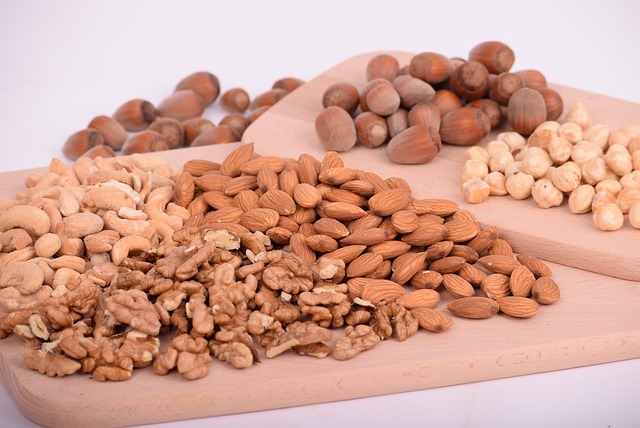
With the holiday party and baking season upon us, we turn to the subject of nuts. We’re talking about walnuts, pecans, cashews, and the like.

Nuts can be a powerhouse of nutrition with fiber, healthy oils, and beneficial phytonutrients that cut down on inflammation and ramp up heart health, blood sugar balance, and so much more.

But there can be a downside to nuts, depending on how they are treated.

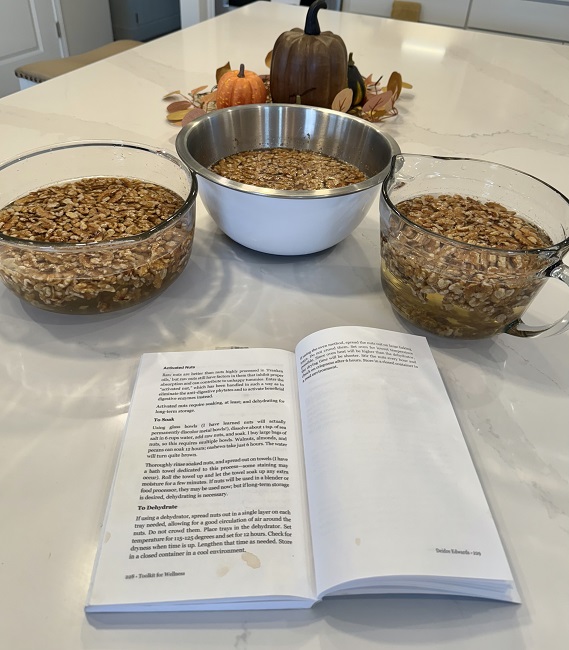
Longtime readers of this blog or my book, Toolkit for Wellness, know that raw nuts are better than nuts highly processed in unhealthy oils.

But raw nuts still have factors in them that can inhibit proper absorption of nutrients and can contribute to unhappy tummies.

Enter the ‘activated nut,’ which has been handled in such a way as to eliminate the anti-digestive phytates and to activate beneficial digestive enzymes instead.

Activated nuts require soaking first, followed by dehydrating.

To soak:

Use glass bowls, if possible. Metal bowls may discolor but can be cleaned using Bar Keeper’s Friend.

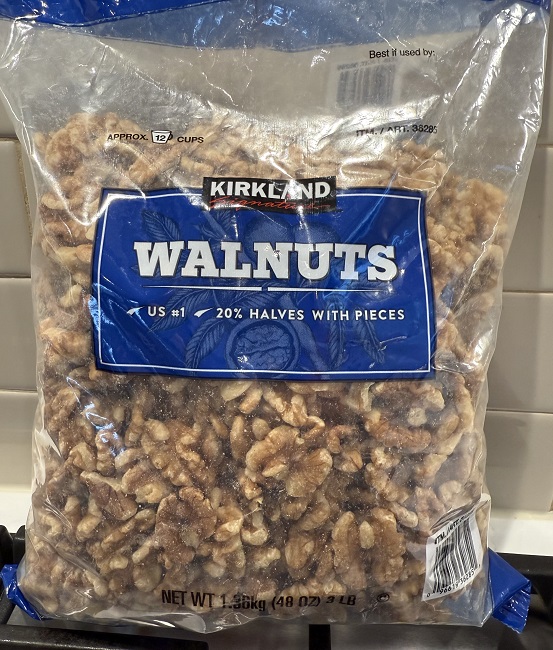
Dissolve approximately 1 teaspoon of sea salt in 6 cups of water, add raw nuts, and soak. I buy large bags of nuts, so this requires multiple bowls.

Walnuts, almonds, and pecans can soak 12+ hours; cashews take just 6 hours. The water will turn quite brown.

Using a large colander, thoroughly rinse soaked nuts and spread out on towels. I have a large bath towel dedicated to this process – some staining may occur. Roll the towel up and let the towel soak up any extra moisture for a few minutes.

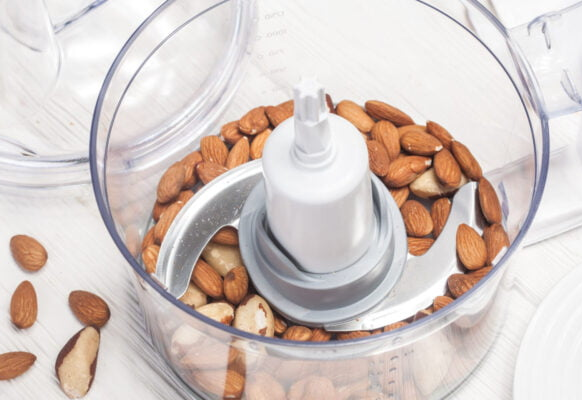
If nuts are to be used in a blender or food processor, they can be used now; but if long-term storage is desired or if they are to be used in baking, dehydrating is necessary.

To dehydrate:

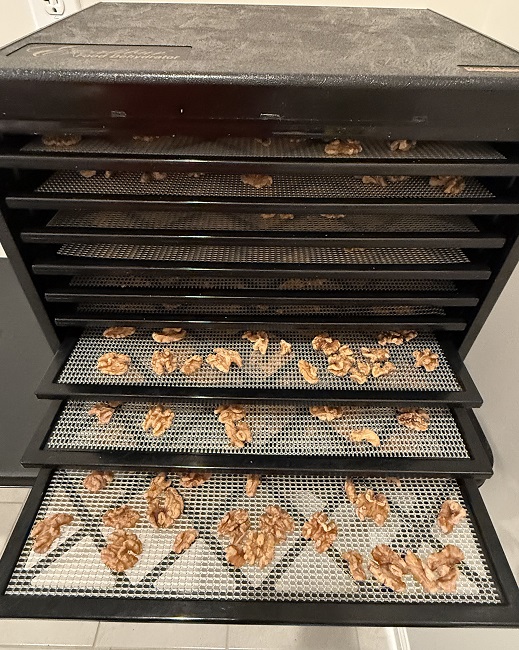
If using a dehydrator, spread nuts out in a single layer on each tray needed, allowing for good circulation of air around the nuts. Do not crowd them. Place trays in dehydrator. Set temperature to 115-125 degrees and set timer for 12 hours.

When time is up, check for dryness and lengthen the time as needed. Store in a closed container in a cool environment.

If using the oven method, spread nuts out on large baking trays without crowding them. Set the oven at its lowest temperature. Since oven heat will be higher than the dehydrator, the drying time will be shorter. Stir nuts every hour and check for crispness after 6 hours.

Freezing nuts will lengthen their shelf life.

The resulting nut is light, crisp, and brimming with goodness!

I mostly activate pecans and walnuts, but now that my trusty dehydrator has found a place in my new home, I will return to activating almonds and cashews again as well. The brown outer covering of the soaked almond can be pinched off prior to dehydrating if desired.

Happy, healthy snacking and baking –

Deidre

Sharing is caring! Use the options under the MORE button below to share with family and friends.

Hugs – A No No For Now!

As my third experience up close and personal with Covid ends – I’m negative! – there will be no friendly hugs for a while.

We long for that physical expression of love, friendship, and concern – and our mental and physical selves need that influx of the resulting oxytocin. Looking back on those dark days of the global pandemic, we remember how deprived and out of sorts we became from the lack of touch.

Oxytocin, sometimes referred to as the ‘cuddle hormone,’ is vital to our inner balance including:

  • Improved mood: Oxytocin can help you feel happier and more relaxed. 
  • Reduced stress: Hugs can lower cortisol levels, which can help you feel less stressed and improve your sleep. 
  • Improved cardiovascular health: Hugs can lower your blood pressure, heart rate, and improve cardiovascular function. 
  • Reduced inflammation: Oxytocin can help reduce inflammation and improve healing. 
  • Strengthened immune system: Hugs can help strengthen your immune system. 
  • Reduced cravings: Oxytocin can help lessen cravings for drugs, alcohol, and sweets. Remember how we turned to extra drinking and poor eating during Covid isolation? 
  • Improved relationships: Hugs can deepen your relationships. 
  • Reduced depression: Hugs can help decrease depression. 
  • Improved concentration: Hugs can help you concentrate easier. 
  • Improved energy: Hugs can help you feel more energetic. 

We need to have those hugs last for more than six seconds to release oxytocin at maximum levels. 

More than six seconds.

Try it.

I’ve heard some say that a great hug lasts for three breaths.

Ahhhh.

Maybe if I wore a mask?

In health –

Deidre

Spread the love and oxytocin by sharing this post using the options under the MORE button below.

Intentional Self Balance

I got off that round tuit!

It was like a scene from several years ago when I decided to do something that would hold me accountable for balancing my food intake and my energy output with regular exercise and portion control.

Yes, it’s one thing to write about health and wellness, and another thing to not let life circumstances derail my solid intentions.

We so easily lose course, especially if we allow ourselves to become codependent on someone or something.

Are your friends not available for your buddy walks around the neighborhood? While that should not keep us from regular walking, often we let it.

Is it difficult to get to exercise classes? Is that a reason to stop working out?

So I, “did a thing.”

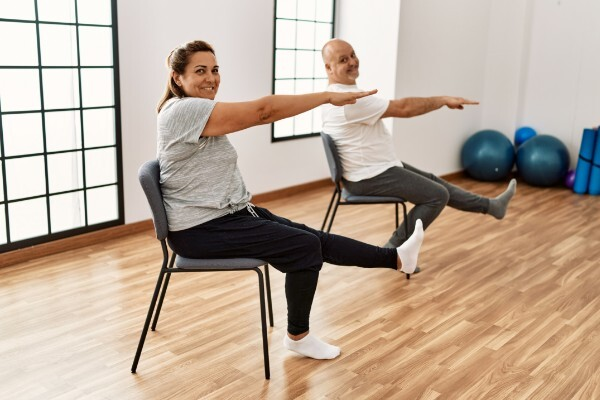
Like signing up for that Noom membership after seeing another ad for it – something that worked wonders for me – I saw a chair yoga ad on Facebook that made me want to see more. After learning the details, I took the plunge for a 12-week special offer for just $25.

Right then, I did my first session. A small, easy commitment that took all of 16 minutes to do.

Check.

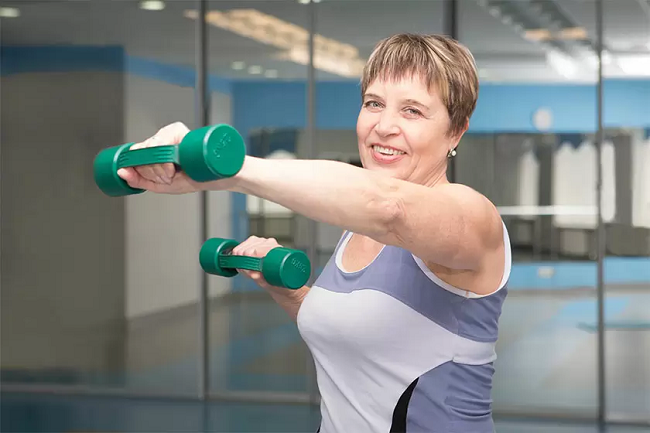
Another session this morning – this time with light weights sprinkled in.

Check.

What’s that feeling of accomplishment?

I know all this stuff, but it’s the intentionality and accountability of it all that makes this work!

Small commitment. Every day. Works for any goal we have in mind.

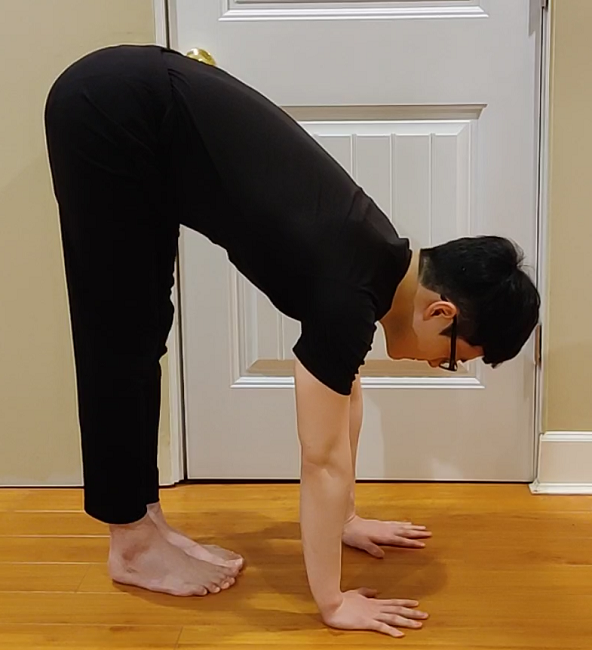
Being able to put my palms flat on the floor means nothing if I don’t do it. Chair yoga used to be a joke in my mind, but when I am doing nothing organized, chair yoga is working.

Bigger things will come, but intentionally doing something each day beats doing nothing every time.

When ‘getting around to it’ never happens, turning to an intentional approach will get you there.

In health – intentionally –

Deidre

Heck, Yeah!

We begin with a quote from Positive Psychology:

“Life is too short to spend time on things that don’t fit our values. When considering whether to commit to something, we typically ask ourselves, ‘Do I have enough time for this?‘ or ‘Will I enjoy it?‘ etc. But we should consider a more important question first: Which of my values does this align with?”

We pat ourselves on the back if we succeed in not over-committing our time.  Learning to balance personal energy is essential; but, adding to our plate just because we have time is not enough, is it?

Committing to a new action, without considering if it reflects our values, will ultimately undermine our wellbeing. Feelings of being inauthentic conflict with our sense of being true to ourselves.

Here’s a gentle reminder that by saying, “no way” to options that do not align with our values is an empowering action to take – while remaining on the lookout for something to which our very essence will scream, “Heck yeah, let’s do this!”

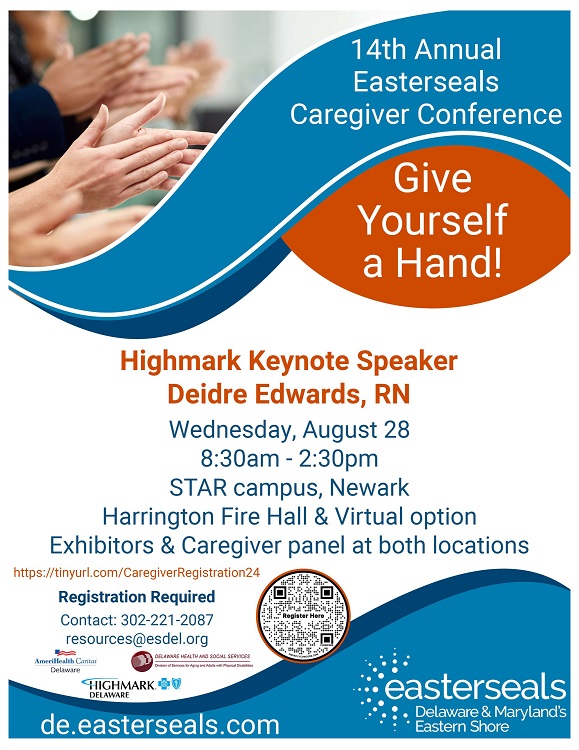
Something to which I gave a resounding, “heck yeah,” was choosing to speak at an annual caregiver conference.  

This has been an all-consuming endeavor that has taken four months to bring to fruition – on top of getting my website redesigned, and Toolkit for Caregivers third edition published. (More later about that).

As you read this, tomorrow I will be giving both a keynote, “You’re a Caregiver: Give Yourself a Hand!” and a workshop, “Mindfulness and Relaxation at Your Fingertips.”

Listeners, both in person and online, will experience a validation of their life-changing efforts in caregiving for a loved one, and will walk away with tools to empower themselves to become more resilient by bolstering their self-care and well-being.

There have been many activities to which I have said, “no thanks,” to of late because, not only was there not enough time, but also, they did not align with my personal values – even if they were touted as being a fun, social event.

Okay. Now, to the elephant in the room.

Success has come to the Kindle version of Toolkit for Caregivers and remains on special for $1.99. Thank you to everyone who has shared its availability with others!

There’s a glitch with Amazon, however, concerning both paperback versions. This reversal was totally unexpected, and involves behind the scenes things that I hope can be straightened out this week.

Sigh.

We’re working on it.

So, until you see a book cover on the print version that looks like the Kindle version, they are not the same. Green is good; blue is old.  

The website is inching closer to completion.

Sigh.

This little grasshopper is learning to be patient and to control only the things over which I have control … even if there is a whole lot of sighing around here.

Right now, there’s practice to be done for tomorrow’s presentations.

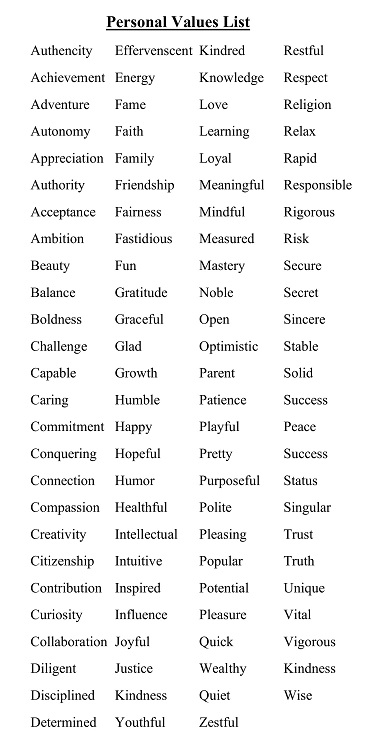
What are your values? Here’s a blast from the past as Sheree shares a download of a handy values list. Check it out to find your top five or ten personal values to which you may measure your activities to check for alignment.

In health –

Deidre

Sharing is caring. Use the options under the MORE button below to share this information with others.

Surprise From The Stork!

When you work so hard for something and you are faced with so many delays, and patience is being tried like never before – there are tears of frustration and trembling of anger barely controlled – then that sweet moment comes when you can see a path to success.

With critical elements still hanging in the balance of uncertain completion, I turned to my calendar to see when the next possible date would be to publish my book.

August 20. Today, as you read this, but in the future as I write this – in faith.

My birthday month. A day that is 2+0 which is personally significant. I’m claiming it.

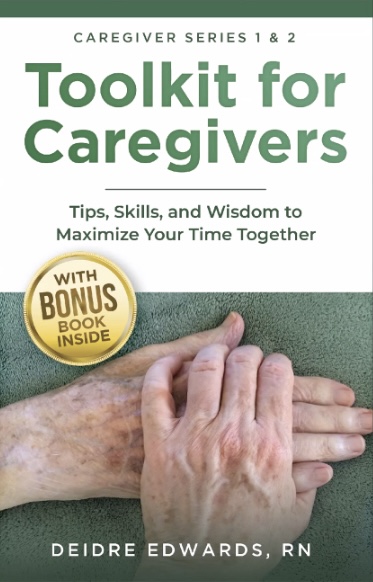
Please join me in welcoming to the world the third edition of Toolkit for Caregivers.

We had anticipated twins – the new edition and the new website – but the stork had something else in mind. Like many babies, their moment of birth is not always as anticipated.

I could not bear another delay in getting this beautiful Third Edition of Toolkit for Caregivers into the hands of those who need it; so, we developed a way to birth the book today while leaving the website in the oven a bit longer.

I would be so grateful for your help in making Toolkit for Caregivers more visible for potential readers on Amazon by increasing its ratings. Please consider getting the Kindle version – on sale for a limited time at $1.99 – and leave a verified purchase review. I know Sheree will have links in this post that will take you to Amazon.

Star reviews are wonderful – adding a brief, honest written review would be stupendous!

You don’t have to read every word right away; I know you are busy. You can scroll through to read a bit here and there, and I am sharing a quick two-page, chapter-by-chapter synopsis below, you can look at to better understand the scope of the book before leaving a review.

There are three versions of this new edition: Kindle, paperback, and paperback with full-color interior. Up at the top of the sales page on Amazon, in blue letters is “See all formats and editions.” (Check beside the star ratings). That link will take you to the full-color option for the paperback, as well as all other options.

Our editor, Sheree, just shared with me how a mutual friend, who just lost her husband, used one of the free downloads, The Business Side of Dying Checklist, to take the natural overwhelming emotions and confusion away as she went about taking care of needed family business. She was lost trying to figure out how to even get started; but, with the help of the checklist, she had finished in a couple of days!

Access for these free materials, as well as the new Caregiver Toolkit Bundle – which will assist caregivers with organization, self-care, and creating balance in their lives – is, therefore, also delayed a bit due to the redesign process of my website.

Fear not! All readers need to do is leave their email contact information on my site and I will let you know the moment the new site and materials are accessible for download.

Please check out my new baby and let me know what you think!

In health and proud as a new parent – yet still awaiting on the other baby –

Deidre

A FREE PREVIEW FOR YOU FROM TOOLKIT FOR CAREGIVERS!

Synopsis by Chapters for Toolkit for Caregivers

by Deidre Edwards, RN

Part 1 – Toolkit for Caregivers, Tips, Skills, and Wisdom to Maximize Your Time Together

Chapter 1 – Physical Environment – guides the reader on how to incorporate the home hospital bed into their house, listing various aspects to consider when placing it: privacy, accessibility, what the patient will be looking at, and more. Insider tips are given for adding layers to the bed for comfort and safety, and for caregiver ease of use.

From hacks using pool noodles to trick out the bed, to unique combinations for barrier cream, to options for urination and bowel movements, all common patient care concerns are covered – all aimed to optimize patient comfort and ease of care for the family caregiver.

Chapter 2 – Infection Control – covers the essentials for preventing the spread of infection. Step-by-step skills in hand washing techniques and wearing and taking off disposable gloves are clearly laid out. Suggestions for additional personal protective equipment are shared.

Chapter 3 – Process for Patient Care – even if the family caregiver has supplemental help, chances are there will be times when personal care will have to be given to the patient. No worries! All the basic skills of patient care are explained step-by-step so anyone can understand. Free downloads are available to print so readers can have the skill at their fingertips. From how to move the patient in the bed, changing sheets while the patient is in the bed, brushing teeth, complete bed bath, nail care, feeding, to how to modify clothing for the bedfast patient – it’s all there, and more.

Chapter 4 – Processes for you, the Caregiver – highlights: the extreme importance of self-care, how to simplify organization of keeping track of both the changing patient conditions and supplemental caregiver coverage through using calendars. Ideas for prioritizing self-care are given.

Chapter 5 – Processes for Home Visits – describes the roles of various health care providers who may visit the home: nurses, aides, social workers, physical and occupational therapists, and chaplains. How the calendar method of tracking the loved one’s changes simplifies these home visits is described.

Chapter 6 – Bring the Party Home – describes how various examples of home activities for the loved one and the family caregiver can contribute to meaningful experiences and help alleviate stress for all.

Chapter 7 – Odds and Ends – covers a variety of common issues: DNR (Do Not Resuscitate) documents, how to handle an approaching major weather event, to “inappropriately twinkling” eyes.

The Caregiver Toolkit Bundle is offered in a link to the author’s website that contains resources for caregiver mindfulness, self-care, audio affirmations, In this Moment of Quiet adult coloring workbook, and customizable templates for calendars, and record keeping templates for medications.

Part 2 – (Bonus Book) Love Lives Here – Toolkit for Caregiver Survival, for Before, During, and After

Chapter 1 – Love Is – a reminder that the mindset for caregiving is based on love, and because of love, there is a natural desire for mutual preparedness.

Chapter 2 – Before There is a Need – emphasizes that the need for preparing for future transitions in life/health/death come to us all. Avoiding taking preparations does not reflect love because those who are left behind, or who must become caregivers, are traumatized by a lack of having a plan in place. Tips on starting The Conversation are shared along with items that should be discussed and understood by all: Advanced Directives, organ donor issues, Legal and Medical Power of Attorney, Last Will and Testament, funeral plans, finances with right of survivorship/beneficiary, location of important papers, and more. Link to free download: Talking Points for The Conversation which expands on this material.

Chapter 3 – During the Caregiving Time – provides additional insights into caregiver self-care needs and solutions for meeting them. The normal emotional responses to caregiving are identified and ways to grapple with the confusing swirl of emotions are shared. Activities for their loved one are described along with ideas for having special one-on-one conversations. Ideas are mapped out for further preparations if their loved one’s condition is terminal.

Chapter 4 – A Time of Transition – things to look for if their loved one is terminal. Approaches to end-of-life issues, why their loved one may be hanging on, and potential needs during transition are shared including the last breath which may be missed by the family.

Chapter 5 – After – prepares readers for their initial response to their loved one’s passing and how to use the love they shared to keep them going.

Chapter 6 – The Business Side of Dying – right when everything hurts the worst and being left to grieve may be desired, the real world presents the newly grieved with business affairs. This chapter walks the reader through where they need to go first and what to do, along with identifying and supporting their first emotions of grief. How to handle thank you notes is discussed. Link to free download: The Business Side of Dying Checklist for the reader to follow and personalize as needed.

Chapter 7 – Grief – while each grief experience is unique, readers are given insider tips on what to expect. They have gone from the anticipatory grief they felt as a caregiver to real end-of-a-life grief. Waves of emotions will come, some expected, and others not expected. Ideas of how to get through the firsts are shared for birthdays, anniversaries, etc. Mindsets that will facilitate healing are shared that might assist them on a path of personal self-growth while still embracing and understanding their love and grief.

Chapter 8 – Learning to See the World with a New Focus – Never diminishing the enormity of being left with empty arms, readers are reminded that their living and healing depends upon helping themselves. They can come to understand that “Living our lives today does not dishonor those who no longer live here with us.”